Li Guangjie, Yun Xiangdong, Ye Kaishan, Zhao Haiyan, An Jiangdong, Zhang Xueliang, Han Xingwen, Li Yanhong, Wang Shuanke
Department of Orthopedics, Lanzhou University Second Hospital, Lanzhou, China.
The First Hospital of Lanzhou University, Lanzhou, China.
J Cell Mol Med. 2020 May;24(9):4944-4955. doi: 10.1111/jcmm.15040. Epub 2020 Mar 21.
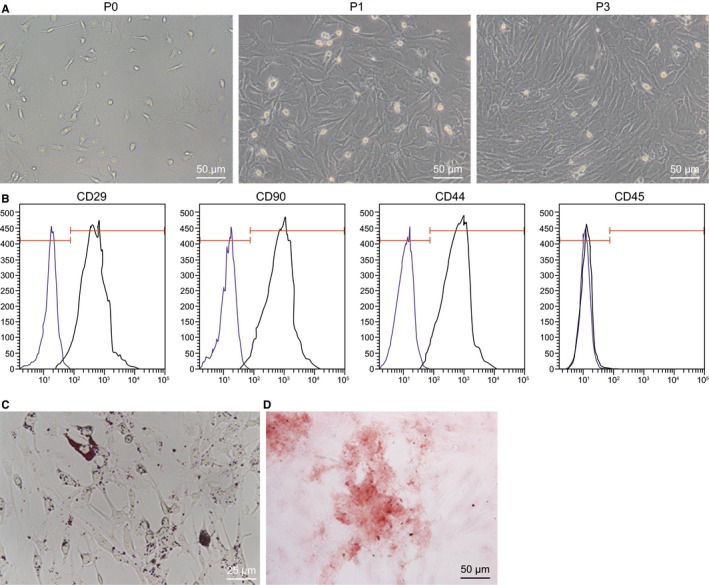
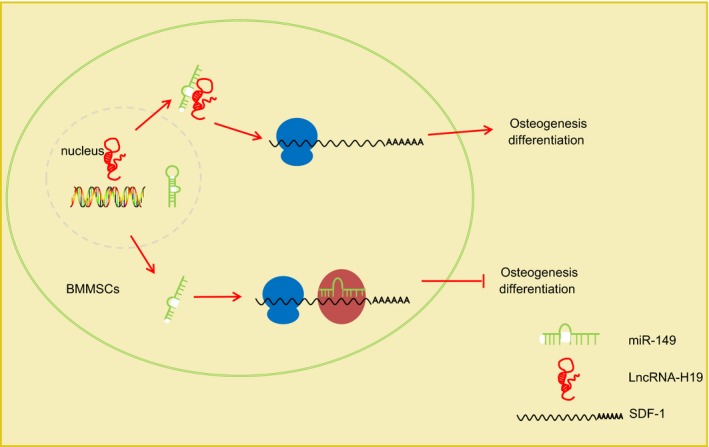
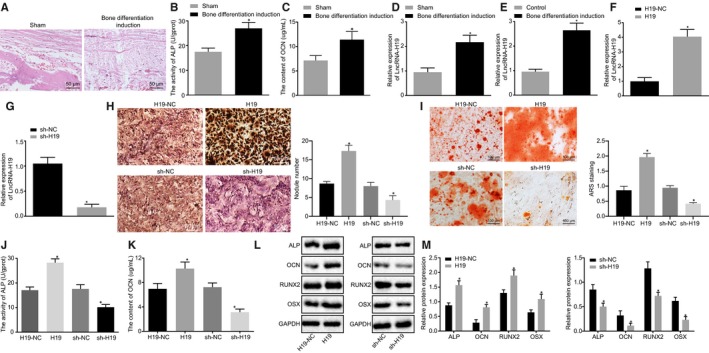
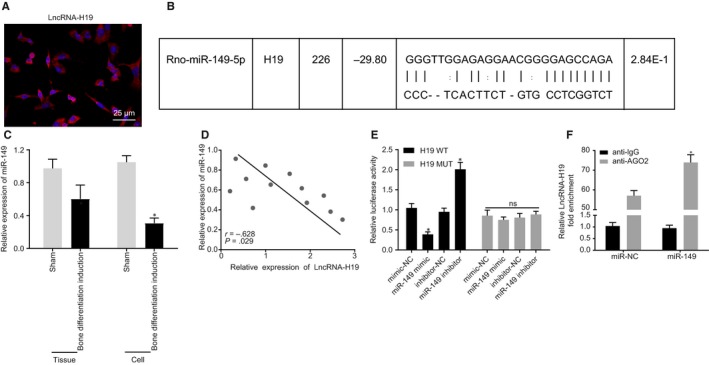
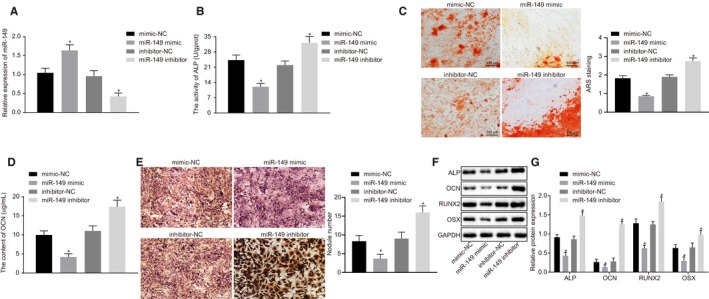
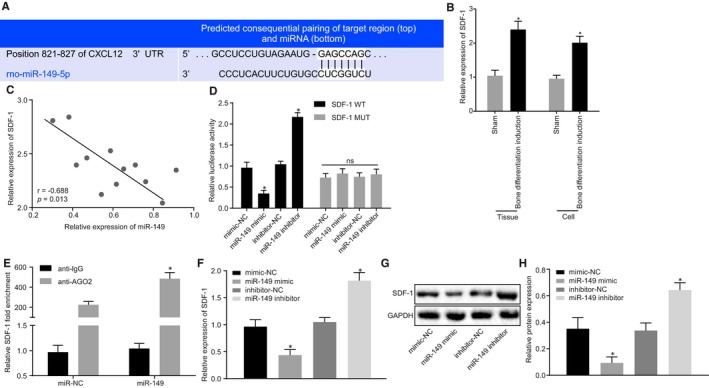
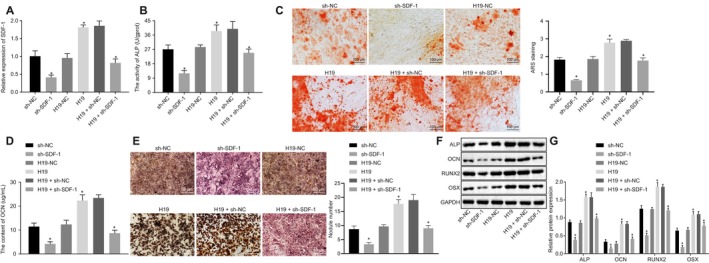
Bone defects resulting from non-union fractures or tumour resections are common clinical problems. Long non-coding RNAs (lncRNAs) are reported to play vital roles in stem cell differentiation. The aim of this study was to elucidate the role of lncRNA-H19 in osteogenic differentiation of bone marrow mesenchymal stem cells (BMMSCs). Following the establishment of an osteogenic differentiation model in rats, the expression of H19, microRNA-149 (miR-149) and stromal cell-derived factor-1 (SDF-1) was measured by RT-qPCR. Thereafter, BMMSCs were isolated from rats and treated with a series of mimic, inhibitor or siRNA. SDF-1 expression, alkaline phosphatase (ALP) activity and osteocalcin (OCN) content were detected. The mineralized and calcified nodules were assessed by alizarin red S and Von Kossa staining. BMMSC surface markers were detected by flow cytometry. Western blot analysis was used to measure the expression of ALP, OCN, runt-related transcription factor 2 (RUNX2) and osterix (OSX) proteins. Lastly, dual-luciferase reporter gene assay and RNA immunoprecipitation were applied to verify the relationship of H19, miR-149 and SDF-1. Overexpressed H19 and SDF-1 and poorly expressed miR-149 were found in rats with osteogenic differentiation. H19 increased SDF-1 expression by binding to miR-149. H19 enhanced ALP activity, OCN content, calcium deposit and ALP, OCN, RUNX2 and OSX protein expression of BMMSCS by up-regulating SDF-1 via binding to miR-149. Taken together, up-regulated H19 could promote the osteogenic differentiation of BMMSCs by increasing SDF-1 via miR-149.
由骨折不愈合或肿瘤切除导致的骨缺损是常见的临床问题。据报道,长链非编码RNA(lncRNA)在干细胞分化中发挥着重要作用。本研究的目的是阐明lncRNA-H19在骨髓间充质干细胞(BMMSC)成骨分化中的作用。在建立大鼠成骨分化模型后,通过RT-qPCR检测H19、微小RNA-149(miR-149)和基质细胞衍生因子-1(SDF-1)的表达。此后,从大鼠中分离出BMMSC并用一系列模拟物、抑制剂或小干扰RNA进行处理。检测SDF-1表达、碱性磷酸酶(ALP)活性和骨钙素(OCN)含量。通过茜素红S和冯库萨染色评估矿化和钙化结节。通过流式细胞术检测BMMSC表面标志物。采用蛋白质免疫印迹分析来检测ALP、OCN、 runt相关转录因子2(RUNX2)和osterix(OSX)蛋白的表达。最后,应用双荧光素酶报告基因检测和RNA免疫沉淀来验证H19、miR-149和SDF-1之间的关系。在成骨分化的大鼠中发现H19和SDF-1过表达而miR-149表达不足。H19通过与miR-149结合增加SDF-1表达。H19通过与miR-149结合上调SDF-1,从而增强BMMSCS的ALP活性、OCN含量、钙沉积以及ALP、OCN、RUNX2和OSX蛋白表达。综上所述,上调的H19可通过miR-149增加SDF-1来促进BMMSC的成骨分化。