Wang Guoliang, He Lu, Xiang Yaoyu, Jia Di, Li Yanlin
Department of Sports Medicine, First Affiliated Hospital of Kunming Medical University, Kunming, Yunnan 650032, China.
Kunming Medical University, Kunming, Yunnan 650032, China.
Asian Biomed (Res Rev News). 2022 Aug 31;16(4):169-179. doi: 10.2478/abm-2022-0021. eCollection 2022 Aug.
Gene regulatory network analysis has found that long noncoding ribonucleic acids (lncRNAs) are strongly associated with the pathogenesis of osteoarthritis.
To determine the differential expression of lncRNAs and microRNAs (miRNAs) in normal chondrocytes and those from a model of articular chondrocyte degeneration.
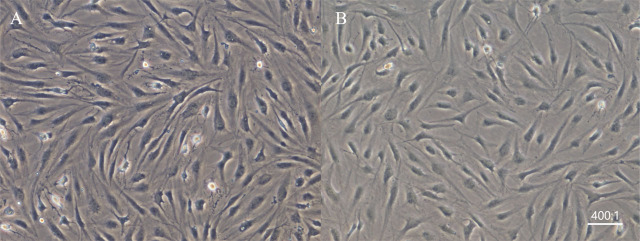
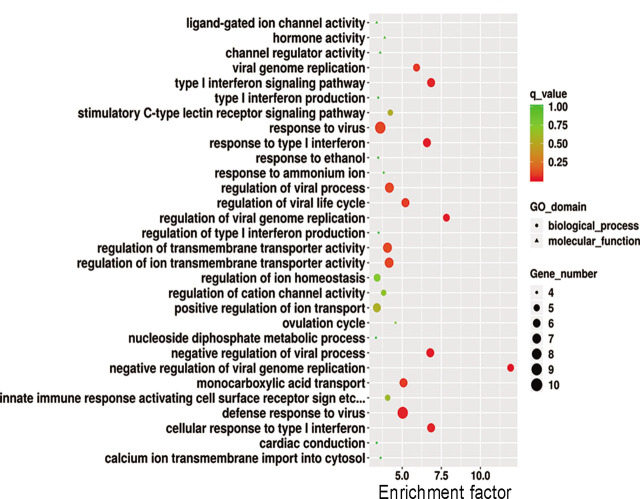
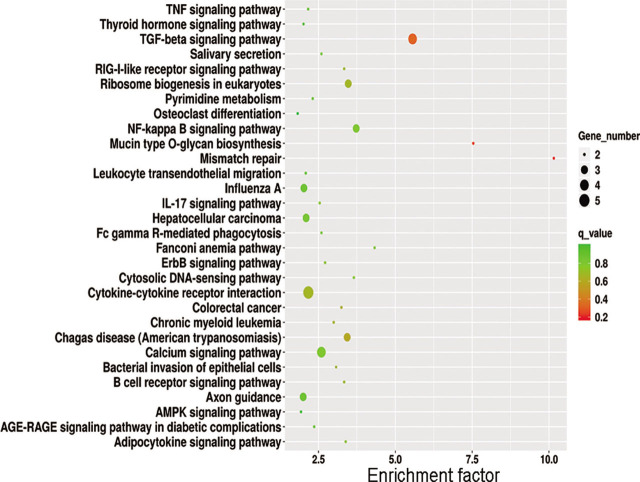
Chondrocytes were cultured from cartilage obtained from patients diagnosed with osteoarthritis of the knee. Stromal cell-derived factor-1 (SDF-1) was used to induce their degeneration. Total RNA was extracted, analyzed, amplified, labeled, and hybridized on a chip to determine expression. The set of enriched differentially expressed miRNAs was analyzed by gene ontology and the Kyoto Encyclopedia of Genes and Genomes to describe the functional properties of the key biological processes and pathways. We conducted a bioinformatics analysis using Cytoscape to elucidate the interactions between miRNAs and proteins.
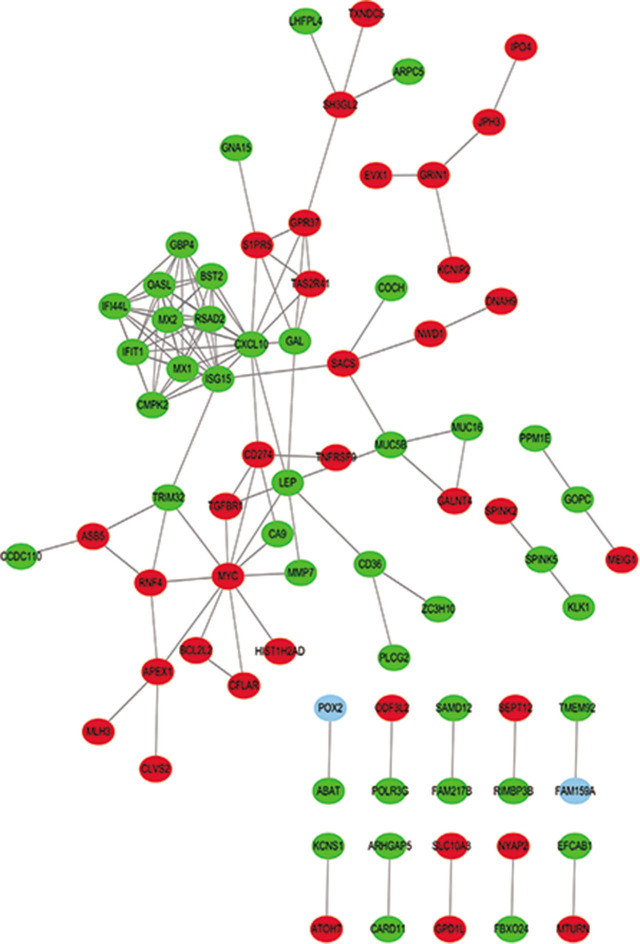
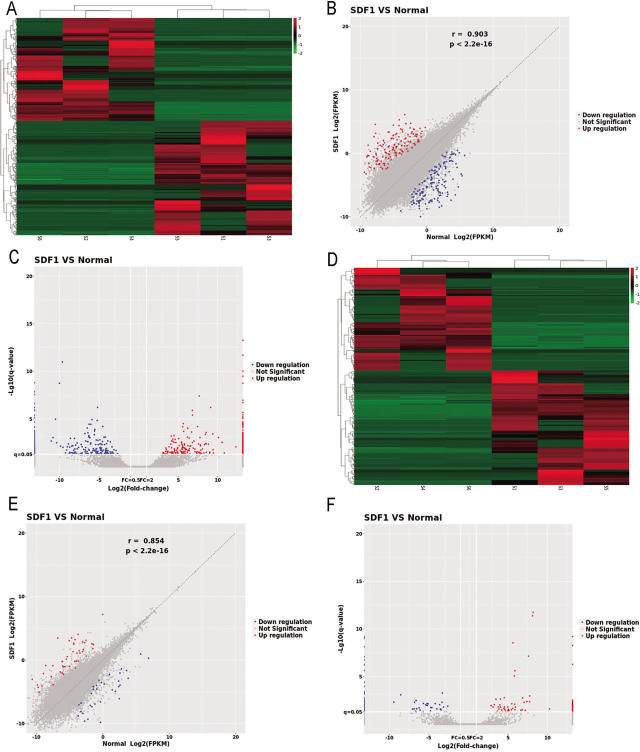
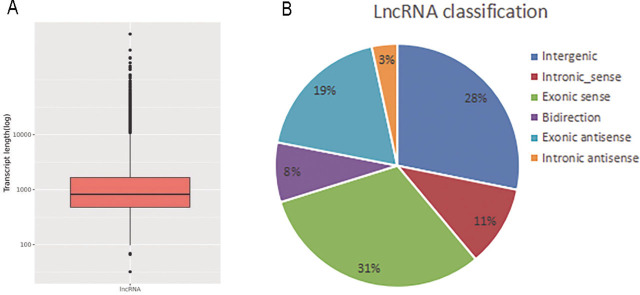
We found that the expression of 186 lncRNAs was significantly different in the model of chondrocyte degeneration, in which 88 lncRNAs were upregulated, and 98 were downregulated. Expression of 684 miRNAs was significantly different. Analysis of the protein-protein interaction (PPI) network indicated that the genes for CXCL10, ISG15, MYC, MX1, OASL, IFIT1, RSAD2, MX2, IFI44L, and BST2 are the top 10 core genes, identifying the most important functional modules to elucidate the differential expression of miRNAs.
These data may provide new insights into the molecular mechanisms of chondrocyte degeneration in osteoarthritis, and the identification of lncRNAs and miRNAs may provide potential targets for the differential diagnosis and therapy of osteoarthritis.
基因调控网络分析发现,长链非编码核糖核酸(lncRNAs)与骨关节炎的发病机制密切相关。
确定lncRNAs和微小核糖核酸(miRNAs)在正常软骨细胞和关节软骨细胞退变模型中的差异表达。
从诊断为膝关节骨关节炎患者的软骨中培养软骨细胞。用基质细胞衍生因子-1(SDF-1)诱导其退变。提取总RNA,进行分析、扩增、标记并与芯片杂交以确定表达情况。通过基因本体论和京都基因与基因组百科全书分析富集的差异表达miRNAs集,以描述关键生物学过程和途径的功能特性。我们使用Cytoscape进行生物信息学分析,以阐明miRNAs与蛋白质之间的相互作用。
我们发现186种lncRNAs在软骨细胞退变模型中的表达存在显著差异,其中88种lncRNAs上调,98种下调。684种miRNAs的表达存在显著差异。蛋白质-蛋白质相互作用(PPI)网络分析表明,趋化因子CXCL10、干扰素刺激基因15(ISG15)、原癌基因MYC、Mx1蛋白(MX1)、2'-5'-寡腺苷酸合成酶样蛋白(OASL)、干扰素诱导蛋白44样蛋白(IFIT1)、维甲酸诱导基因I样蛋白2(RSAD2)、Mx2蛋白(MX2)、干扰素诱导蛋白44L(IFI44L)和骨髓基质细胞抗原2(BST2)的基因是前10个核心基因,确定了阐明miRNAs差异表达的最重要功能模块。
这些数据可能为骨关节炎软骨细胞退变的分子机制提供新的见解,lncRNAs和miRNAs的鉴定可能为骨关节炎的鉴别诊断和治疗提供潜在靶点。