Josep Carreras Leukemia Research Institute, Campus ICO-Germans Trias i Pujol, Universitat Autònoma de Barcelona, 08916, Badalona, Spain; Department of Experimental and Health Sciences, Universitat Pompeu Fabra (UPF), Barcelona, Spain.
Biomedical Center Munich, Physiological Chemistry, Ludwig-Maximilians-Universität München, 82152, Planegg-Martinsried, Germany.
Mol Metab. 2020 Aug;38:100950. doi: 10.1016/j.molmet.2020.01.014. Epub 2020 Feb 12.
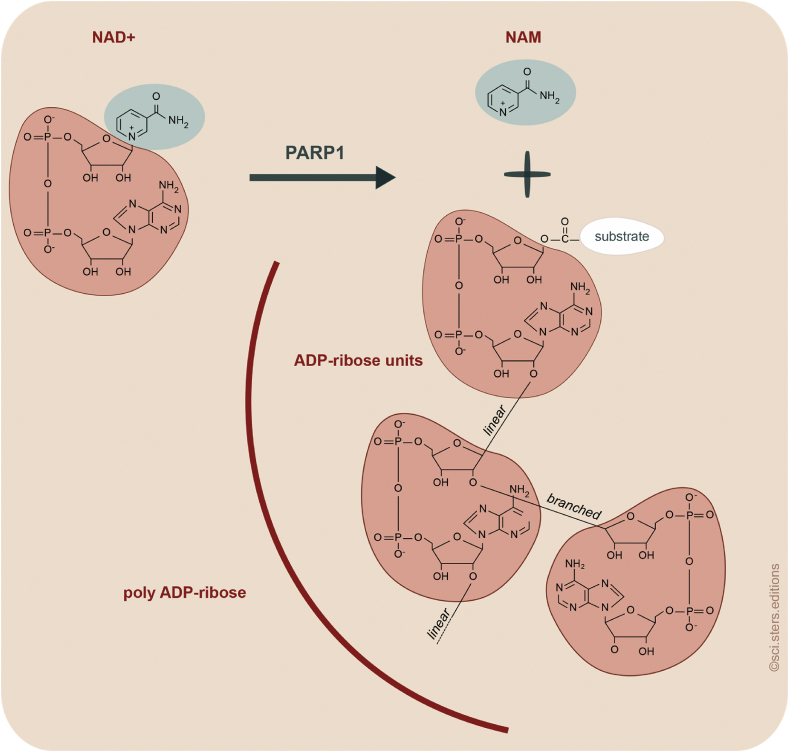
Poly-ADP-ribose polymerases (PARPs) are key mediators of cellular stress response. They are intimately linked to cellular metabolism through the consumption of NAD. PARP1/ARTD1 in the nucleus is the major NAD consuming activity and plays a key role in maintaining genomic integrity.
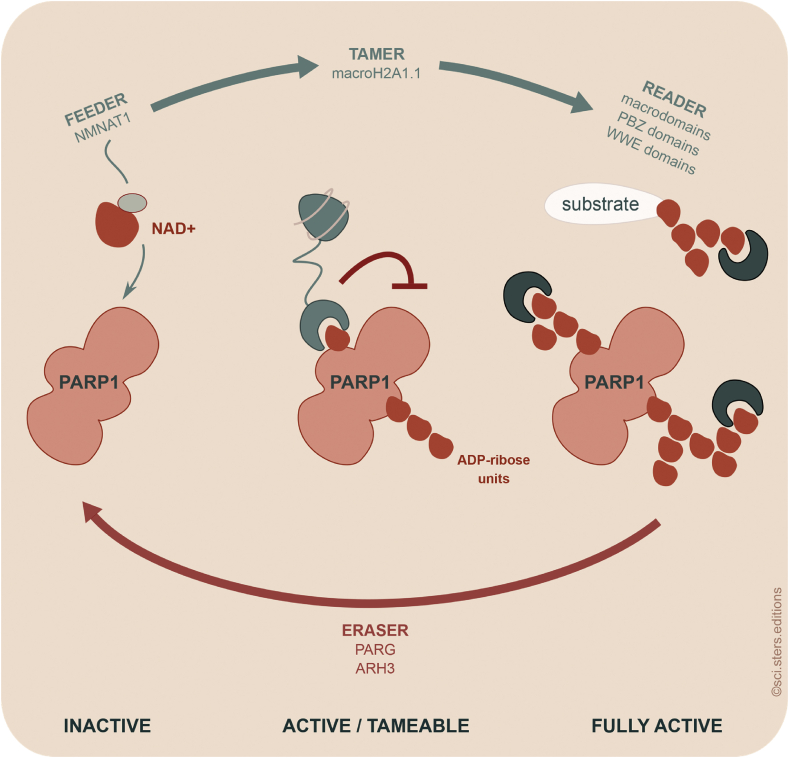
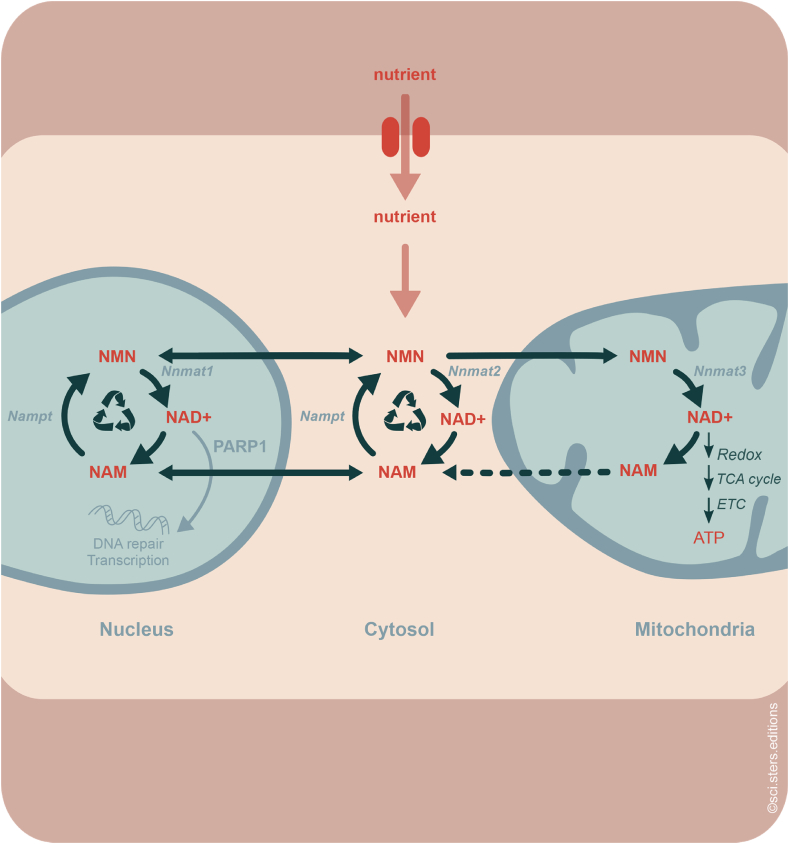
In this review, we discuss how different organelles are linked through NAD metabolism and how PARP1 activation in the nucleus can impact the function of distant organelles. We discuss how differentiated cells tame PARP1 function by upregulating an endogenous inhibitor, the histone variant macroH2A1.1.
The presence of macroH2A1.1, particularly in differentiated cells, raises the threshold for the activation of PARP1 with consequences for DNA repair, gene transcription, and NAD homeostasis.
多聚 ADP-核糖聚合酶(PARPs)是细胞应激反应的关键介质。它们通过消耗 NAD 与细胞代谢密切相关。核内的 PARP1/ARTD1 是主要的 NAD 消耗活性物质,在维持基因组完整性方面发挥着关键作用。
在这篇综述中,我们讨论了不同细胞器如何通过 NAD 代谢联系在一起,以及核内 PARP1 的激活如何影响远处细胞器的功能。我们讨论了分化细胞如何通过上调一种内源性抑制剂,即组蛋白变体 macroH2A1.1,来控制 PARP1 的功能。
macroH2A1.1 的存在,特别是在分化细胞中,提高了 PARP1 激活的阈值,对 DNA 修复、基因转录和 NAD 动态平衡有影响。