Department of Anesthesiology and Pain Medicine, Tongji Hospital, Tongji Medical College, Huazhong University of Science and Technology, Wuhan, 430030, China.
Department of Psychiatry, UMKC School of Medicine, Kansas City, MO, 64108, USA.
Acta Pharmacol Sin. 2020 Aug;41(8):1041-1048. doi: 10.1038/s41401-020-0394-6. Epub 2020 Mar 19.
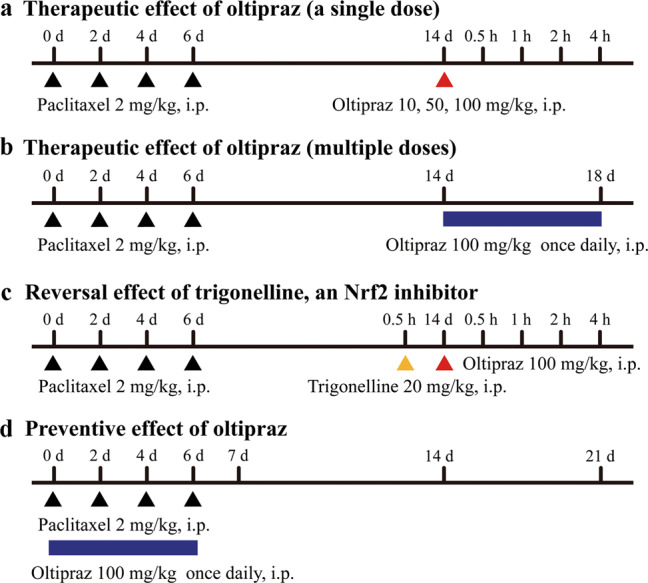
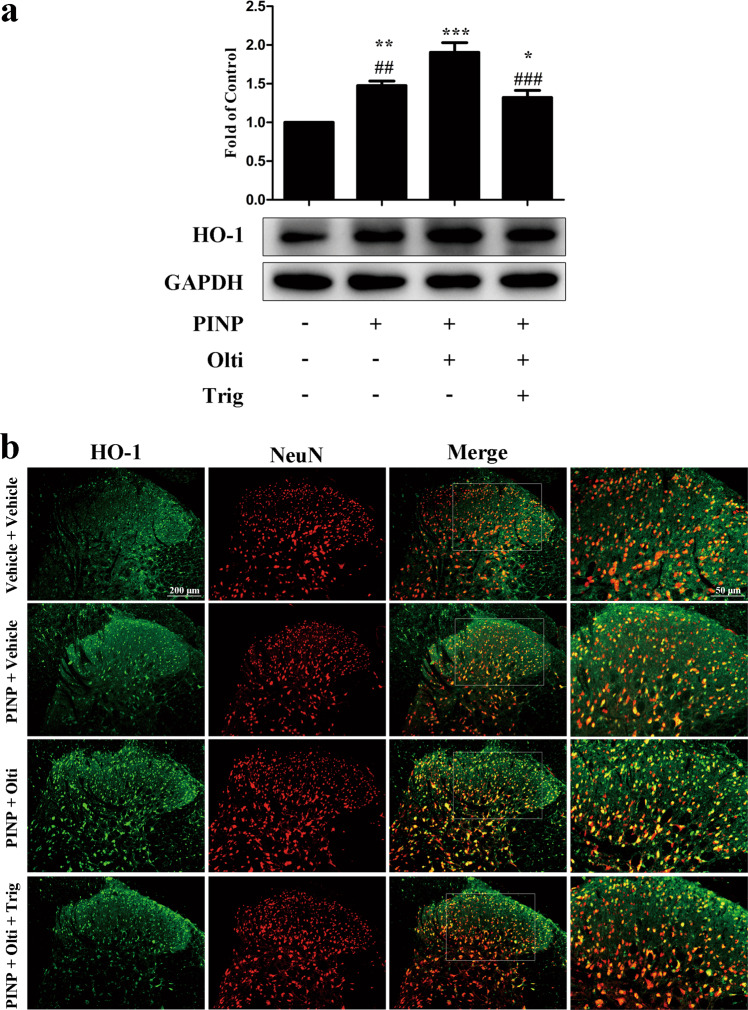
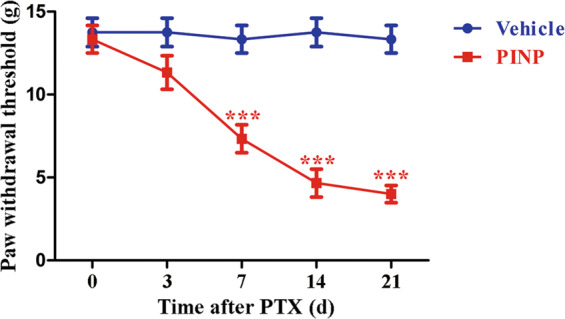
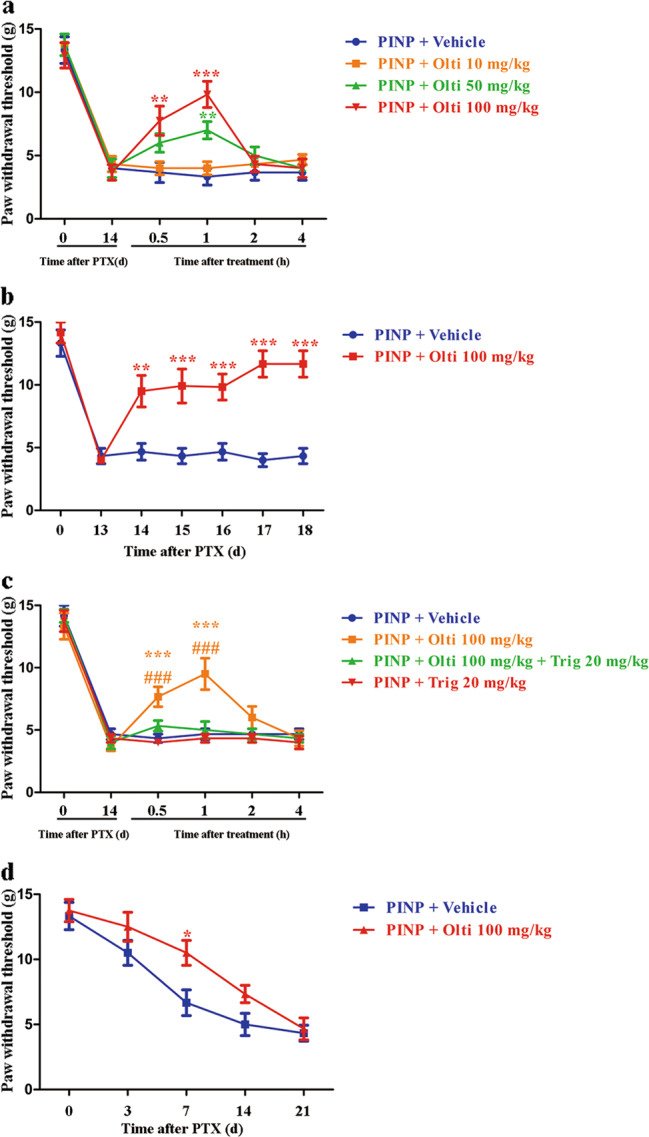
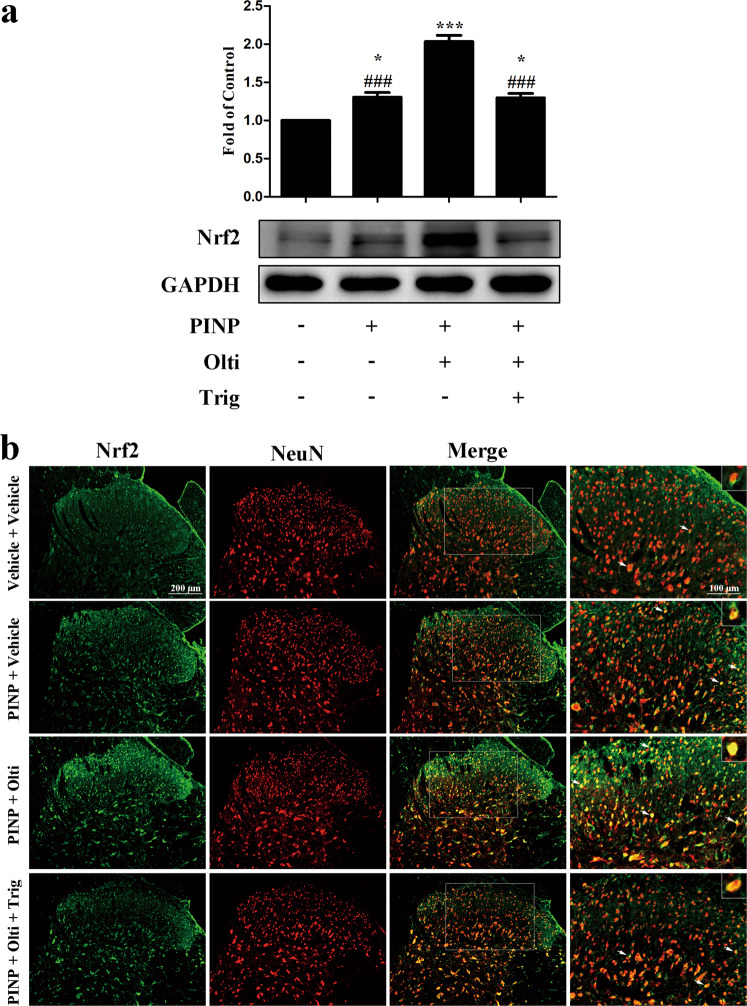
Paclitaxel-induced neuropathic pain (PINP) is refractory to currently used analgesics. Previous studies show a pivotal role of oxidative stress in PINP. Because the nuclear factor erythroid-2-related factor 2 (Nrf2) has been considered as the critical regulator of endogenous antioxidant defense, we here explored whether activation of Nrf2 could attenuate PINP. A rat model of PINP was established by intraperitoneal injection of paclitaxel (2 mg/kg) every other day with a final cumulative dose of 8 mg/kg. Hind paw withdrawal thresholds (PWTs) in response to von Frey filament stimuli were used to assess mechanical allodynia. We showed that a single dose of Nrf2 activator, oltipraz (10, 50, and 100 mg/kg), dose-dependently attenuated established mechanical allodynia, whereas repeated injection of oltipraz (100 mg· kg· d, i.p. from d 14 to d 18) almost abolished the mechanical allodynia in PINP rats. The antinociceptive effect of oltipraz was blocked by pre-injection of Nrf2 inhibitor trigonelline (20 mg/kg, i.p.). Early treatment with oltipraz (100 mg· kg· d, i.p. from d 0 to d 6) failed to prevent the development of the PINP, but delayed its onset. Western blot and immunofluorescence analysis revealed that the expression levels of Nrf2 and HO-1 were significantly upregulated in the spinal cord of PINP rats. Repeated injection of oltipraz caused further elevation of the expression levels of Nrf2 and HO-1 in the spinal cord of PINP rats, which was reversed by pre-injection of trigonelline. These results demonstrate that oltipraz ameliorates PINP via activating Nrf2/HO-1-signaling pathway in the spinal cord.
紫杉醇诱导的神经病理性疼痛(PINP)对目前使用的镇痛药有抗药性。先前的研究表明氧化应激在 PINP 中起关键作用。由于核因子红细胞 2 相关因子 2(Nrf2)已被认为是内源性抗氧化防御的关键调节剂,我们在此探讨了激活 Nrf2 是否可以减轻 PINP。通过腹腔注射紫杉醇(2mg/kg)每隔一天一次,共 8 次,建立 PINP 大鼠模型,最后累积剂量为 8mg/kg。用 von Frey 细丝刺激评估机械性痛觉过敏。我们表明,单次给予 Nrf2 激活剂奥替普拉(10、50 和 100mg/kg)剂量依赖性地减轻了已建立的机械性痛觉过敏,而反复注射奥替普拉(100mg·kg·d,腹腔注射从第 14 天到第 18 天)几乎消除了 PINP 大鼠的机械性痛觉过敏。奥替普拉的镇痛作用被 Nrf2 抑制剂三羟吡啶(20mg/kg,腹腔注射)预先注射所阻断。早期给予奥替普拉(100mg·kg·d,腹腔注射从第 0 天到第 6 天)不能预防 PINP 的发展,但延迟了其发病。Western blot 和免疫荧光分析显示,Nrf2 和 HO-1 的表达水平在 PINP 大鼠脊髓中显著上调。反复注射奥替普拉导致 PINP 大鼠脊髓中 Nrf2 和 HO-1 的表达水平进一步升高,而三羟吡啶预先注射则逆转了这一现象。这些结果表明,奥替普拉通过激活 Nrf2/HO-1 信号通路改善 PINP。