Stichting Epilepsie Instellingen Nederland - SEIN, Achterweg 5, 2103 SW Heemstede, Dokter Denekampweg 20, 8025 BV, Zwolle, The Netherlands.
NIHR University College London Hospitals Biomedical Research Centre, UCL Queen Square Institute of Neurology, Queen Square, London, WC1N 3BG, UK.
Ann Clin Transl Neurol. 2020 Apr;7(4):462-473. doi: 10.1002/acn3.51017. Epub 2020 Mar 24.
We ascertained the prevalence of ictal arrhythmias to explain the high rate of sudden unexpected death in epilepsy (SUDEP) in Dravet syndrome (DS).
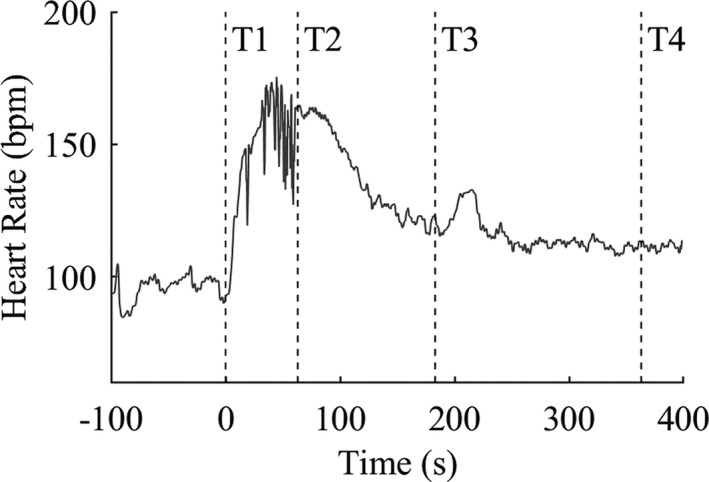
We selected cases with clinical DS, ≥6 years, SCN1A mutation, and ≥1 seizure/week. Home-based ECG recordings were performed for 20 days continuously. Cases were matched for age and sex to two epilepsy controls with no DS and ≥1 major motor seizure during video-EEG. We determined the prevalence of peri-ictal asystole, bradycardia, QTc changes, and effects of convulsive seizures (CS) on heart rate, heart rate variability (HRV), and PR/QRS. Generalized estimating equations were used to account for multiple seizures within subjects, seizure type, and sleep/wakefulness.
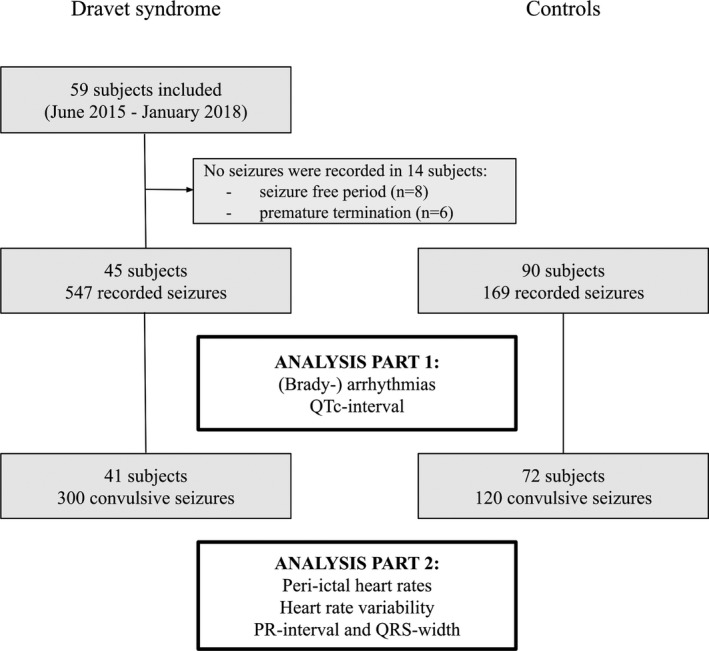
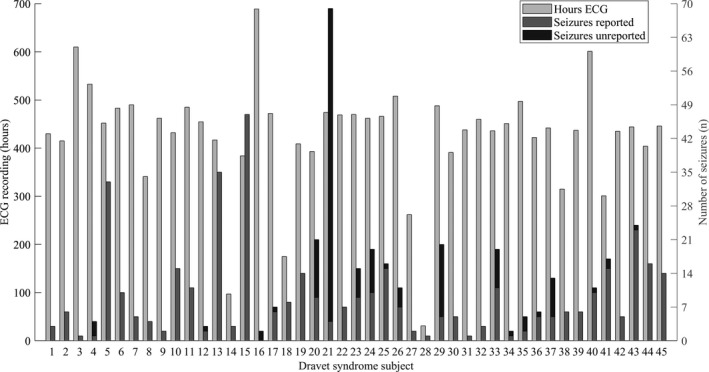
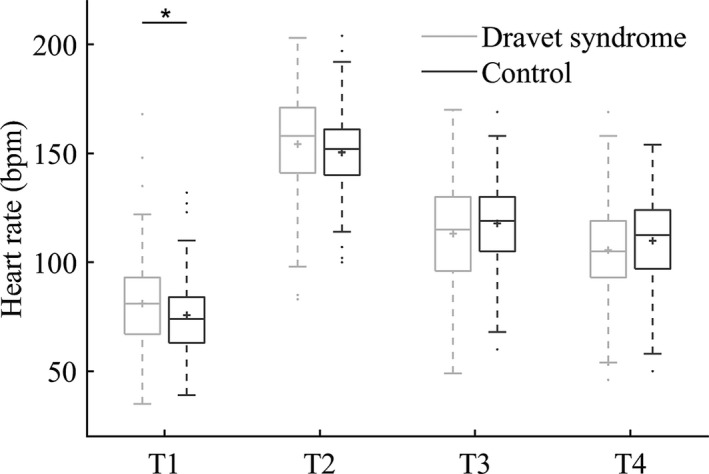
We included 59 cases. Ictal recordings were obtained in 45 cases and compared to 90 controls. We analyzed 547 seizures in DS (300 CS) and 169 in controls (120 CS). No asystole occurred. Postictal bradycardia was more common in controls (n = 11, 6.5%) than cases (n = 4, 0.7%; P = 0.002). Peri-ictal QTc-lengthening (≥60ms) occurred more frequently in DS (n = 64, 12%) than controls (n = 8, 4.7%, P = 0.048); pathologically prolonged QTc was rare (once in each group). In DS, interictal HRV was lower compared to controls (RMSSD P = 0.029); peri-ictal values did not differ between the groups. Prolonged QRS/PR was rare and more common in controls (QRS: one vs. none; PR: three vs. one).
We did not identify major arrhythmias in DS which can directly explain high SUDEP rates. Peri-ictal QTc-lengthening was, however, more common in DS. This may reflect unstable repolarization and an increased propensity for arrhythmias.
我们确定了癫痫发作期心律失常的患病率,以解释德拉维特综合征(DS)中癫痫猝死(SUDEP)的高发生率。
我们选择了具有临床 DS、≥6 岁、SCN1A 突变和≥1 次/周发作的病例。连续进行 20 天的家庭心电图记录。根据年龄和性别与两名无 DS 的癫痫对照匹配,这些对照在视频脑电图期间有≥1 次主要运动性发作。我们确定了发作期停搏、心动过缓、QTc 改变以及癫痫发作(CS)对心率、心率变异性(HRV)和 PR/QRS 的影响的患病率。使用广义估计方程来解释受试者内的多次发作、发作类型和睡眠/觉醒状态。
我们纳入了 59 例病例。在 45 例病例中获得了发作期记录,并与 90 例对照进行了比较。我们分析了 DS 中的 547 次发作(300 次 CS)和对照组中的 169 次发作(120 次 CS)。没有出现停搏。发作后心动过缓在对照组中更为常见(n=11,6.5%),而病例组中更为少见(n=4,0.7%;P=0.002)。DS 中发作期 QTc 延长(≥60ms)的发生率高于对照组(n=64,12%)(n=8,4.7%,P=0.048);病理性 QTc 延长很少见(每组各一例)。与对照组相比,DS 患者的间期 HRV 较低(RMSSD,P=0.029);两组间的发作期值无差异。延长的 QRS/PR 很少见,但在对照组中更为常见(QRS:一例 vs. 无;PR:三例 vs. 一例)。
我们没有发现 DS 中有可直接解释高 SUDEP 发生率的主要心律失常。然而,DS 中更常见发作期 QTc 延长。这可能反映了不稳定的复极和心律失常的倾向增加。