Max Planck Institute for Terrestrial Microbiology, Marburg, Germany.
LOEWE Center for Synthetic Microbiology (SYNMIKRO), Marburg, Germany.
mBio. 2020 Mar 24;11(2):e02269-19. doi: 10.1128/mBio.02269-19.
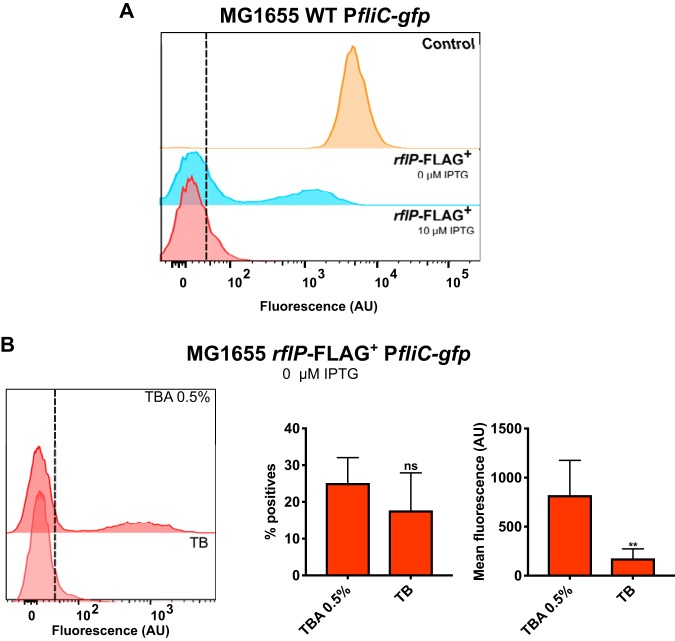
Bacterial flagellar motility plays an important role in many processes that occur at surfaces or in hydrogels, including adhesion, biofilm formation, and bacterium-host interactions. Consequently, expression of flagellar genes, as well as genes involved in biofilm formation and virulence, can be regulated by the surface contact. In a few bacterial species, flagella themselves are known to serve as mechanosensors, where an increased load on flagella experienced during surface contact or swimming in viscous media controls gene expression. In this study, we show that gene regulation by motility-dependent mechanosensing is common among pathogenic strains. This regulatory mechanism requires flagellar rotation, and it enables pathogenic to repress flagellar genes at low loads in liquid culture, while activating motility in porous medium (soft agar) or upon surface contact. It also controls several other cellular functions, including metabolism and signaling. The mechanosensing response in pathogenic depends on the negative regulator of motility, RflP (YdiV), which inhibits basal expression of flagellar genes in liquid. While no conditional inhibition of flagellar gene expression in liquid and therefore no upregulation in porous medium was observed in the wild-type commensal or laboratory strains of , mechanosensitive regulation could be recovered by overexpression of RflP in the laboratory strain. We hypothesize that this conditional activation of flagellar genes in pathogenic reflects adaptation to the dual role played by flagella and motility during infection. Flagella and motility are widespread virulence factors among pathogenic bacteria. Motility enhances the initial host colonization, but the flagellum is a major antigen targeted by the host immune system. Here, we demonstrate that pathogenic strains employ a mechanosensory function of the flagellar motor to activate flagellar expression under high loads, while repressing it in liquid culture. We hypothesize that this mechanism allows pathogenic to regulate its motility dependent on the stage of infection, activating flagellar expression upon initial contact with the host epithelium, when motility is beneficial, but reducing it within the host to delay the immune response.
细菌鞭毛的运动在许多发生在表面或水凝胶中的过程中起着重要作用,包括黏附、生物膜形成和细菌-宿主相互作用。因此,鞭毛基因的表达以及生物膜形成和毒力相关基因的表达可以受到表面接触的调节。在少数细菌物种中,鞭毛本身被认为是机械感受器,在表面接触或在粘性介质中游泳时,鞭毛上的负载增加会控制基因表达。在这项研究中,我们表明,依赖于运动的机械感受的基因调节在致病性菌株中很常见。这种调节机制需要鞭毛的旋转,它使致病性在液体培养中在低负载下抑制鞭毛基因的表达,而在多孔介质(软琼脂)或表面接触时激活运动。它还控制其他几种细胞功能,包括代谢和信号转导。致病性的机械感受反应依赖于运动的负调节因子 RflP(YdiV),它抑制液体中鞭毛基因的基础表达。虽然在野生型共生体或实验室菌株中没有观察到液体中鞭毛基因表达的条件抑制,因此在多孔介质中没有上调,但在实验室菌株中过表达 RflP 可以恢复机械敏感调节。我们假设这种在致病性中的条件激活鞭毛基因反映了鞭毛和运动在感染过程中的双重作用的适应。鞭毛和运动是致病性细菌中广泛存在的毒力因子。运动增强了宿主的初始定植,但鞭毛是宿主免疫系统靶向的主要抗原。在这里,我们证明致病性菌株利用鞭毛马达的机械感受器功能在高负载下激活鞭毛表达,而在液体培养中抑制鞭毛表达。我们假设,这种机制使致病性能够根据感染阶段调节其运动依赖性,在与宿主上皮接触时激活鞭毛表达,此时运动是有益的,但在宿主内减少运动以延迟免疫反应。