Barbara and Donald Zucker School of Medicine at Hofstra/Northwell, Feinstein Institutes for Medical Research, Manhasset, NY, United States.
Department of Otolaryngology, Long Island Jewish Medical Center, Barbara and Donald Zucker School of Medicine at Hofstra/Northwell, New Hyde Park, NY, United States.
Front Immunol. 2020 Mar 10;11:336. doi: 10.3389/fimmu.2020.00336. eCollection 2020.
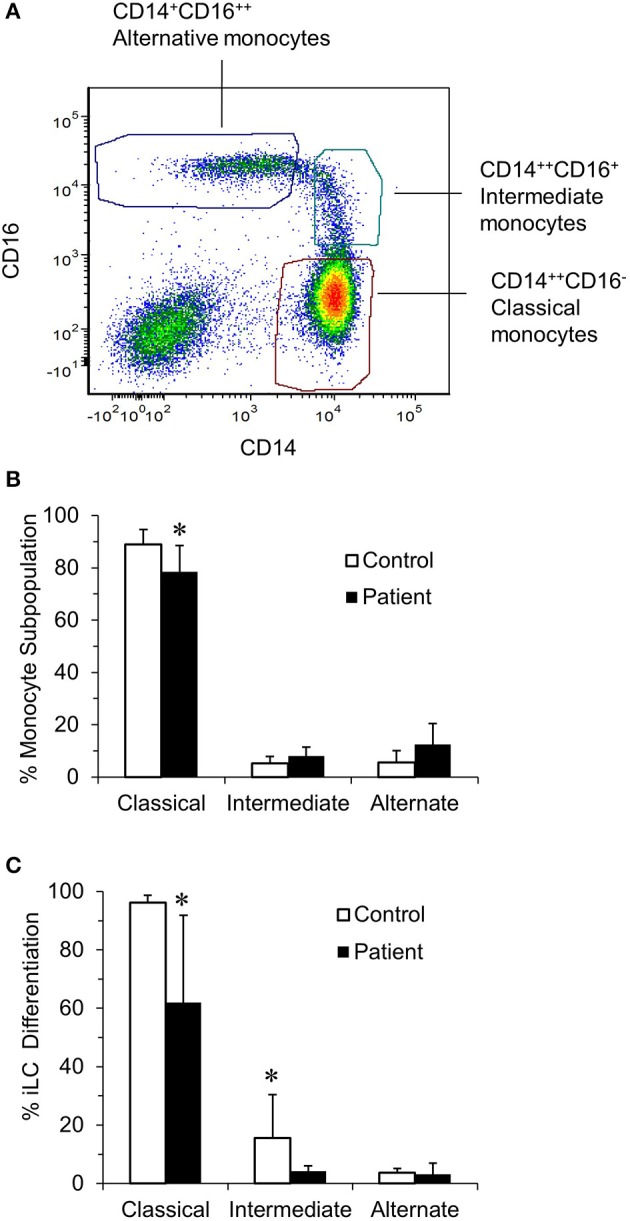
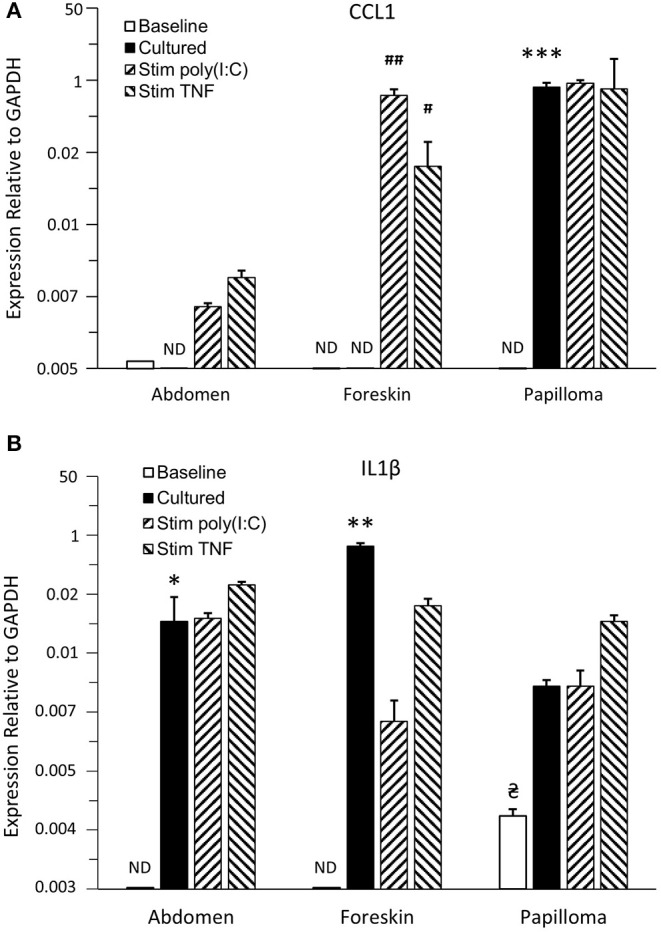
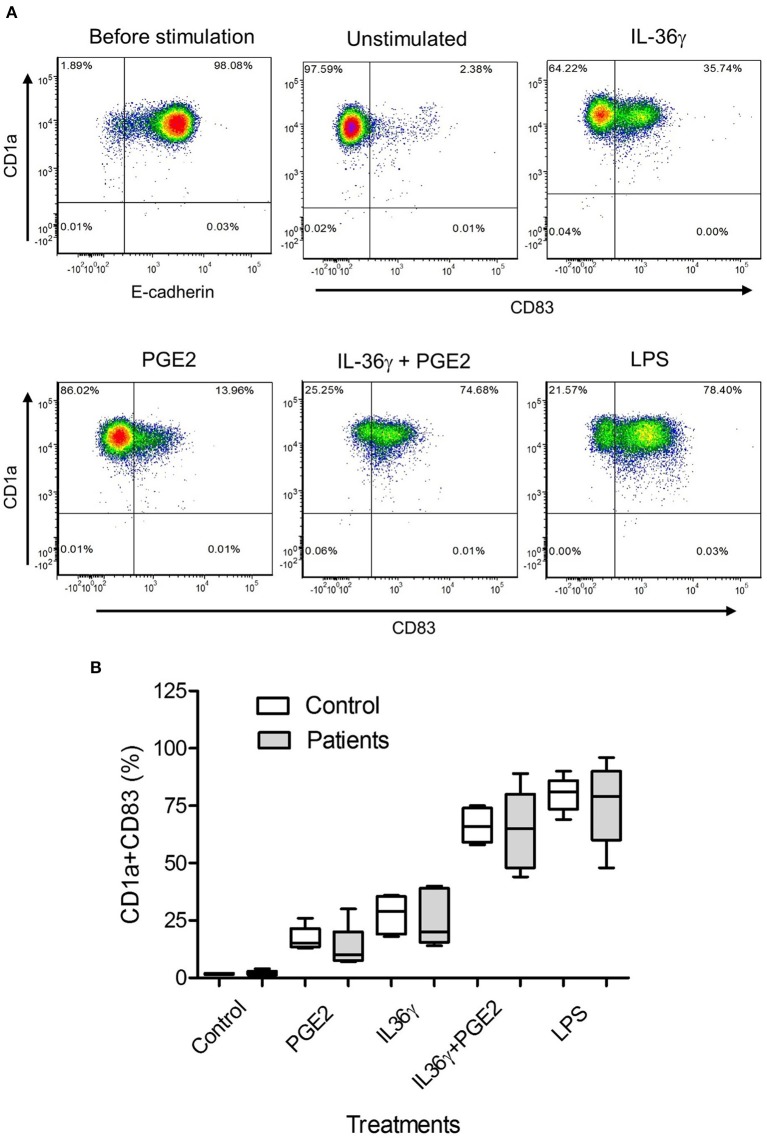
The micromilieu within respiratory papillomas supports persistent human papillomavirus (HPV) infection and disease recurrence in patients with recurrent respiratory papillomatosis (RRP). These patients show polarized (T2-/Treg) adaptive immunity in papillomas and blood, enriched immature Langerhans cell (iLC) numbers, and overexpression of cyclooxygenase-2/prostaglandin E (PGE) in the upper airway. Blood monocyte-derived, and tissue-derived iLCs from RRP patients and controls were now studied to more fully understand innate immune dysregulation in RRP. Patients' monocytes generated fewer iLCs than controls, due to a reduced fraction of classical monocytes that generated most but not all the iLCs. Prostaglandin E, which was elevated in RRP plasma, reduced monocyte-iLC differentiation from controls to the levels of RRP patients, but had no effect on subsequent iLC maturation. Cytokine/chemokine responses by iLCs from papillomas, foreskin, and abdominal skin differed significantly. Freshly derived tissue iLCs expressed low and high mRNAs and were unresponsive to IL-36γ stimulation. Papilloma iLCs uniquely expressed IL-36γ at baseline and expressed when cultured overnight outside their immunosuppressive microenvironment without additional stimulation. We conclude that monocyte/iLC innate immunity is impaired in RRP, in part due to increased PGE exposure . The immunosuppressive papilloma microenvironment likely alters iLC responses, and vice versa, supporting T2-like/Treg HPV-specific adaptive immunity in RRP.
呼吸道乳头瘤内的微环境支持复发性呼吸道乳头瘤病(RRP)患者中持续性人乳头瘤病毒(HPV)感染和疾病复发。这些患者在乳头瘤和血液中表现出极化的(T2-/Treg)适应性免疫,富含不成熟朗格汉斯细胞(iLC)数量,以及上呼吸道中环氧化酶-2/前列腺素 E(PGE)的过度表达。现在研究了 RRP 患者和对照者的血液单核细胞衍生和组织衍生的 iLC,以更全面地了解 RRP 中的固有免疫失调。由于经典单核细胞生成大多数但不是全部 iLC 的比例降低,因此患者的单核细胞生成的 iLC 比对照者少。RRP 血浆中升高的前列腺素 E 降低了对照者单核细胞-iLC 的分化,使其达到 RRP 患者的水平,但对随后的 iLC 成熟没有影响。来自乳头瘤、包皮和腹部皮肤的 iLC 的细胞因子/趋化因子反应有显著差异。新衍生的组织 iLC 表达低和高 mRNA,对 IL-36γ刺激无反应。在没有额外刺激的情况下,在其免疫抑制微环境之外培养过夜时,乳头瘤 iLC 独特地在基线时表达 IL-36γ,并表达 。我们得出结论,RRP 中的单核细胞/iLC 固有免疫受损,部分原因是 PGE 暴露增加。免疫抑制性乳头瘤微环境可能改变 iLC 反应,反之亦然,从而支持 RRP 中 T2 样/Treg HPV 特异性适应性免疫。