Psychiatric Laboratory and Mental Health Center, West China Hospital of Sichuan University, Chengdu, Sichuan 610041, China.
Huaxi Brain Research Center, West China Hospital of Sichuan University, Chengdu, Sichuan 610041, China.
Zool Res. 2020 May 18;41(3):258-272. doi: 10.24272/j.issn.2095-8137.2020.034.
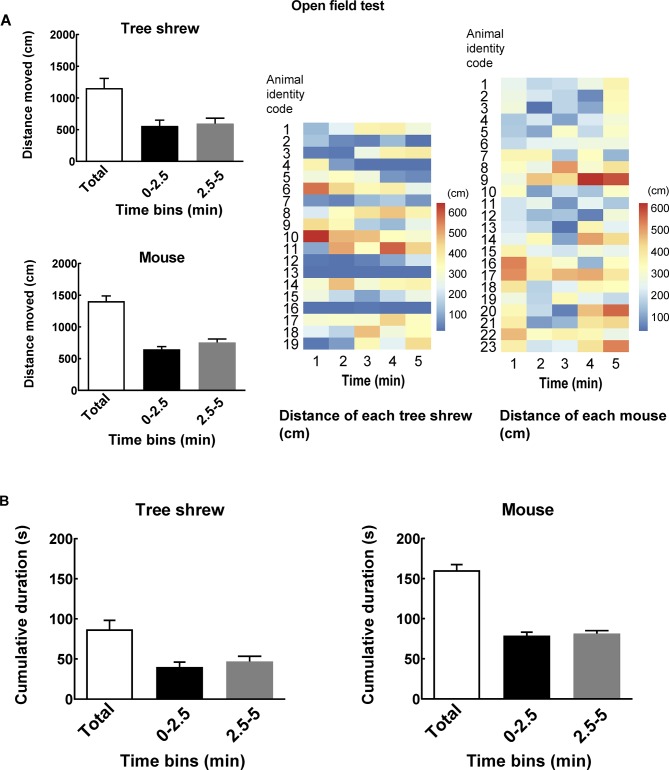
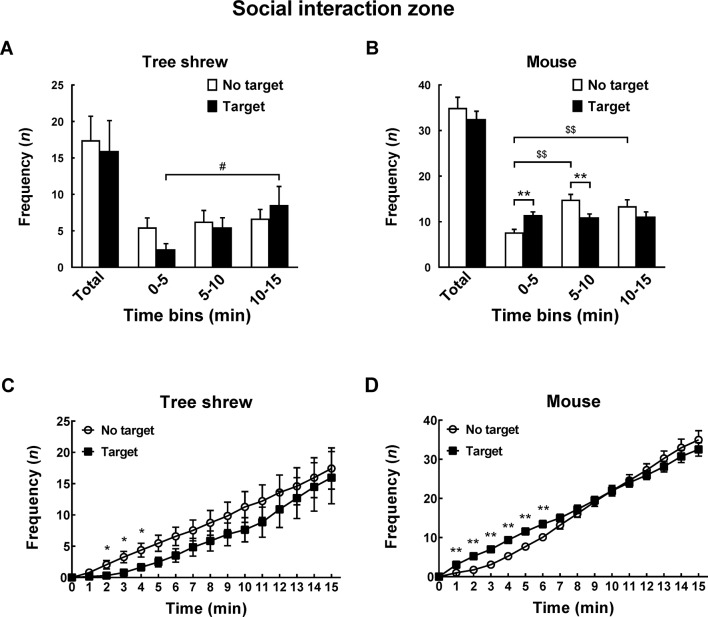
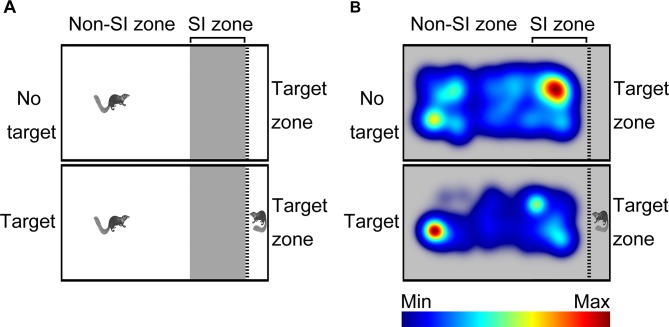
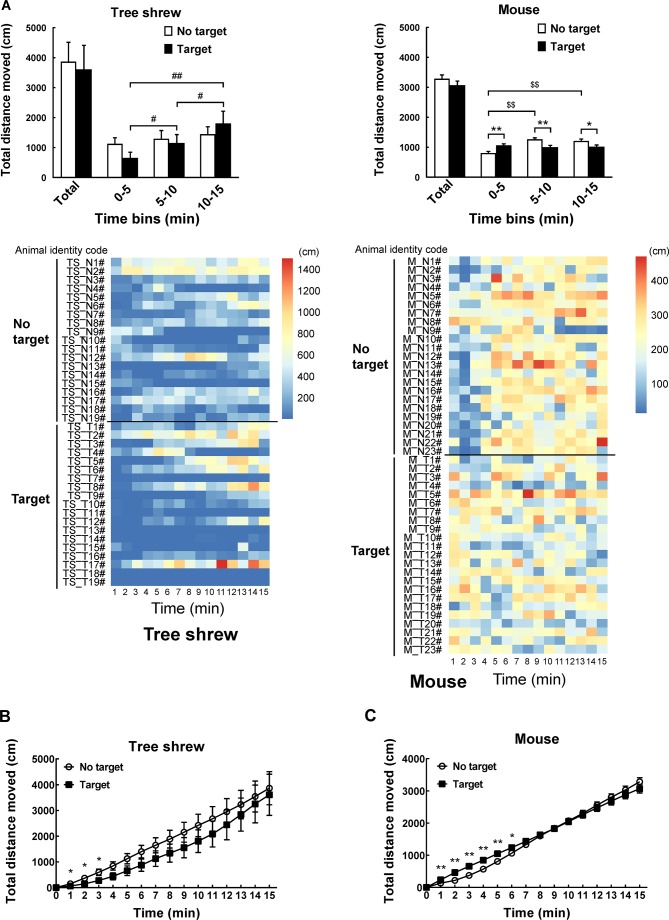
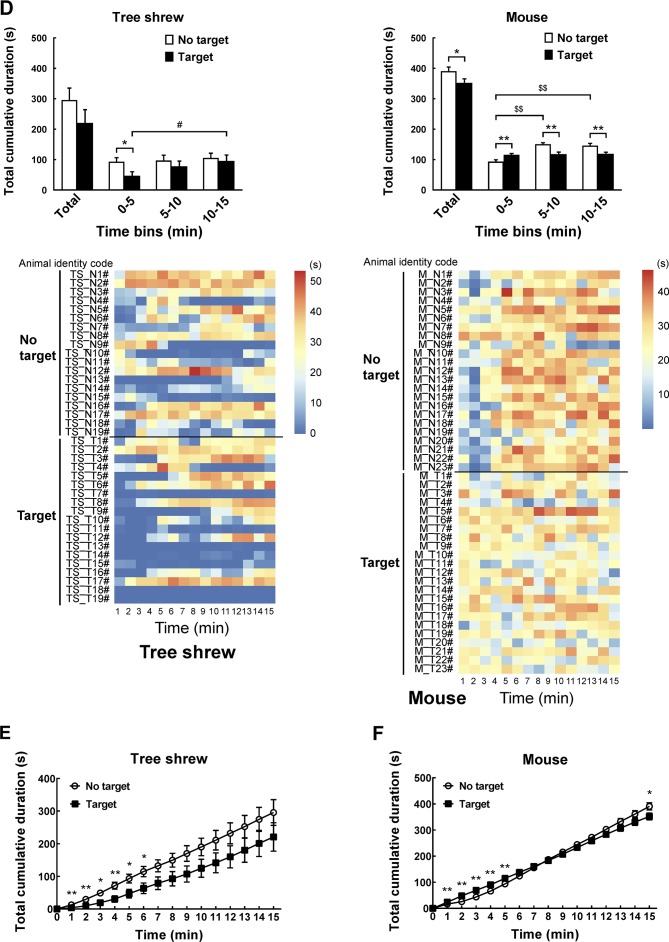
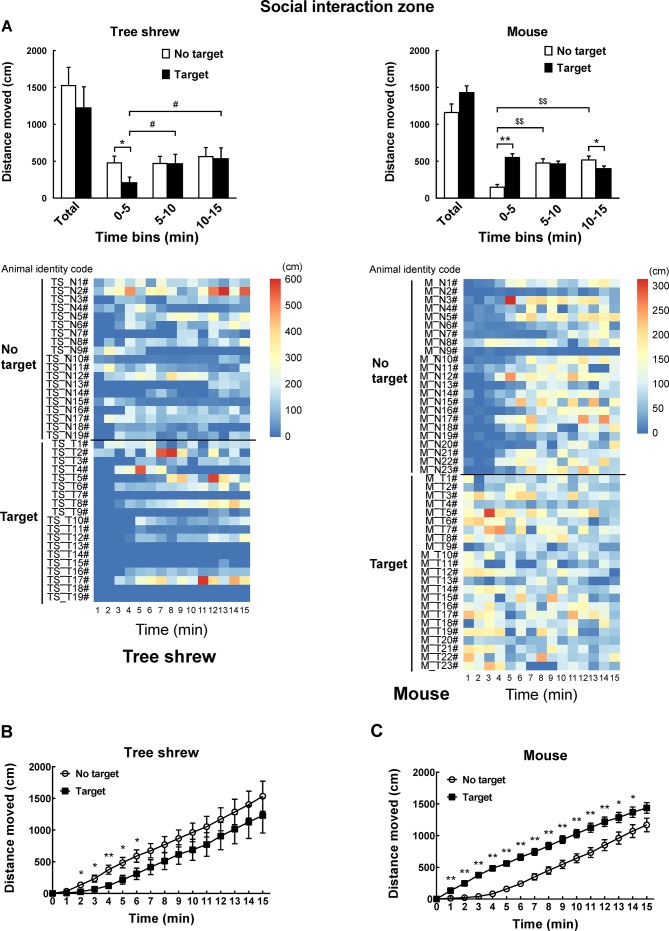
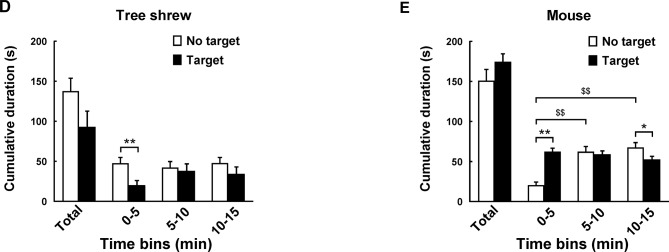
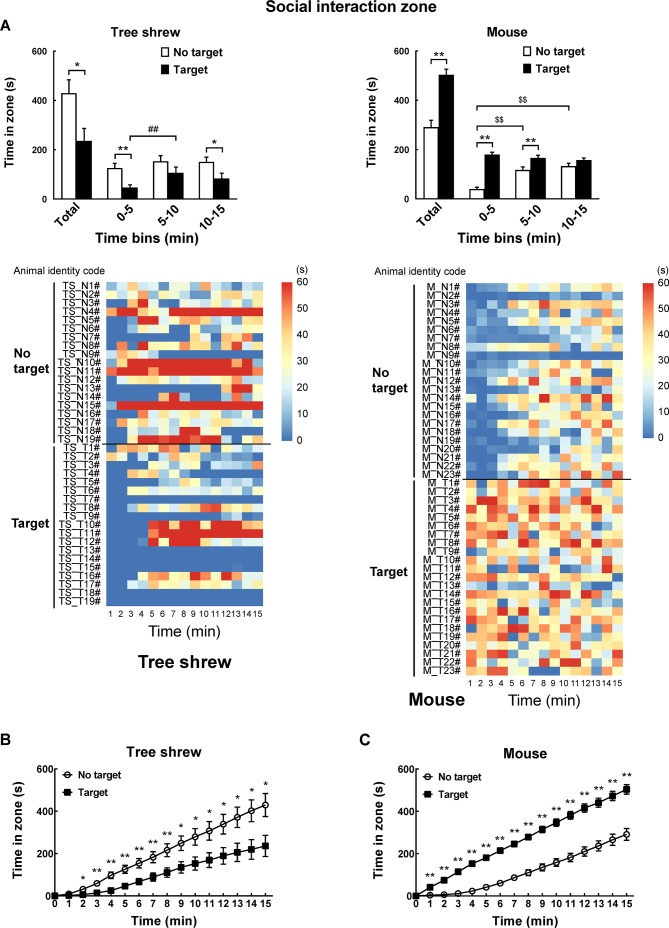
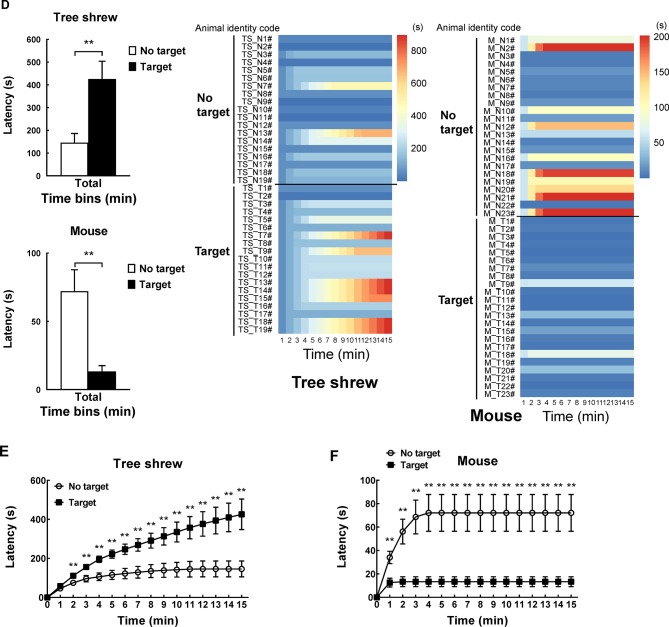
Adult male tree shrews vigorously defend against intruding male conspecifics. However, the characteristics of social behavior have not been entirely explored in these males. In this study, male wild-type tree shrews ( ) and C57BL/6J mice were first allowed to familiarize themselves with an open-field apparatus. The tree shrews exhibited a short duration of movement (moving) in the novel environment, whereas the mice exhibited a long duration of movement. In the 30 min social preference-avoidance test, target animals significantly decreased the time spent by the experimental tree shrews in the social interaction (SI) zone, whereas experimental male mice exhibited the opposite. In addition, experimental tree shrews displayed a significantly longer latency to enter the SI zone in the second 15 min session (target-present) than in the first 15 min session (target-absent), which was different from that found in mice. Distinct behavioral patterns in response to a conspecific male were also observed in male tree shrews and mice in the first, second, and third 5 min periods. Thus, social behaviors in tree shrews and mice appeared to be time dependent. In summary, our study provides results of a modified social preference-avoidance test designed for the assessment of social behavior in tree shrews. Our findings demonstrate the existence of social avoidance behavior in male tree shrews and prosocial behavior in male mice toward unfamiliar conspecifics. The tree shrew may be a new animal model, which differs from mice, for the study of social avoidance and prosocial behaviors.
成年雄性树鼩会积极抵御入侵的雄性同种个体。然而,这些雄性个体的社会行为特征尚未完全被探索。在这项研究中,首先让野生型雄性树鼩()和 C57BL/6J 小鼠熟悉旷场仪器。树鼩在新环境中的运动时间(移动)较短,而小鼠的运动时间较长。在 30 分钟的社交偏好回避测试中,目标动物显著减少了实验树鼩在社交互动(SI)区的时间,而实验雄性小鼠则表现出相反的情况。此外,实验树鼩在第二 15 分钟(目标存在)的社交互动区的潜伏期明显长于第一 15 分钟(目标不存在),这与小鼠不同。在第一、第二和第三 5 分钟的时间段内,雄性树鼩和小鼠对同种雄性的反应也表现出不同的行为模式。因此,树鼩和小鼠的社会行为似乎是时间依赖的。总之,我们的研究提供了一种改良的社交偏好回避测试的结果,该测试旨在评估树鼩的社会行为。我们的研究结果表明,雄性树鼩存在社会回避行为,而雄性小鼠对陌生同种个体表现出亲社会行为。树鼩可能是一种新的动物模型,与小鼠不同,可用于研究社会回避和亲社会行为。