Institute for Immunology and Infection Research, School of Biological Sciences, Charlotte Auerbach Road, University of Edinburgh, Edinburgh, United Kingdom.
Elife. 2020 Mar 26;9:e51620. doi: 10.7554/eLife.51620.
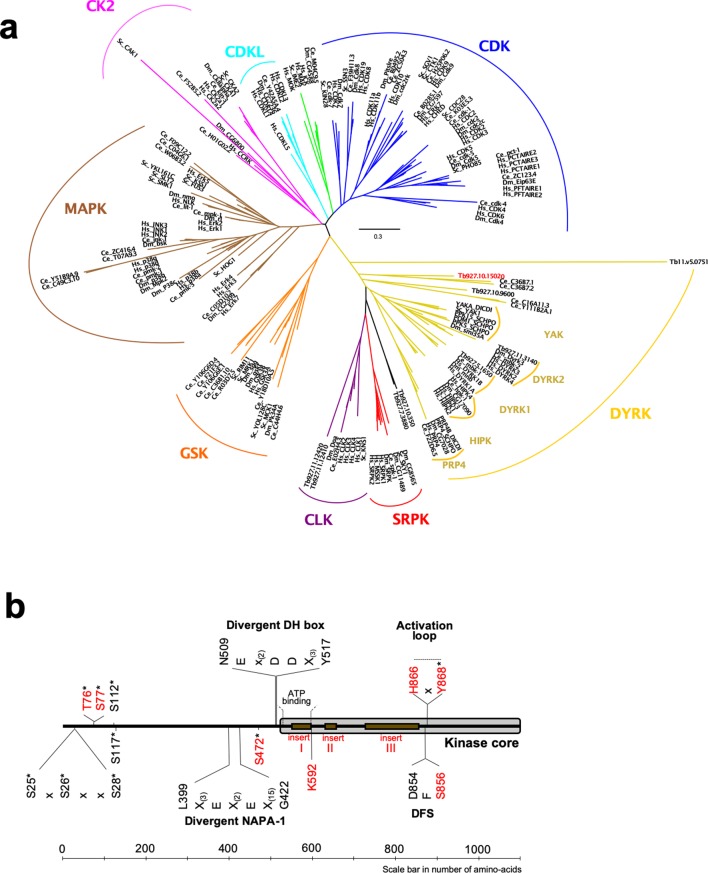
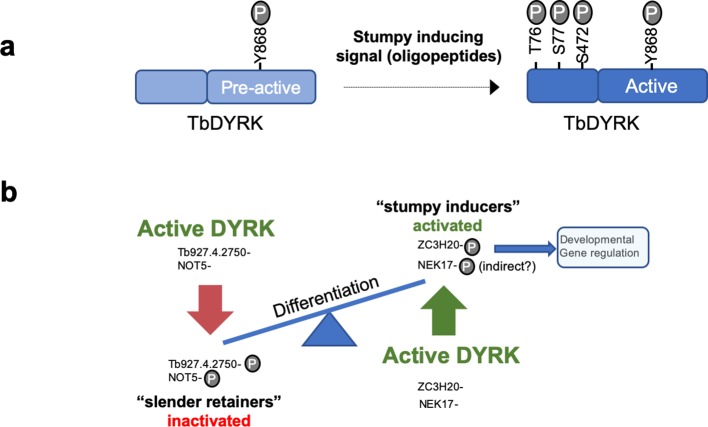
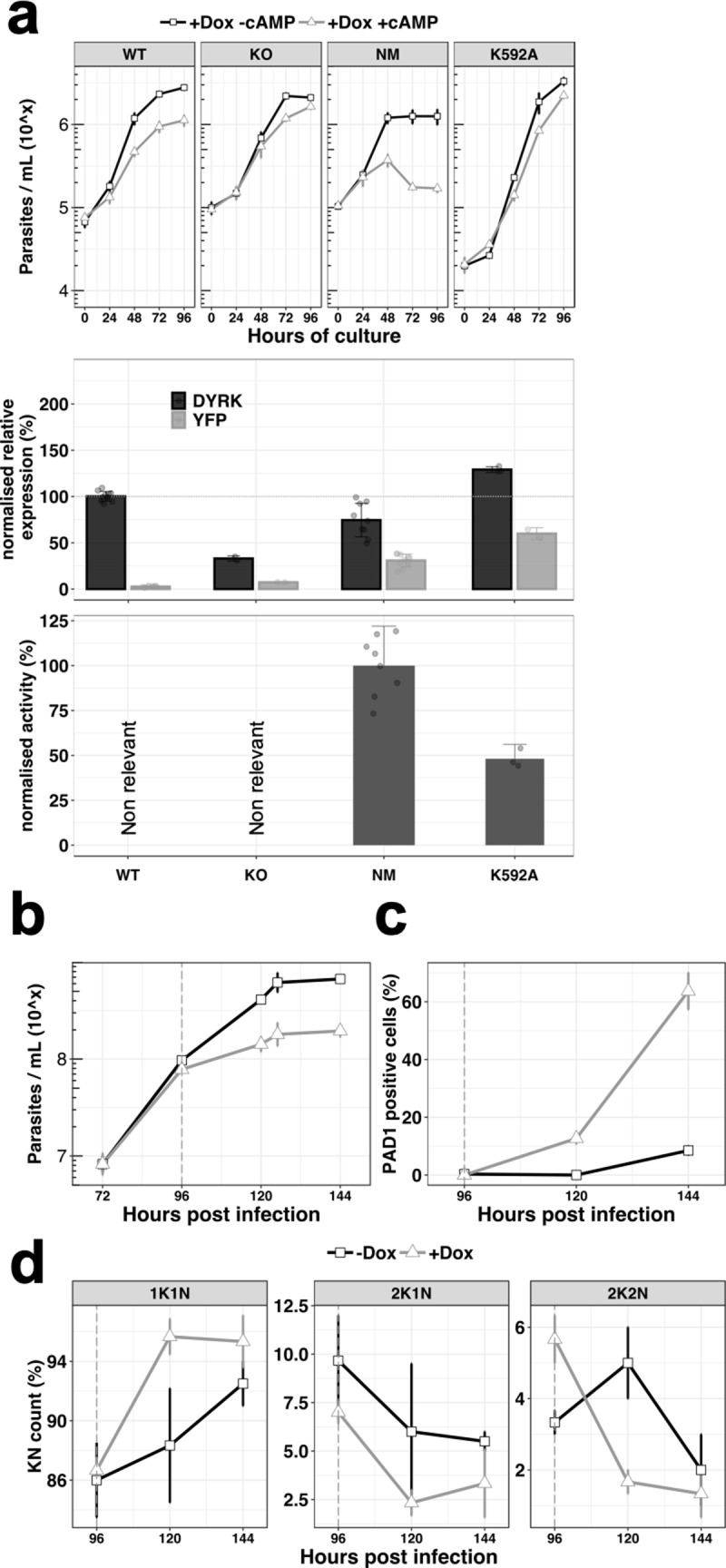
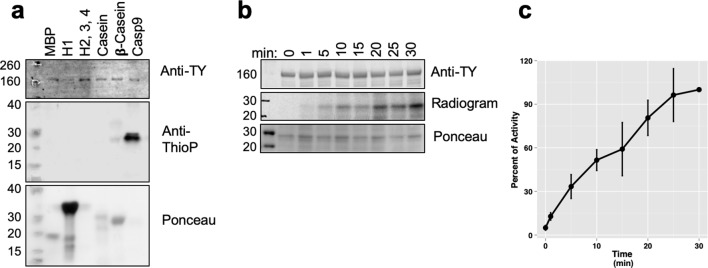
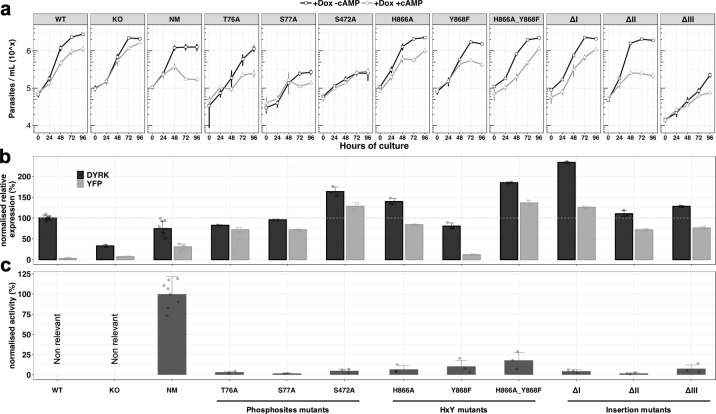
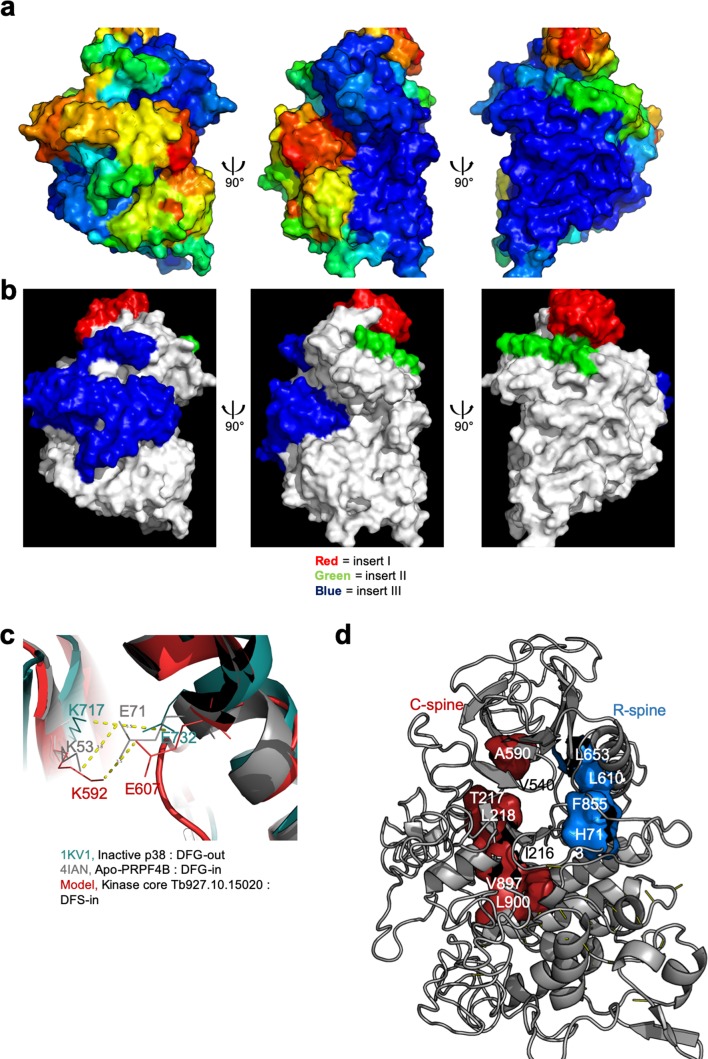
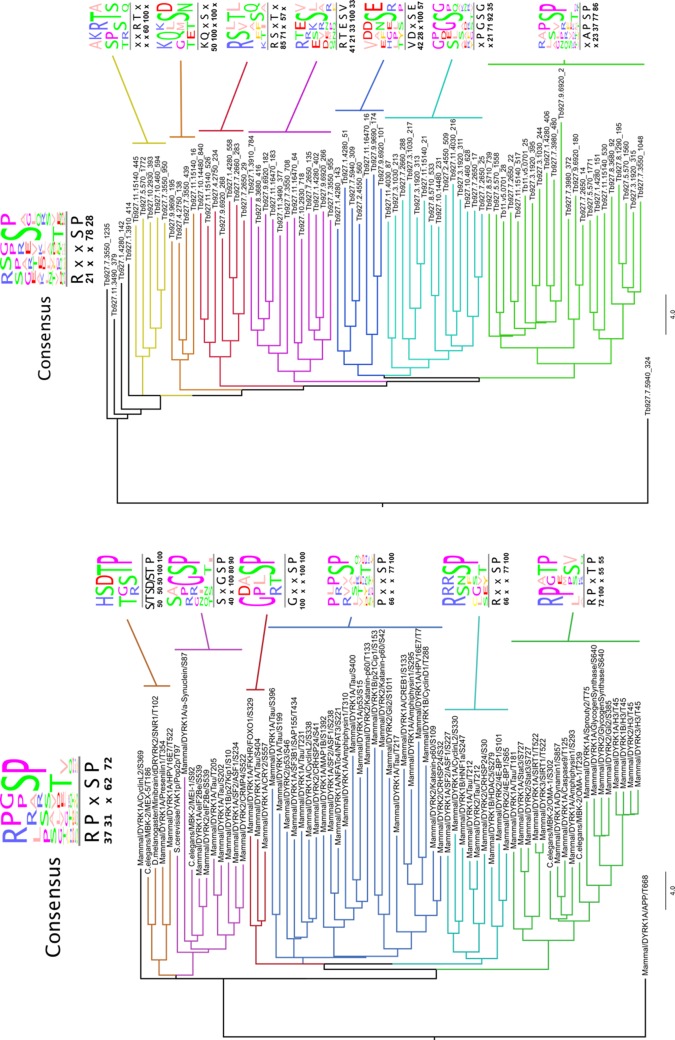
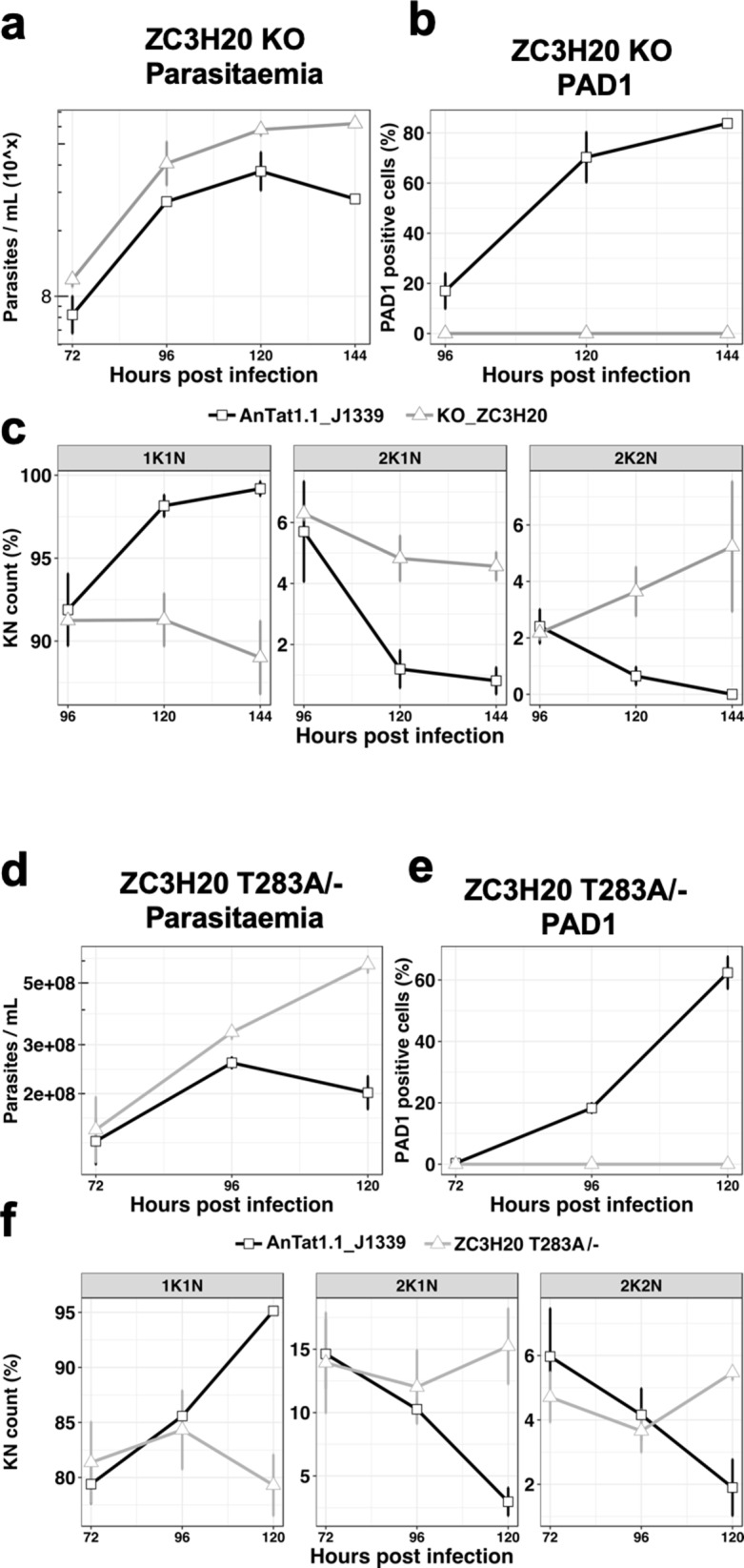
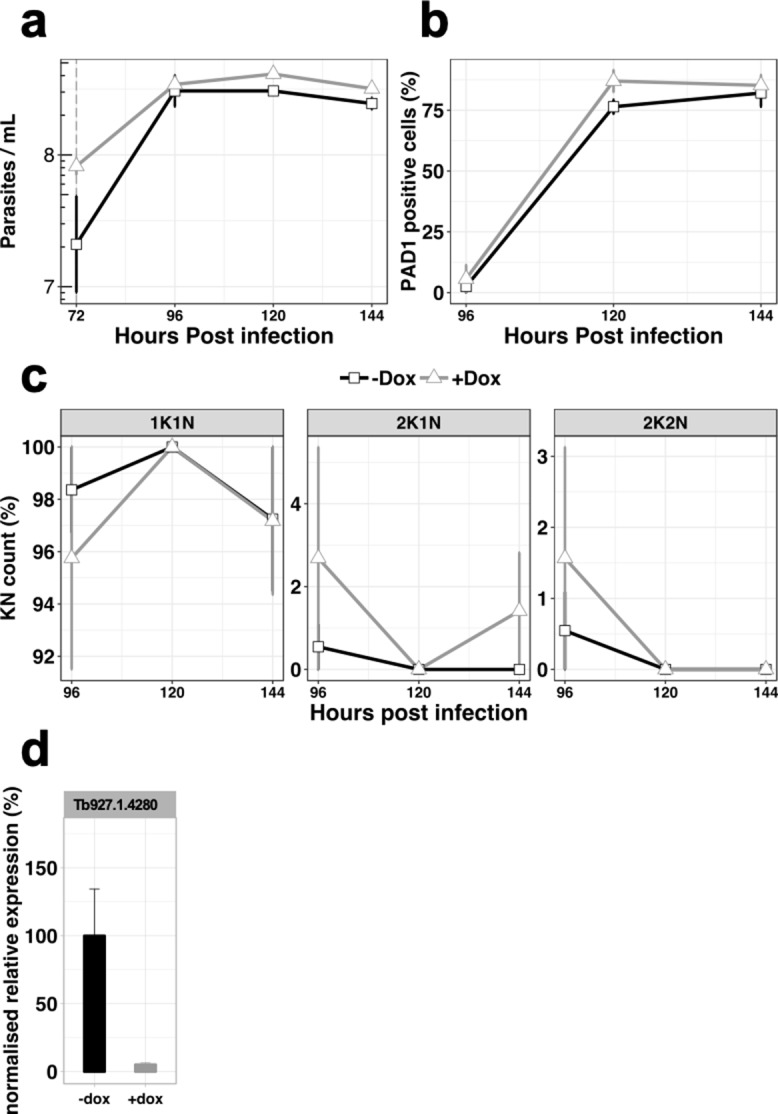
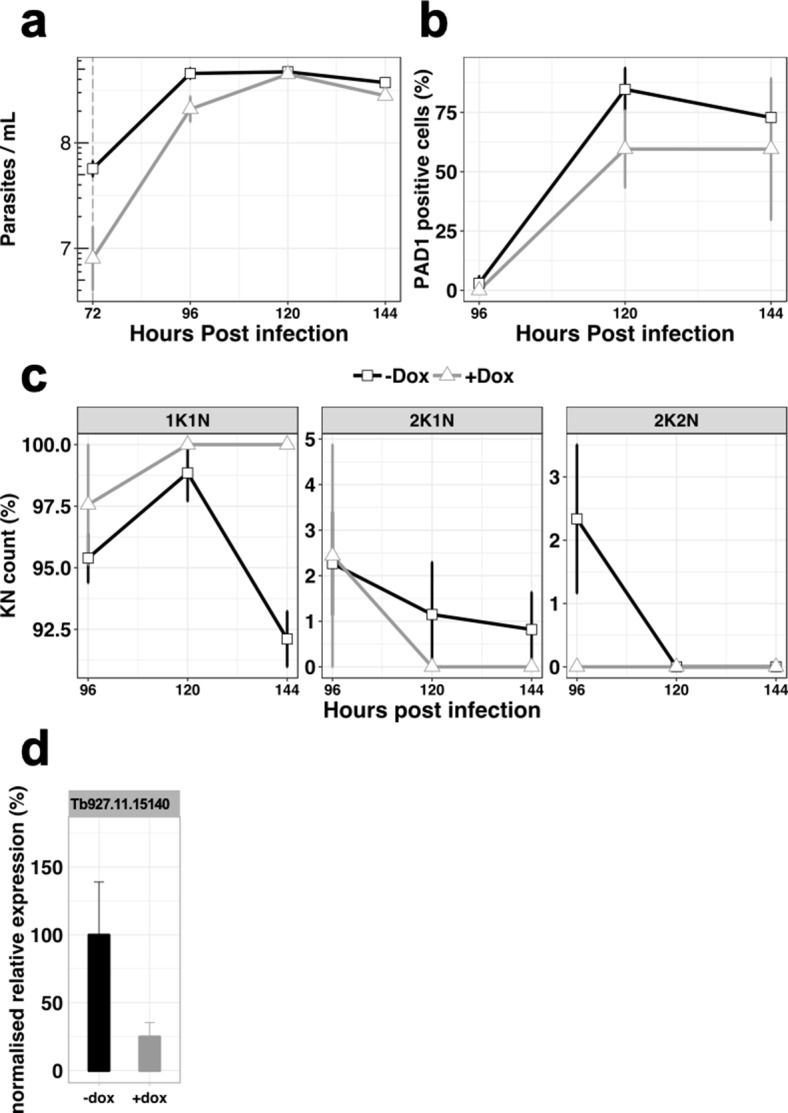
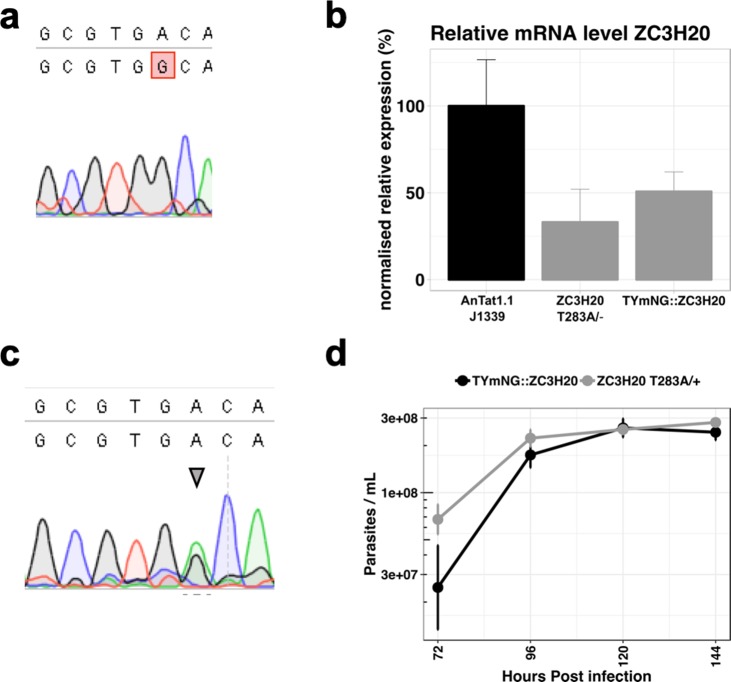
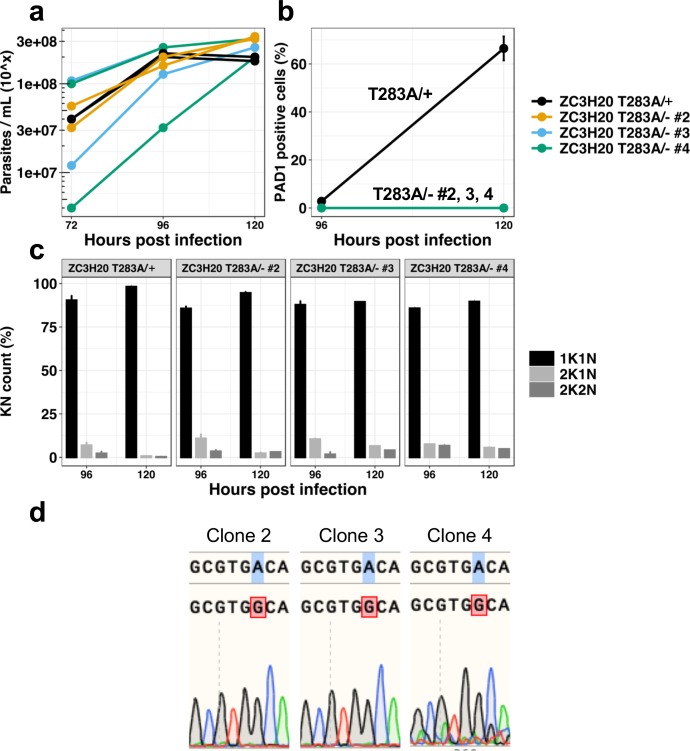
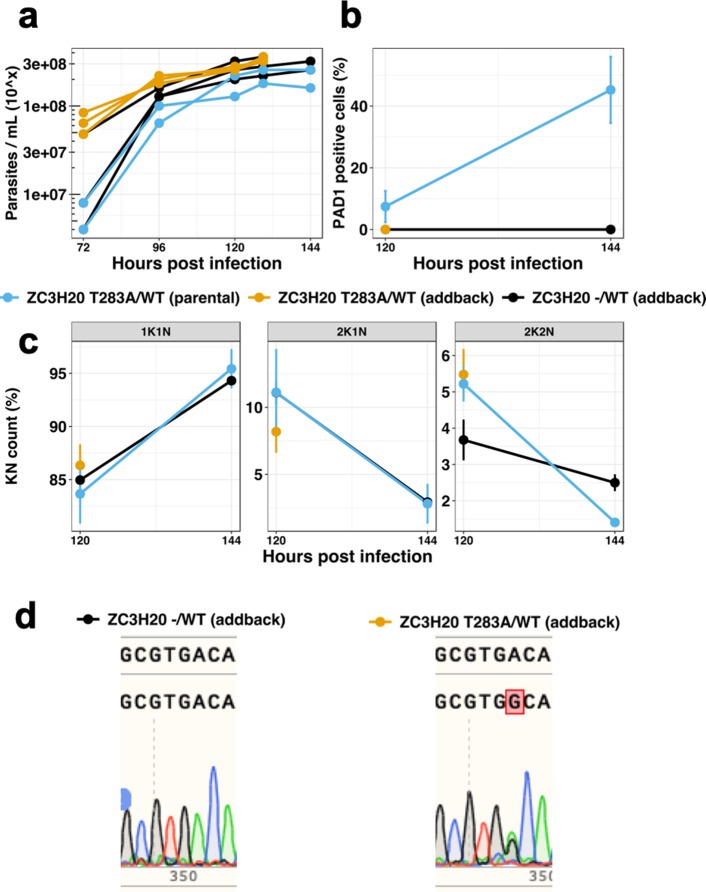
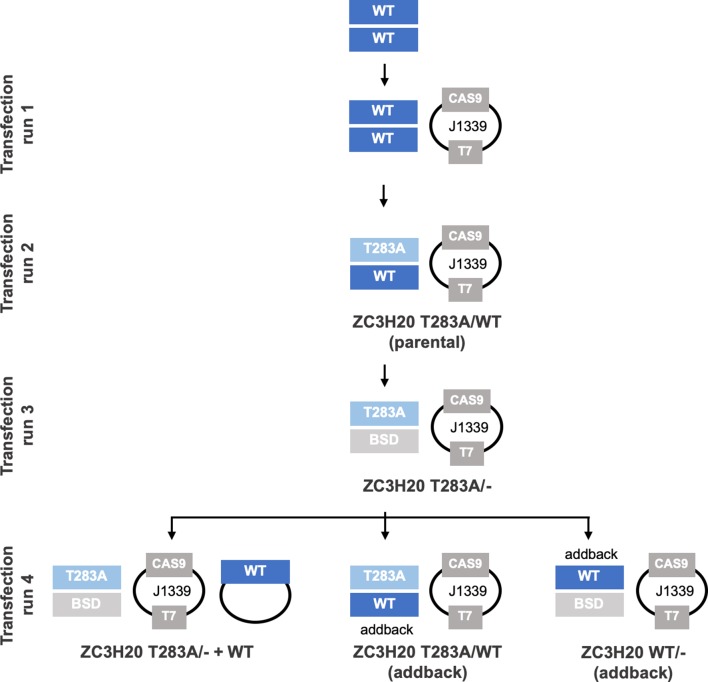
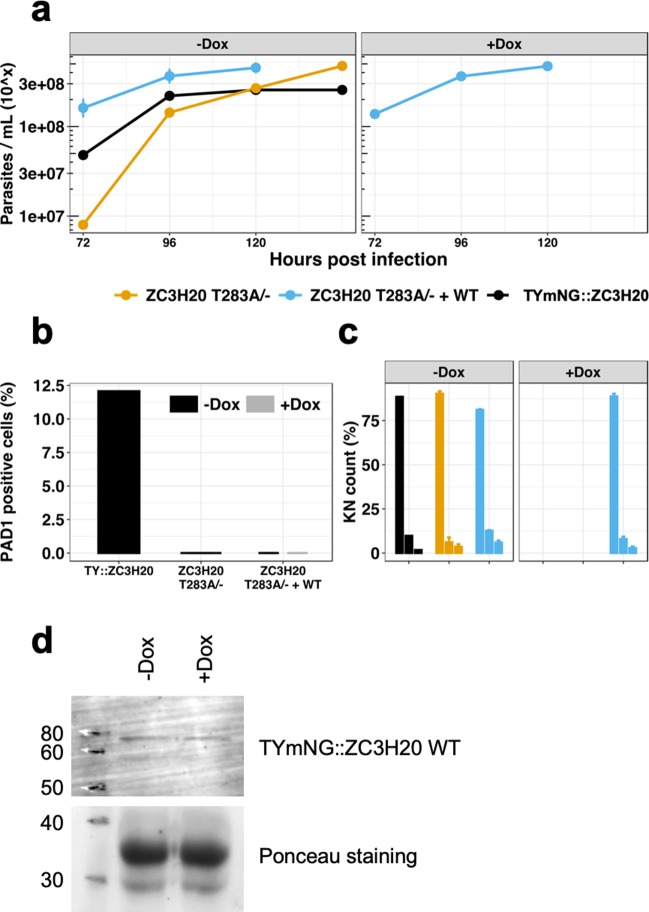
The sleeping sickness parasite, , uses quorum sensing (QS) to balance proliferation and transmission potential in the mammal bloodstream. A signal transduction cascade regulates this process, a component of which is a divergent member of the DYRK family of protein kinases, TbDYRK. Phylogenetic and mutational analysis in combination with activity and phenotypic assays revealed that TbDYRK exhibits a pre-activated conformation and an atypical HxY activation loop motif, unlike DYRK kinases in other eukaryotes. Phosphoproteomic comparison of TbDYRK null mutants with wild-type parasites identified molecules that operate on both the inhibitory 'slender retainer' and activatory 'stumpy inducer' arms of the QS control pathway. One of these molecules, the RNA-regulator TbZC3H20, regulates parasite QS, this being dependent on the integrity of its TbDYRK phosphorylation site. This analysis reveals fundamental differences to conventional DYRK family regulation and links trypanosome environmental sensing, signal transduction and developmental gene expression in a coherent pathway.
昏睡病寄生虫 利用群体感应 (QS) 在哺乳动物血液中平衡增殖和传播潜力。信号转导级联调节这一过程,其中一个组成部分是 DYRK 蛋白激酶家族的一个发散成员,即 TbDYRK。系统发育和突变分析结合活性和表型测定表明,与其他真核生物中的 DYRK 激酶不同,TbDYRK 表现出预激活构象和非典型的 HxY 激活环基序。与野生型寄生虫相比,TbDYRK 缺失突变体的磷酸化蛋白质组比较鉴定出了在 QS 控制途径的抑制性“细长保持器”和激活性“短粗诱导物”臂上起作用的分子。这些分子之一,RNA 调节剂 TbZC3H20,调节寄生虫的 QS,这取决于其 TbDYRK 磷酸化位点的完整性。这种分析揭示了与传统 DYRK 家族调节的根本差异,并将锥虫环境感应、信号转导和发育基因表达在一个连贯的途径中联系起来。