Gurgul Artur, Jasielczuk Igor, Semik-Gurgul Ewelina, Pawlina-Tyszko Klaudia, Szmatoła Tomasz, Polak Grażyna, Bugno-Poniewierska Monika
Center for Experimental and Innovative Medicine, University of Agriculture in Kraków, Rędzina 1c, 30-248 Kraków, Poland.
Department of Animal Molecular Biology, National Research Institute of Animal Production, Krakowska 1, 32-083 Balice, Poland.
Animals (Basel). 2020 Mar 24;10(3):542. doi: 10.3390/ani10030542.
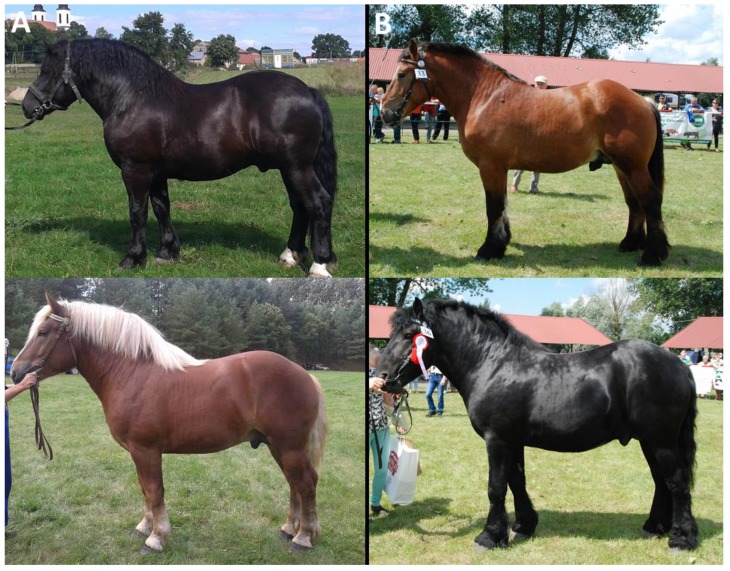
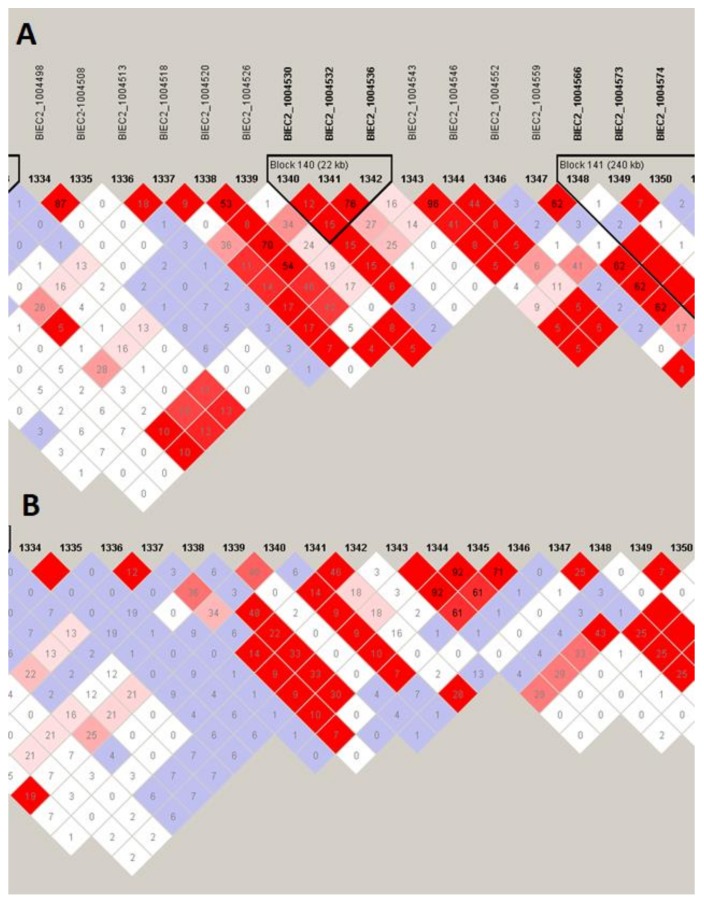
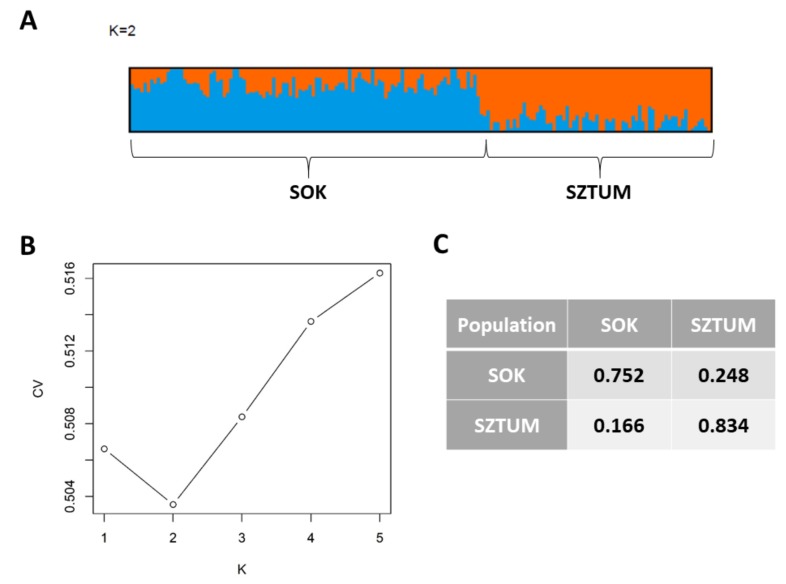
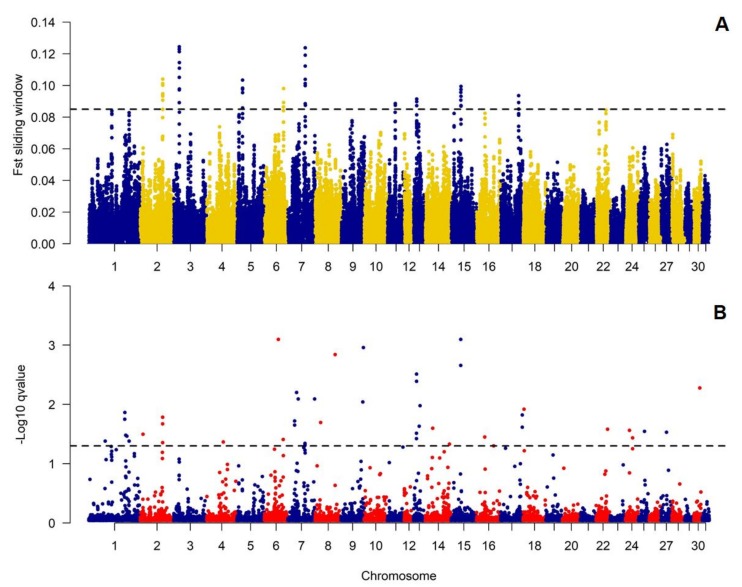
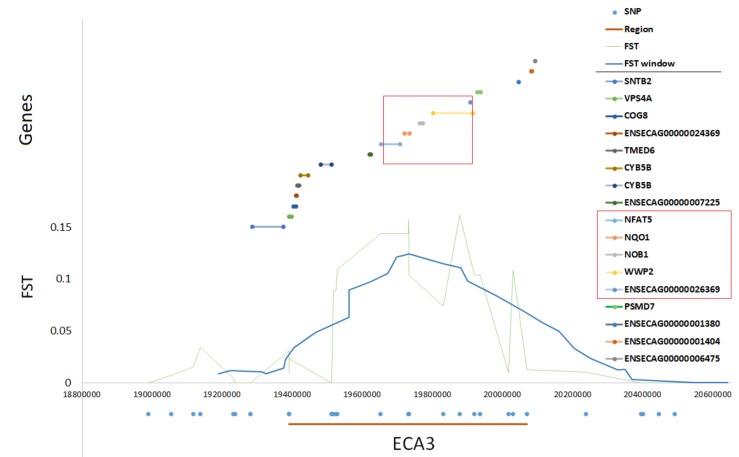
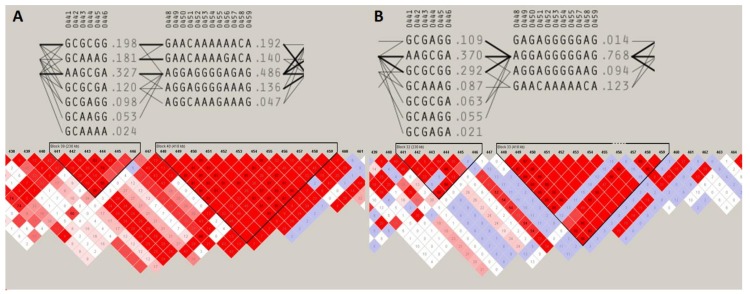
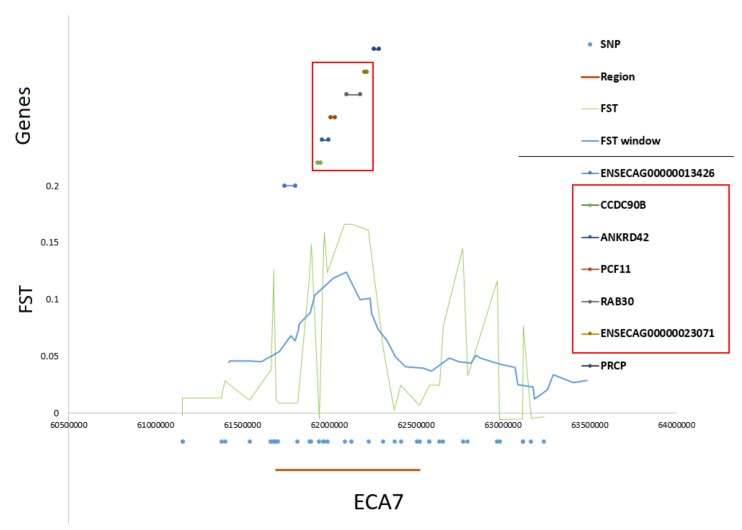
The current role of the horse as a companion animal resulted in a decrease of interest in breeding and usage of draft horses. This meant that the population of cold-blooded horses in Poland has been dramatically reduced during the last decades. To avoid impoverishment of the gene pool of the local horse population, a conservation program was established which involves draft horses and other local horse breeds. The draft horses bred in Poland can be subdivided in a few horse types of which the most widespread and consolidated are Sztumski and Sokólski horses. These two subpopulations are phenotypically diversified, however, the overall level of their genetic differentiation seems to be relatively low and not precisely determined, especially with the use of molecular markers. In reference to this, in this study we used Illumina genotyping arrays to describe in detail the genetic differentiation of these two cold-blooded horse populations. We describe the genetic distance between them, as well as within-population variation, admixture patterns, and level of relatedness within populations. We also made an attempt to detect genome regions divergently selected between those horses by the detection of diversifying selection signals. The results of this study provide initial evidence supporting breeding decisions that were made during conservation breeding program design and answer questions raised by the breeders of Sokólski and Sztumski horses concerning the level of their genetic variation and differentiation.
马作为伴侣动物的当前角色导致了对挽马繁殖和使用的兴趣下降。这意味着在过去几十年里,波兰冷血马的数量大幅减少。为避免当地马种群基因库的枯竭,制定了一项保护计划,其中涉及挽马和其他当地马品种。在波兰繁育的挽马可细分为几种马类型,其中分布最广且最稳定的是什图姆斯基马和索科尔斯基马。这两个亚种群在表型上具有多样性,然而,它们的遗传分化总体水平似乎相对较低且尚未精确确定,尤其是在使用分子标记的情况下。鉴于此,在本研究中,我们使用Illumina基因分型阵列详细描述了这两个冷血马种群的遗传分化。我们描述了它们之间的遗传距离,以及种群内变异、混合模式和种群内的亲缘关系水平。我们还试图通过检测多样化选择信号来检测这些马之间差异选择的基因组区域。本研究结果提供了初步证据,支持在保护育种计划设计过程中做出的育种决策,并回答了索科尔斯基马和什图姆斯基马育种者提出的关于其遗传变异和分化水平的问题。