Beijing Key Laboratory of Basic Research with Traditional Chinese Medicine on Infectious Diseases, Beijing, China.
Beijing Hospital of Traditional Chinese Medicine, Capital Medical University, Beijing, China.
J Cell Mol Med. 2019 Sep;23(9):5868-5875. doi: 10.1111/jcmm.14529. Epub 2019 Jul 27.
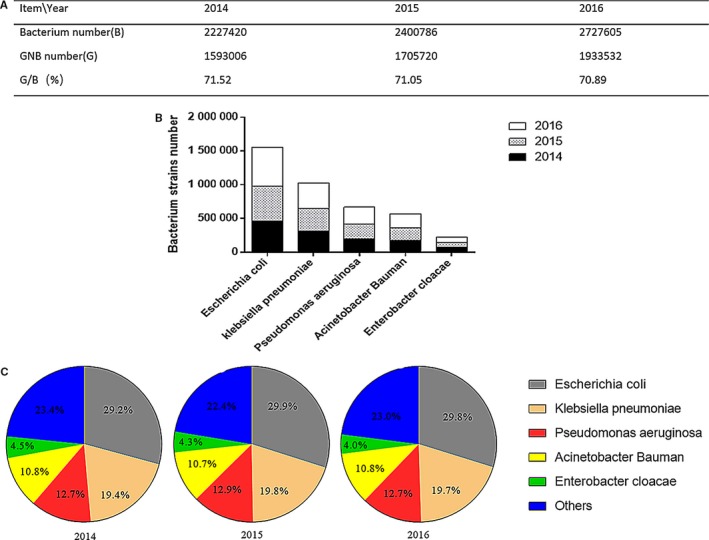
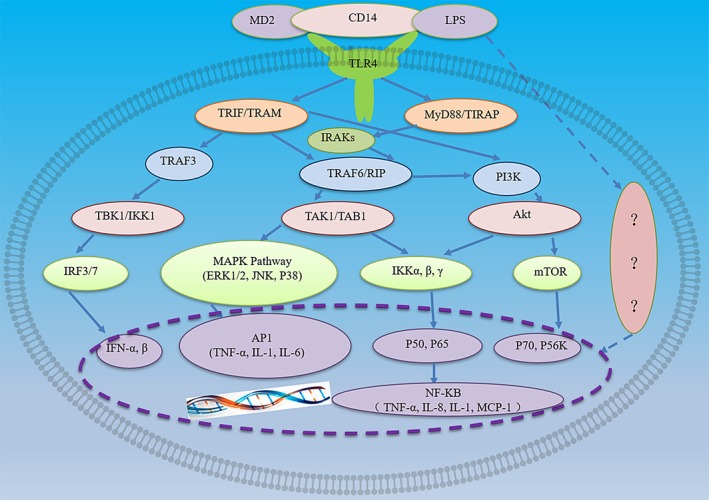
Gram-negative bacteria (GNB) emerge as important pathogens causing pulmonary infection, which can develop into sepsis due to bacterial resistance to antibiotics. GNB pneumonia poses a huge social and economic burden all over the world. During GNB infection in the lung, Toll-like receptor 4 (TLR4) can form a complex with MD2 and CD14 after recognizing lipopolysaccharide of GNB, initiate the MyD88- and TRIF-dependent signalling pathways and stimulate host non-specific immune response. In this review, we summarize recent progress in our understanding of the role of TLR4 in GNB pneumonia. The latest experimental results, especially in TLR4 knockout animals, suggest a promising potential of targeting TLR4 signalling pathway for the treatment of GNB pneumonia. Furthermore, we highlight the benefits of Traditional Chinese Medicine as novel candidates for the therapy of GNB pneumonia due to the modulation of TLR4 signalling pathway. Finally, we discuss the promise and challenge in the development of TLR4-based drugs for GNB pneumonia.
革兰氏阴性菌(GNB)作为引起肺部感染的重要病原体出现,由于细菌对抗生素的耐药性,可能发展为败血症。GNB 肺炎在全世界造成了巨大的社会和经济负担。在肺部 GNB 感染过程中,Toll 样受体 4(TLR4)在识别 GNB 的脂多糖后可与 MD2 和 CD14 形成复合物,启动 MyD88 和 TRIF 依赖性信号通路,刺激宿主非特异性免疫反应。在这篇综述中,我们总结了近年来对 TLR4 在 GNB 肺炎中作用的认识进展。最新的实验结果,特别是在 TLR4 敲除动物中的实验结果,表明靶向 TLR4 信号通路治疗 GNB 肺炎具有广阔的应用前景。此外,由于 TLR4 信号通路的调节,我们强调了中药作为 GNB 肺炎治疗新候选药物的优势。最后,我们讨论了基于 TLR4 的药物治疗 GNB 肺炎的前景和挑战。