Building Block Science Joint Research Chair, Graduate School of Frontier Biosciences, Osaka University, 1-3 Yamadaoka, Suita, 565-0871, Japan.
Sci Rep. 2020 Mar 26;10(1):5484. doi: 10.1038/s41598-020-59371-y.
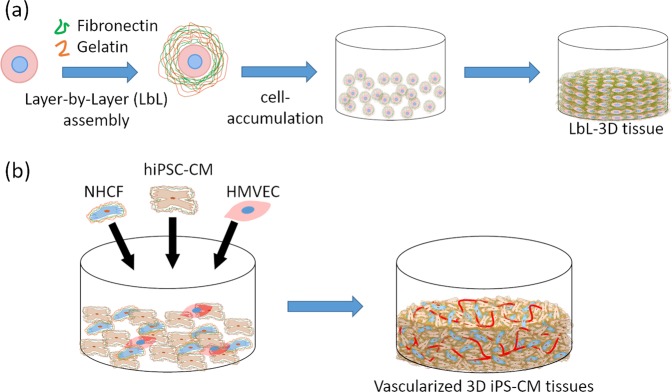
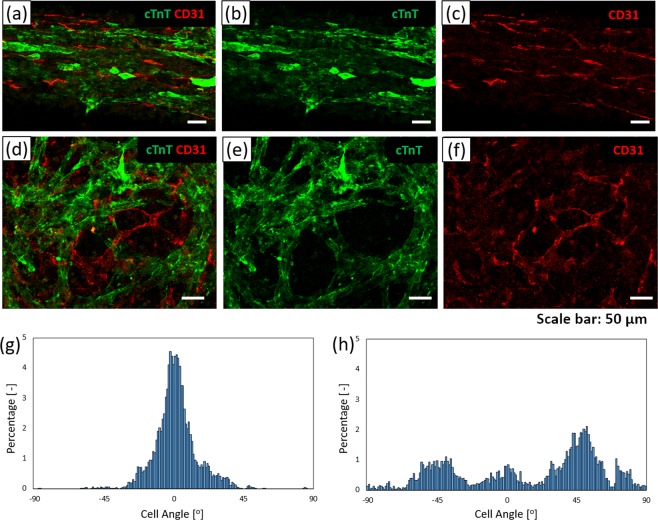
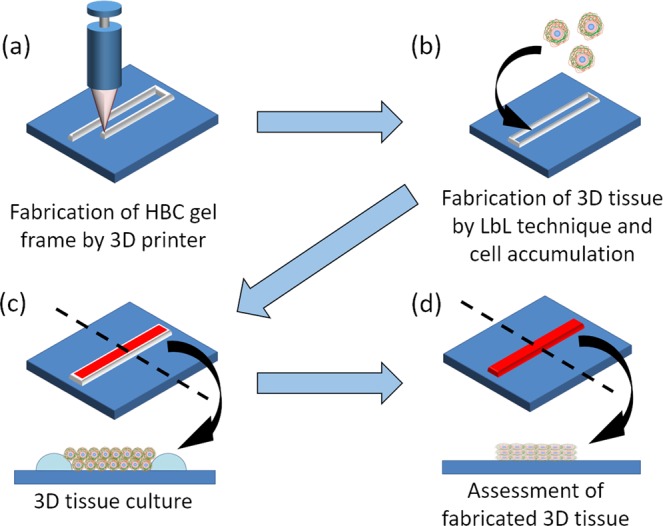
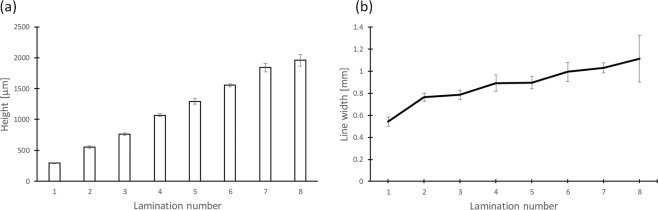
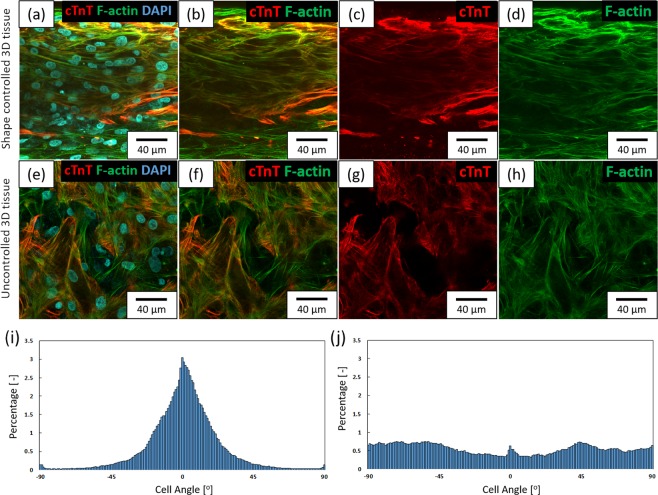
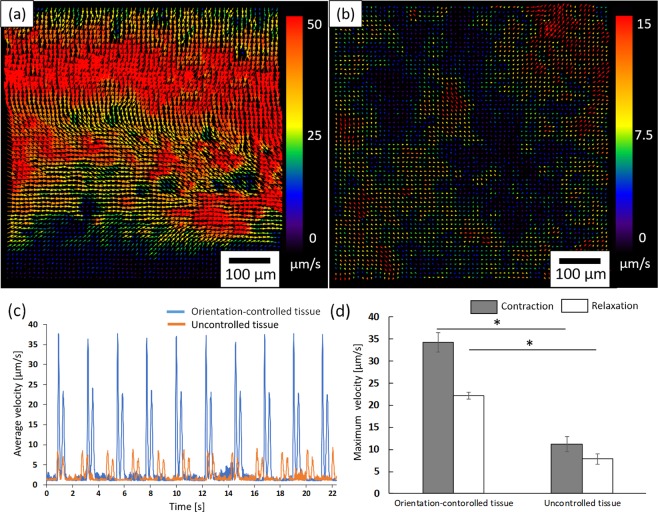
Herein, we report the fabrication of native organ-like three-dimensional (3D) cardiac tissue with an oriented structure and vascular network using a layer-by-layer (LbL), cell accumulation and 3D printing technique for regenerative medicine and pharmaceutical applications. We firstly evaluated the 3D shaping ability of hydroxybutyl chitosan (HBC), a thermoresponsive polymer, by using a robotic dispensing 3D printer. Next, we tried to fabricate orientation-controlled 3D cardiac tissue using human induced pluripotent stem cell-derived cardiomyocytes (hiPSC-CM) and normal human cardiac fibroblasts (NHCF) coated with extracellular matrix (ECM) nanofilms by layer-by-layer technique. These cells were seeded in the fabricated rectangular shape HBC gel frame. After cultivation of the fabricated tissue, fluorescence staining of the cytoskeleton revealed that hiPSC-CM and NHCF were aligned in one direction. Moreover, we were able to measure its contractile behavior using a video image analysis system. These results indicate that orientation-controlled cardiac tissue has more remarkable contractile function than uncontrolled cardiac tissue. Finally, co-culture with human cardiac microvascular endothelial cells (HMVEC) successfully provided a vascular network in orientation-controlled 3D cardiac tissue. The constructed 3D cardiac tissue with an oriented structure and vascular network would be a useful tool for regenerative medicine and pharmaceutical applications.
在这里,我们报告了使用层层(LbL)、细胞积累和 3D 打印技术制造具有定向结构和血管网络的天然器官样三维(3D)心脏组织的方法,用于再生医学和药物应用。我们首先使用机器人分配 3D 打印机评估了热响应聚合物羟丁基壳聚糖(HBC)的 3D 成型能力。接下来,我们尝试使用细胞外基质(ECM)纳米膜包被的人诱导多能干细胞衍生的心肌细胞(hiPSC-CM)和正常人心肌成纤维细胞(NHCF)通过层层技术制造定向控制的 3D 心脏组织。这些细胞被接种在制造的矩形 HBC 凝胶框架中。在制造的组织培养后,细胞骨架的荧光染色显示 hiPSC-CM 和 NHCF 沿一个方向排列。此外,我们能够使用视频图像分析系统测量其收缩行为。这些结果表明,定向控制的心脏组织比非定向控制的心脏组织具有更显著的收缩功能。最后,与人心脏微血管内皮细胞(HMVEC)的共培养成功地在定向控制的 3D 心脏组织中提供了血管网络。具有定向结构和血管网络的构建 3D 心脏组织将成为再生医学和药物应用的有用工具。