Ling Li-Rong, Zheng Dan-Hua, Zhang Zhi-Yang, Xie Wen-Hui, Huang Yue-Hong, Chen Zhi-Xin, Wang Xiao-Zhong, Li Dan
Department of Gastroenterology, Fujian Medical University Union Hospital, Fuzhou, Fujian 350001, P.R. China.
Oncol Lett. 2020 Apr;19(4):2861-2869. doi: 10.3892/ol.2020.11404. Epub 2020 Feb 17.
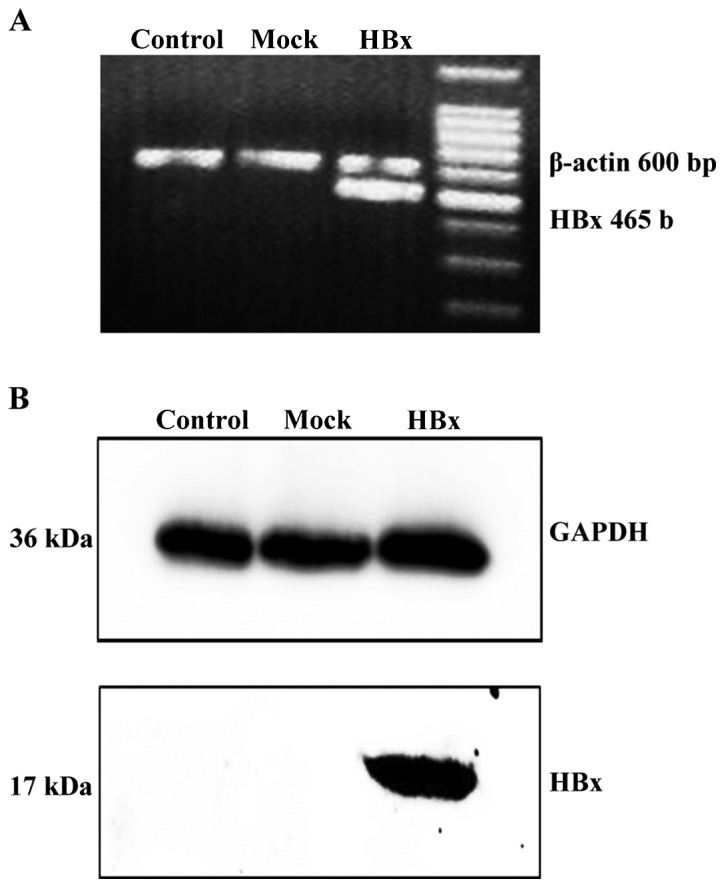
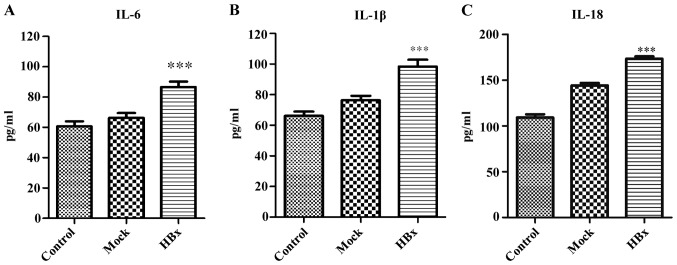
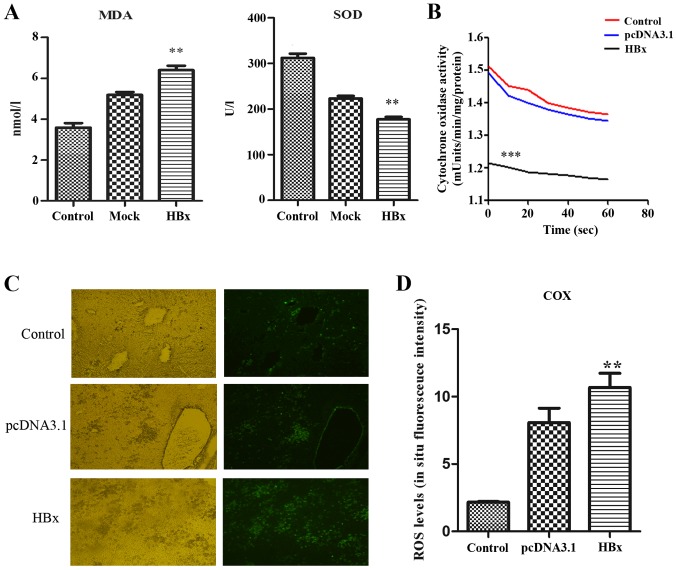
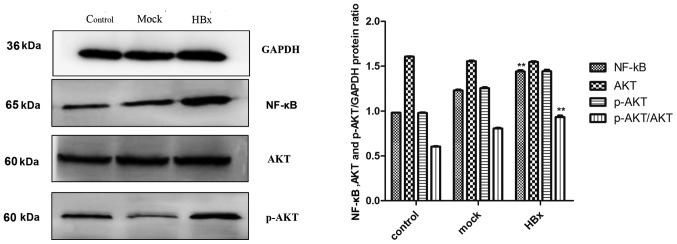
Hepatitis B virus × protein (HBx) serves an important role in the pathogenesis of the hepatitis B virus infection. Previous studies have reported that the interaction between HBx and hepatocyte mitochondria is an important factor leading to liver cell injury and apoptosis, ultimately inducing the formation of liver cancer. In the present study, a mouse model expressing HBx was constructed using hydrodynamic transfection based on the interaction between HBx and cytochrome oxidase (COX) subunit III. The specific mechanism of HBx-induced oxidative stress in mouse hepatocytes and the subsequent effect on mitochondrial function and inflammatory injury was assessed. The results demonstrated that HBx reduced the activity of COX and the expression of superoxide dismutase and upregulated the expression of malondialdehyde, NF-κB and phospho-AKT, thus increasing oxidative stress. In addition, HBx induced an increase in interleukin (IL)-6, IL-1β and IL-18 expression levels, which created an inflammatory microenvironment in the liver, further promoting hepatocyte inflammatory injury. Therefore, it was proposed that HBx may affect hepatocyte mitochondrial respiration by reducing the activity of cytochrome oxidase, leading to mitochondrial dysfunction and inducing hepatocyte inflammation and injury.
乙型肝炎病毒X蛋白(HBx)在乙型肝炎病毒感染的发病机制中起重要作用。先前的研究报道,HBx与肝细胞线粒体之间的相互作用是导致肝细胞损伤和凋亡的重要因素,最终诱导肝癌的形成。在本研究中,基于HBx与细胞色素氧化酶(COX)亚基III之间的相互作用,采用流体动力学转染构建了表达HBx的小鼠模型。评估了HBx诱导小鼠肝细胞氧化应激的具体机制及其对线粒体功能和炎性损伤的后续影响。结果表明,HBx降低了COX的活性以及超氧化物歧化酶的表达,并上调了丙二醛、核因子κB和磷酸化AKT的表达,从而增加了氧化应激。此外,HBx诱导白细胞介素(IL)-6、IL-1β和IL-18表达水平升高,在肝脏中形成炎性微环境,进一步促进肝细胞炎性损伤。因此,有人提出HBx可能通过降低细胞色素氧化酶的活性来影响肝细胞线粒体呼吸,导致线粒体功能障碍,并诱导肝细胞炎症和损伤。