• 文献检索
  • 文档翻译
  • 深度研究
  • 学术资讯
  • Suppr Zotero 插件Zotero 插件
  • 邀请有礼
  • 套餐&价格
  • 历史记录
应用&插件
Suppr Zotero 插件Zotero 插件浏览器插件Mac 客户端Windows 客户端微信小程序
定价
高级版会员购买积分包购买API积分包
服务
文献检索文档翻译深度研究API 文档MCP 服务
关于我们
关于 Suppr公司介绍联系我们用户协议隐私条款
关注我们

Suppr 超能文献

核心技术专利:CN118964589B侵权必究
粤ICP备2023148730 号-1Suppr @ 2026

文献检索

告别复杂PubMed语法,用中文像聊天一样搜索,搜遍4000万医学文献。AI智能推荐,让科研检索更轻松。

立即免费搜索

文件翻译

保留排版,准确专业,支持PDF/Word/PPT等文件格式,支持 12+语言互译。

免费翻译文档

深度研究

AI帮你快速写综述,25分钟生成高质量综述,智能提取关键信息,辅助科研写作。

立即免费体验

纳入临床和生物学因素可改善预后评估并反映当代临床实践。

Incorporation of clinical and biological factors improves prognostication and reflects contemporary clinical practice.

作者信息

Murthy Rashmi K, Song Juhee, Raghavendra Akshara S, Li Yisheng, Hsu Limin, Hess Kenneth R, Barcenas Carlos H, Valero Vicente, Carlson Robert W, Tripathy Debu, Hortobagyi Gabriel N

机构信息

1Department of Breast Medical Oncology, The University of Texas MD Anderson Cancer Center, Houston, TX USA.

2Department of Biostatistics, The University of Texas MD Anderson Cancer Center, Houston, TX USA.

出版信息

NPJ Breast Cancer. 2020 Mar 25;6:11. doi: 10.1038/s41523-020-0152-4. eCollection 2020.

DOI:10.1038/s41523-020-0152-4
PMID:32219153
原文链接:https://pmc.ncbi.nlm.nih.gov/articles/PMC7096449/
Abstract

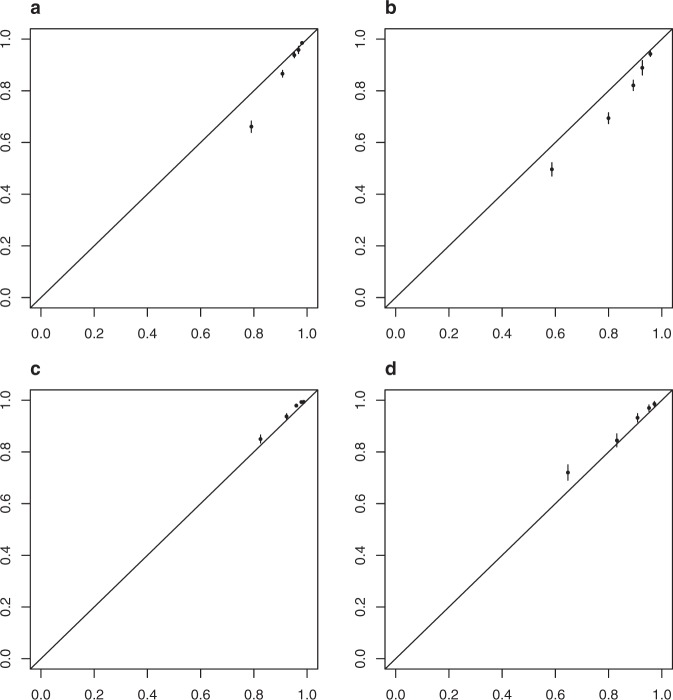
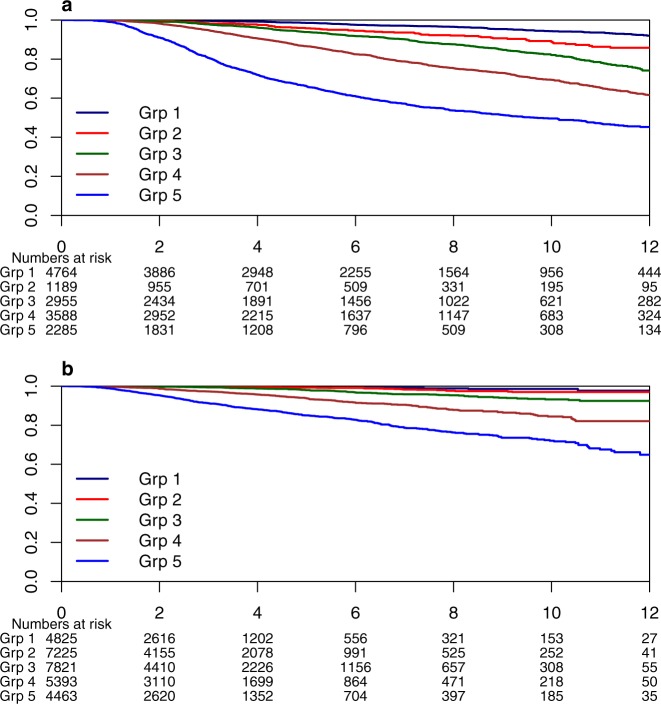
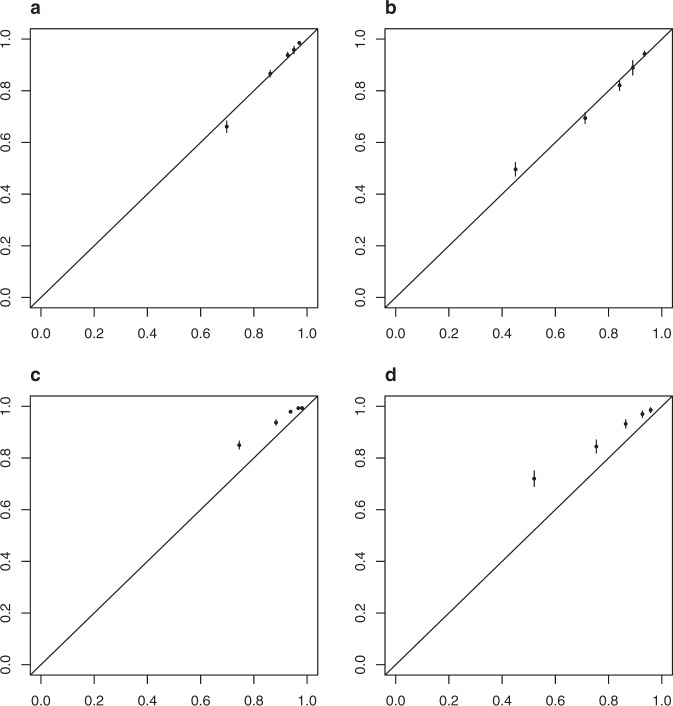
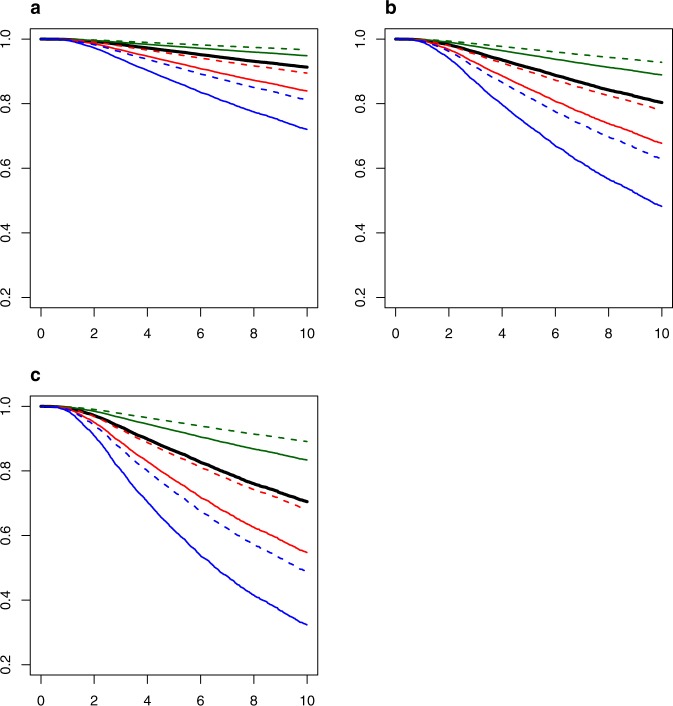
We developed prognostic models for breast cancer-specific survival (BCSS) that consider anatomic stage and other important determinants of prognosis and survival in breast cancer, such as age, grade, and receptor-based subtypes with the intention to demonstrate that these factors, conditional on stage, improve prediction of BCSS. A total of 20,928 patients with stage I-III invasive primary breast cancer treated at The University of Texas MD Anderson Cancer Center between 1990 and 2016, who received surgery as an initial treatment were identified to generate prognostic models by Fine-Gray competing risk regression model. Model predictive accuracy was assessed using Harrell's C-index. The Aalen-Johansen estimator and a selected Fine-Gray model were used to estimate the 5-year and 10-year BCSS probabilities. The performance of the selected model was evaluated by assessing discrimination and prediction calibration in an external validation dataset of 29,727 patients from the National Comprehensive Cancer Network (NCCN). The inclusion of age, grade, and receptor-based subtype in addition to stage significantly improved the model predictive accuracy (C-index: 0.774 (95% CI 0.755-0.794) vs. 0.692 for stage alone,  < 0.0001). Young age (<40), higher grade, and TNBC subtype were significantly associated with worse BCSS. The selected model showed good discriminative ability but poor calibration when applied to the validation data. After recalibration, the predictions showed good calibration in the training and validation data. More refined BCSS prediction is possible through a model that has been externally validated and includes clinical and biological factors.

摘要

我们开发了乳腺癌特异性生存(BCSS)的预后模型,该模型考虑了解剖学分期以及乳腺癌预后和生存的其他重要决定因素,如年龄、分级和基于受体的亚型,目的是证明这些因素在分期的条件下可改善BCSS的预测。我们确定了1990年至2016年间在德克萨斯大学MD安德森癌症中心接受治疗的20928例I-III期浸润性原发性乳腺癌患者,这些患者接受手术作为初始治疗,并通过Fine-Gray竞争风险回归模型生成预后模型。使用Harrell's C指数评估模型预测准确性。使用Aalen-Johansen估计器和选定的Fine-Gray模型来估计5年和10年BCSS概率。在来自国家综合癌症网络(NCCN)的29727例患者的外部验证数据集中,通过评估区分度和预测校准来评估选定模型的性能。除分期外,纳入年龄、分级和基于受体的亚型显著提高了模型预测准确性(C指数:0.774(95%CI 0.755-0.794),而仅分期为0.692,P<0.0001)。年轻(<40岁)、高分级和三阴性乳腺癌(TNBC)亚型与较差的BCSS显著相关。选定的模型在应用于验证数据时显示出良好的区分能力,但校准较差。重新校准后,预测在训练和验证数据中显示出良好的校准。通过经过外部验证并包括临床和生物学因素的模型,可以实现更精确的BCSS预测。
https://cdn.ncbi.nlm.nih.gov/pmc/blobs/b91d/7096449/dbb04764a43f/41523_2020_152_Fig4_HTML.jpg
https://cdn.ncbi.nlm.nih.gov/pmc/blobs/b91d/7096449/e3bc08cef44f/41523_2020_152_Fig1_HTML.jpg
https://cdn.ncbi.nlm.nih.gov/pmc/blobs/b91d/7096449/df065d45e67e/41523_2020_152_Fig2_HTML.jpg
https://cdn.ncbi.nlm.nih.gov/pmc/blobs/b91d/7096449/8b0b53c57b3f/41523_2020_152_Fig3_HTML.jpg
https://cdn.ncbi.nlm.nih.gov/pmc/blobs/b91d/7096449/dbb04764a43f/41523_2020_152_Fig4_HTML.jpg
https://cdn.ncbi.nlm.nih.gov/pmc/blobs/b91d/7096449/e3bc08cef44f/41523_2020_152_Fig1_HTML.jpg
https://cdn.ncbi.nlm.nih.gov/pmc/blobs/b91d/7096449/df065d45e67e/41523_2020_152_Fig2_HTML.jpg
https://cdn.ncbi.nlm.nih.gov/pmc/blobs/b91d/7096449/8b0b53c57b3f/41523_2020_152_Fig3_HTML.jpg
https://cdn.ncbi.nlm.nih.gov/pmc/blobs/b91d/7096449/dbb04764a43f/41523_2020_152_Fig4_HTML.jpg

相似文献

1
Incorporation of clinical and biological factors improves prognostication and reflects contemporary clinical practice.纳入临床和生物学因素可改善预后评估并反映当代临床实践。
NPJ Breast Cancer. 2020 Mar 25;6:11. doi: 10.1038/s41523-020-0152-4. eCollection 2020.
2
How Does the Skeletal Oncology Research Group Algorithm's Prediction of 5-year Survival in Patients with Chondrosarcoma Perform on International Validation?骨肿瘤研究组算法对软骨肉瘤患者 5 年生存率的预测在国际验证中的表现如何?
Clin Orthop Relat Res. 2020 Oct;478(10):2300-2308. doi: 10.1097/CORR.0000000000001305.
3
Development and validation of nomograms for predicting overall and breast cancer-specific survival among patients with triple-negative breast cancer.三阴性乳腺癌患者总生存和乳腺癌特异性生存预测列线图的开发与验证
Cancer Manag Res. 2018 Nov 19;10:5881-5894. doi: 10.2147/CMAR.S178859. eCollection 2018.
4
Construction and Validation of Nomograms Predicting Survival in Triple-Negative Breast Cancer Patients of Childbearing Age.预测育龄期三阴性乳腺癌患者生存的列线图的构建与验证
Front Oncol. 2021 Feb 8;10:636549. doi: 10.3389/fonc.2020.636549. eCollection 2020.
5
Prognostic Model for De Novo and Recurrent Metastatic Breast Cancer.新发和复发性转移性乳腺癌的预后模型
JCO Clin Cancer Inform. 2021 Aug;5:789-804. doi: 10.1200/CCI.21.00020.
6
Nomogram Predicts the Role of Primary Tumor Surgery on Stage-IV Breast Cancer Patients: A SEER-Based Competing Risk Analysis Model.列线图预测原发性肿瘤手术在IV期乳腺癌患者中的作用:基于监测、流行病学和最终结果(SEER)的竞争风险分析模型
Front Oncol. 2022 May 4;12:819531. doi: 10.3389/fonc.2022.819531. eCollection 2022.
7
Validation of Prognostic Stage and Anatomic Stage in the American Joint Committee on Cancer 8th Edition for Inflammatory Breast Cancer.美国癌症联合委员会第8版中炎性乳腺癌预后分期和解剖学分期的验证
Cancers (Basel). 2020 Oct 24;12(11):3105. doi: 10.3390/cancers12113105.
8
Development and Validation of Nomograms for Predicting Overall and Breast Cancer-Specific Survival in Young Women with Breast Cancer: A Population-Based Study.预测年轻乳腺癌女性总生存和乳腺癌特异性生存的列线图的开发与验证:一项基于人群的研究
Transl Oncol. 2018 Dec;11(6):1334-1342. doi: 10.1016/j.tranon.2018.08.008. Epub 2018 Sep 4.
9
Comparison of CTS5 risk model and 21-gene recurrence score assay in large-scale breast cancer population and combination of CTS5 and recurrence score to develop a novel nomogram for prognosis prediction.CTS5 风险模型与 21 基因复发评分检测在大型乳腺癌人群中的比较,以及 CTS5 与复发评分的联合应用以开发新的预后预测列线图。
Breast. 2022 Jun;63:61-70. doi: 10.1016/j.breast.2022.03.007. Epub 2022 Mar 16.
10
Association of sonographic features and molecular subtypes in predicting breast cancer disease outcomes.超声特征与分子亚型与乳腺癌疾病结局的相关性研究。
Cancer Med. 2020 Sep;9(17):6173-6185. doi: 10.1002/cam4.3305. Epub 2020 Jul 13.

引用本文的文献

1
Tumor infiltrating lymphocyte stratification of prognostic staging of early-stage triple negative breast cancer.早期三阴性乳腺癌预后分期的肿瘤浸润淋巴细胞分层
NPJ Breast Cancer. 2022 Jan 11;8(1):3. doi: 10.1038/s41523-021-00362-1.

本文引用的文献

1
Simulation shows undesirable results for competing risks analysis with time-dependent covariates for clinical outcomes.模拟显示,对于具有时间依赖性协变量的临床结局竞争风险分析,结果不理想。
BMC Med Res Methodol. 2018 Jul 16;18(1):79. doi: 10.1186/s12874-018-0535-5.
2
Importance of Considering Competing Risks in Time-to-Event Analyses: Application to Stroke Risk in a Retrospective Cohort Study of Elderly Patients With Atrial Fibrillation.在事件发生时间分析中考虑竞争风险的重要性:在老年房颤患者回顾性队列研究中对中风风险的应用
Circ Cardiovasc Qual Outcomes. 2018 Jul;11(7):e004580. doi: 10.1161/CIRCOUTCOMES.118.004580.
3
Prognostic Validation of the American Joint Committee on Cancer 8th Staging System in 24,014 Korean Patients with Breast Cancer.
美国癌症联合委员会第8版分期系统在24014例韩国乳腺癌患者中的预后验证
J Breast Cancer. 2018 Jun;21(2):173-181. doi: 10.4048/jbc.2018.21.2.173. Epub 2018 Jun 20.
4
Validation Study of the American Joint Committee on Cancer Eighth Edition Prognostic Stage Compared With the Anatomic Stage in Breast Cancer.美国癌症联合委员会第八版预后分期与乳腺癌解剖分期的验证研究。
JAMA Oncol. 2018 Feb 1;4(2):203-209. doi: 10.1001/jamaoncol.2017.4298.
5
A Retrospective Analysis of Clinical Utility of AJCC 8th Edition Cancer Staging System for Breast Cancer.美国癌症联合委员会(AJCC)第8版乳腺癌分期系统临床应用的回顾性分析
World J Oncol. 2017 Jun;8(3):71-75. doi: 10.14740/wjon1039e. Epub 2017 Jun 9.
6
Practical recommendations for reporting Fine-Gray model analyses for competing risk data.关于报告竞争风险数据的Fine-Gray模型分析的实用建议。
Stat Med. 2017 Nov 30;36(27):4391-4400. doi: 10.1002/sim.7501. Epub 2017 Sep 15.
7
Assessment of the prognostic and discriminating value of the novel bioscore system for breast cancer; a SEER database analysis.新型生物评分系统对乳腺癌的预后和鉴别价值评估;一项监测、流行病学和最终结果(SEER)数据库分析
Breast Cancer Res Treat. 2017 Jul;164(1):231-236. doi: 10.1007/s10549-017-4244-2. Epub 2017 Apr 17.
8
Personalized Prognostic Prediction Models for Breast Cancer Recurrence and Survival Incorporating Multidimensional Data.纳入多维数据的乳腺癌复发和生存个性化预后预测模型
J Natl Cancer Inst. 2017 Jul 1;109(7). doi: 10.1093/jnci/djw314.
9
The Neo-Bioscore Update for Staging Breast Cancer Treated With Neoadjuvant Chemotherapy: Incorporation of Prognostic Biologic Factors Into Staging After Treatment.新生物标志物更新在新辅助化疗治疗乳腺癌分期中的应用:治疗后预后生物因素在分期中的纳入。
JAMA Oncol. 2016 Jul 1;2(7):929-36. doi: 10.1001/jamaoncol.2015.6478.
10
Use of Biomarkers to Guide Decisions on Adjuvant Systemic Therapy for Women With Early-Stage Invasive Breast Cancer: American Society of Clinical Oncology Clinical Practice Guideline.利用生物标志物指导早期浸润性乳腺癌女性辅助性全身治疗决策:美国临床肿瘤学会临床实践指南
J Clin Oncol. 2016 Apr 1;34(10):1134-50. doi: 10.1200/JCO.2015.65.2289. Epub 2016 Feb 8.