McGowan Institute for Regenerative Medicine, University of Pittsburgh, 450 Technology Drive, Suite 300, Pittsburgh, PA 15219-3110, USA.
Department of Surgery, School of Medicine, University of Pittsburgh, University of Pittsburgh Medical Center Presbyterian Hospital, 200 Lothrop Street, Pittsburgh, PA 15213, USA.
Sci Adv. 2020 Mar 20;6(12):eaay4361. doi: 10.1126/sciadv.aay4361. eCollection 2020 Mar.
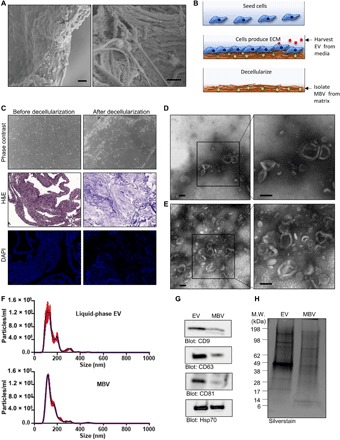
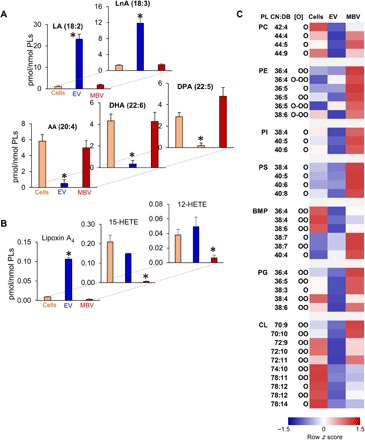
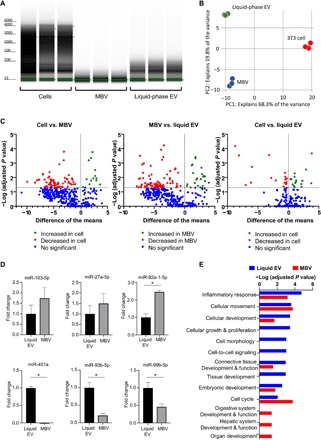
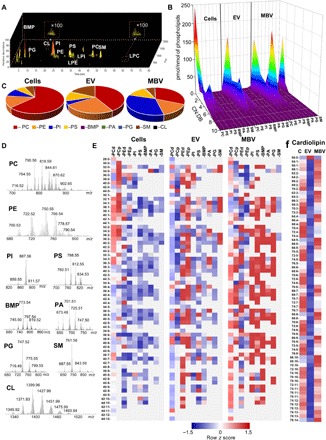
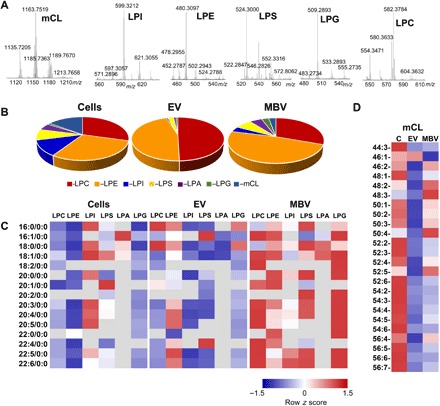
Biomaterials composed of extracellular matrix (ECM) provide both mechanical support and a reservoir of constructive signaling molecules that promote functional tissue repair. Recently, matrix-bound nanovesicles (MBVs) have been reported as an integral component of ECM bioscaffolds. Although liquid-phase extracellular vesicles (EVs) have been the subject of intense investigation, their similarity to MBV is limited to size and shape. Liquid chromatography-mass spectrometry (LC-MS)-based lipidomics and redox lipidomics were used to conduct a detailed comparison of liquid-phase EV and MBV phospholipids. Combined with comprehensive RNA sequencing and bioinformatic analysis of the intravesicular cargo, we show that MBVs are a distinct and unique subpopulation of EV and a distinguishing feature of ECM-based biomaterials. The results begin to identify the differential biologic activities mediated by EV that are secreted by tissue-resident cells and deposited within the ECM.
由细胞外基质 (ECM) 组成的生物材料不仅提供机械支撑,还提供大量的建设性信号分子,从而促进功能性组织修复。最近,基质结合纳米囊泡 (MBV) 已被报道为 ECM 生物支架的一个组成部分。尽管液相细胞外囊泡 (EV) 一直是深入研究的主题,但它们与 MBV 的相似之处仅限于大小和形状。基于液相色谱-质谱 (LC-MS) 的脂质组学和氧化还原脂质组学被用于对液相 EV 和 MBV 磷脂进行详细比较。结合囊泡内货物的综合 RNA 测序和生物信息学分析,我们表明 MBV 是 EV 的一个独特且独特的亚群,也是基于 ECM 的生物材料的一个特征。研究结果开始确定由组织驻留细胞分泌并沉积在 ECM 中的 EV 介导的差异生物学活性。