Department of Molecular Cell Biology, Institute for Cancer Research, Oslo University Hospital-Norwegian Radium Hospital, 0379 Oslo, Norway.
Department of Biosciences, University of Oslo, 0316 Oslo, Norway.
J Lipid Res. 2019 Jan;60(1):9-18. doi: 10.1194/jlr.R084343. Epub 2018 Aug 3.
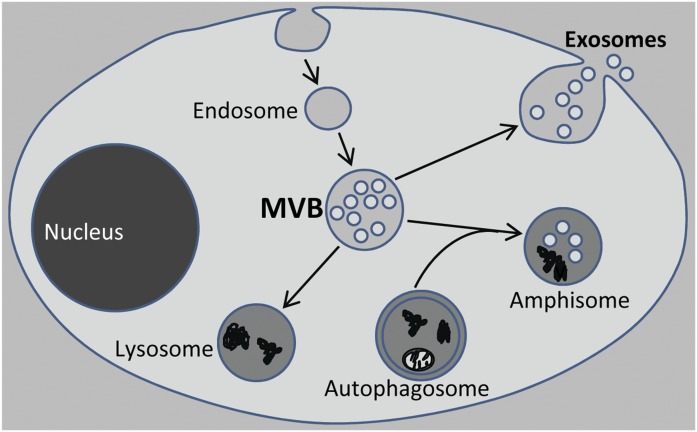
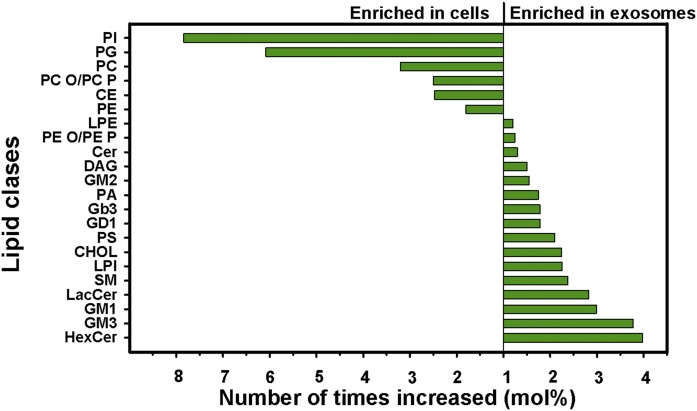
Exosomes are a type of extracellular vesicle released from cells after fusion of multivesicular bodies with the plasma membrane. These vesicles are often enriched in cholesterol, SM, glycosphingolipids, and phosphatidylserine. Lipids not only have a structural role in exosomal membranes but also are essential players in exosome formation and release to the extracellular environment. Our knowledge about the importance of lipids in exosome biology is increasing due to recent technological developments in lipidomics and a stronger focus on the biological functions of these molecules. Here, we review the available information about the lipid composition of exosomes. Special attention is given to ether lipids, a relatively unexplored type of lipids involved in membrane trafficking and abundant in some exosomes. Moreover, we discuss how the lipid composition of exosome preparations may provide useful information about their purity. Finally, we discuss the role of phosphoinositides, membrane phospholipids that help to regulate membrane dynamics, in exosome release and how this process may be linked to secretory autophagy. Knowledge about exosome lipid composition is important to understand the biology of these vesicles and to investigate possible medical applications.
外泌体是一种细胞外囊泡,在多泡体与质膜融合后从细胞中释放出来。这些囊泡通常富含胆固醇、SM、糖脂和磷脂酰丝氨酸。脂质不仅在外泌体膜中具有结构作用,而且在囊泡的形成和释放到细胞外环境中也起着至关重要的作用。由于脂质组学技术的最新发展以及对这些分子生物学功能的更深入关注,我们对脂质在细胞外囊泡生物学中的重要性的认识正在不断提高。在这里,我们回顾了有关外泌体脂质组成的现有信息。特别关注醚脂,这是一种相对未被探索的参与膜运输的脂质类型,在外泌体中含量丰富。此外,我们还讨论了外泌体制剂的脂质组成如何为其纯度提供有用信息。最后,我们讨论了磷酸肌醇,即膜磷脂在调控膜动力学中的作用,在囊泡释放中的作用,以及这一过程如何与分泌自噬相关。了解外泌体的脂质组成对于理解这些囊泡的生物学特性以及研究其可能的医学应用具有重要意义。