Department of Pathology, Perelman School of Medicine, University of Pennsylvania, Philadelphia, PA 19104, USA; Department of Psychiatry, The Children's Hospital of Philadelphia, Philadelphia, PA 19104, USA.
Center for Applied Genomics, Children's Hospital of Philadelphia, The Perelman School of Medicine, University of Pennsylvania, Philadelphia, PA 19104, USA.
Stem Cell Reports. 2020 Apr 14;14(4):703-716. doi: 10.1016/j.stemcr.2020.02.010. Epub 2020 Mar 26.
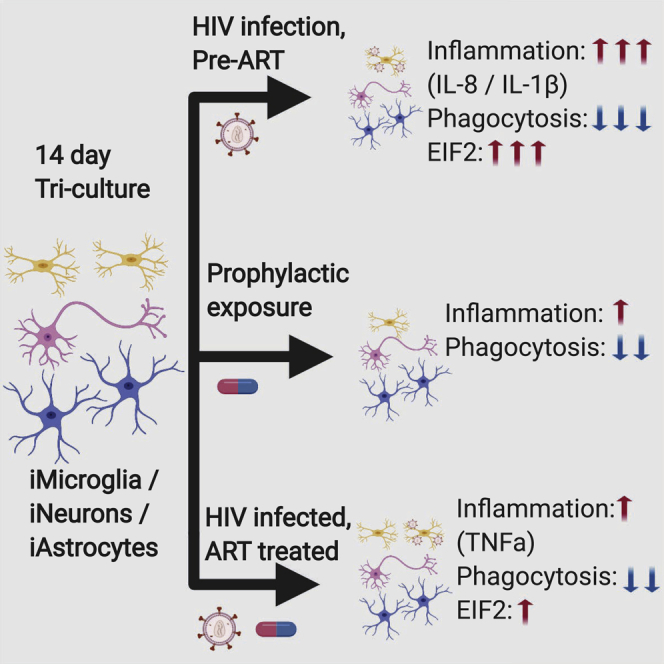
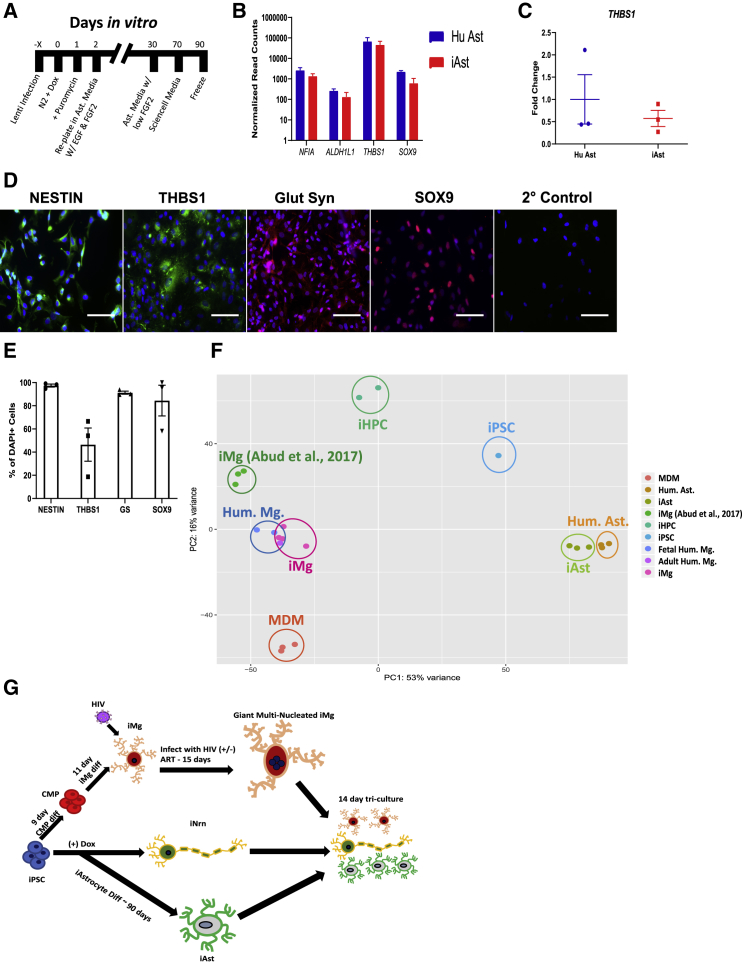
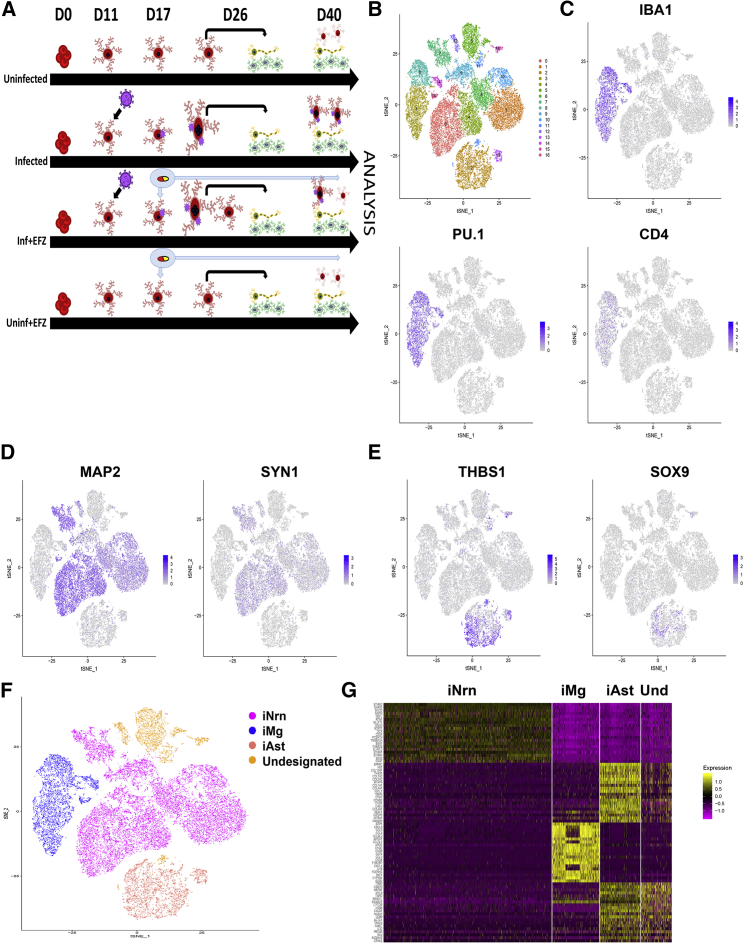
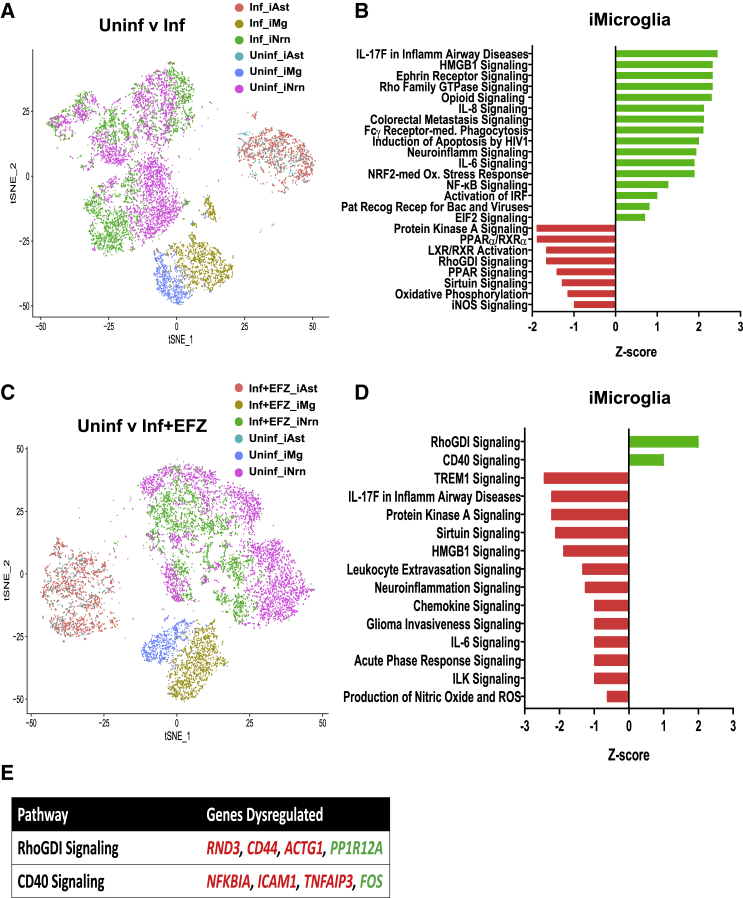
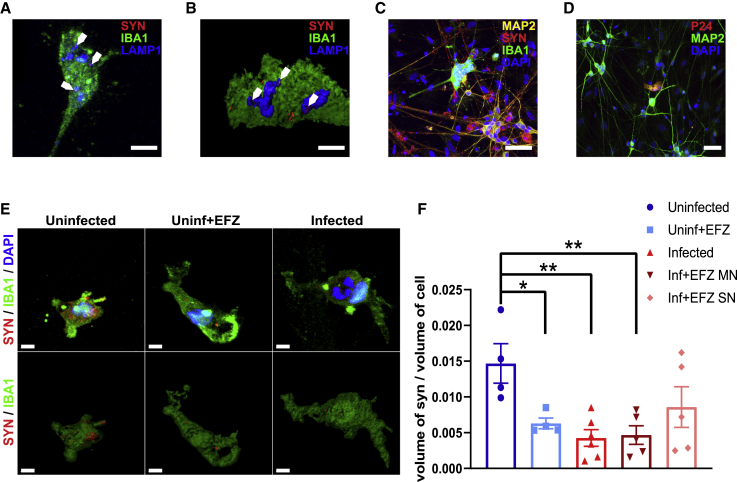
HIV-associated neurocognitive disorders (HAND) affect over half of HIV-infected individuals, despite antiretroviral therapy (ART). Therapeutically targetable mechanisms underlying HAND remain elusive, partly due to a lack of a representative model. We developed a human-induced pluripotent stem cell (hiPSC)-based model, independently differentiating hiPSCs into neurons, astrocytes, and microglia, and systematically combining to generate a tri-culture with or without HIV infection and ART. Single-cell RNA sequencing analysis on tri-cultures with HIV-infected microglia revealed inflammatory signatures in the microglia and EIF2 signaling in all three cell types. Treatment with the antiretroviral compound efavirenz (EFZ) mostly resolved these signatures. However, EFZ increased RhoGDI and CD40 signaling in the HIV-infected microglia. This activation was associated with a persistent increase in transforming growth factor α production by microglia. This work establishes a tri-culture that recapitulates key features of HIV infection in the CNS and provides a new model to examine the effects of infection, its treatment, and other co-morbid conditions.
HIV 相关神经认知障碍(HAND)影响超过一半的 HIV 感染者,尽管有抗逆转录病毒治疗(ART)。HAND 潜在的治疗靶点机制仍然难以捉摸,部分原因是缺乏代表性模型。我们开发了一种基于人诱导多能干细胞(hiPSC)的模型,独立地将 hiPSC 分化为神经元、星形胶质细胞和小胶质细胞,并系统地组合生成具有或不具有 HIV 感染和 ART 的三培养物。对具有 HIV 感染小胶质细胞的三培养物进行单细胞 RNA 测序分析显示,小胶质细胞中存在炎症特征,所有三种细胞类型中均存在 EIF2 信号。用抗逆转录病毒化合物依非韦伦(EFZ)治疗可在很大程度上解决这些特征。然而,EFZ 增加了 HIV 感染小胶质细胞中的 RhoGDI 和 CD40 信号。这种激活与小胶质细胞产生持续增加的转化生长因子 α 有关。这项工作建立了一个三培养物,重现了中枢神经系统中 HIV 感染的关键特征,并提供了一个新的模型来研究感染、治疗及其它合并症的影响。