Department of Mechanical Engineering and Engineering Science, University of North Carolina at Charlotte, Charlotte, NC, USA.
Center for Biomedical Engineering and Science, University of North Carolina at Charlotte, Charlotte, NC, USA.
Nat Neurosci. 2018 Jul;21(7):941-951. doi: 10.1038/s41593-018-0175-4. Epub 2018 Jun 27.
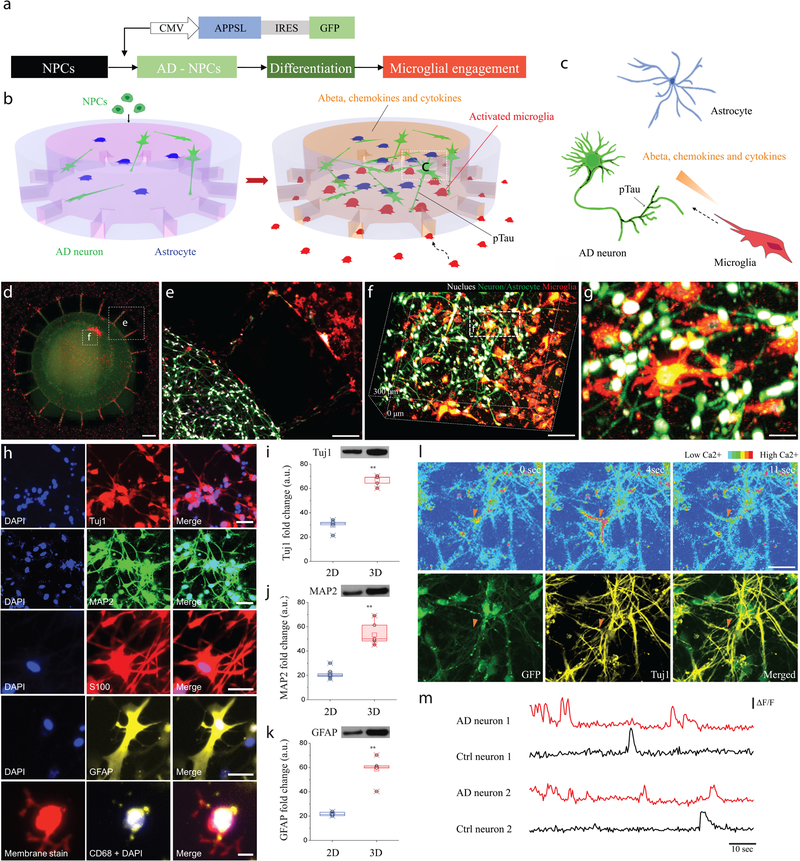
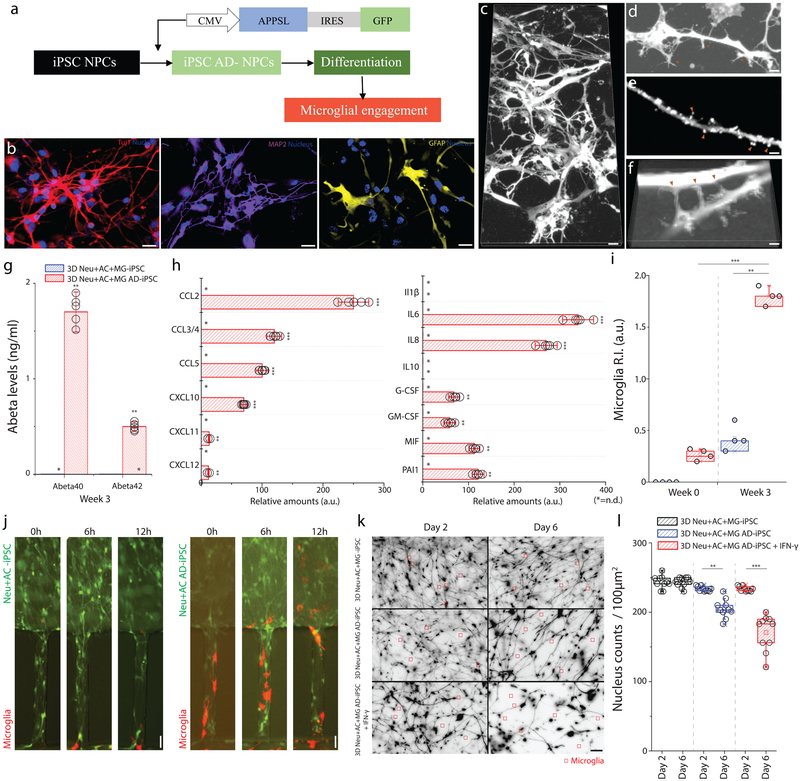
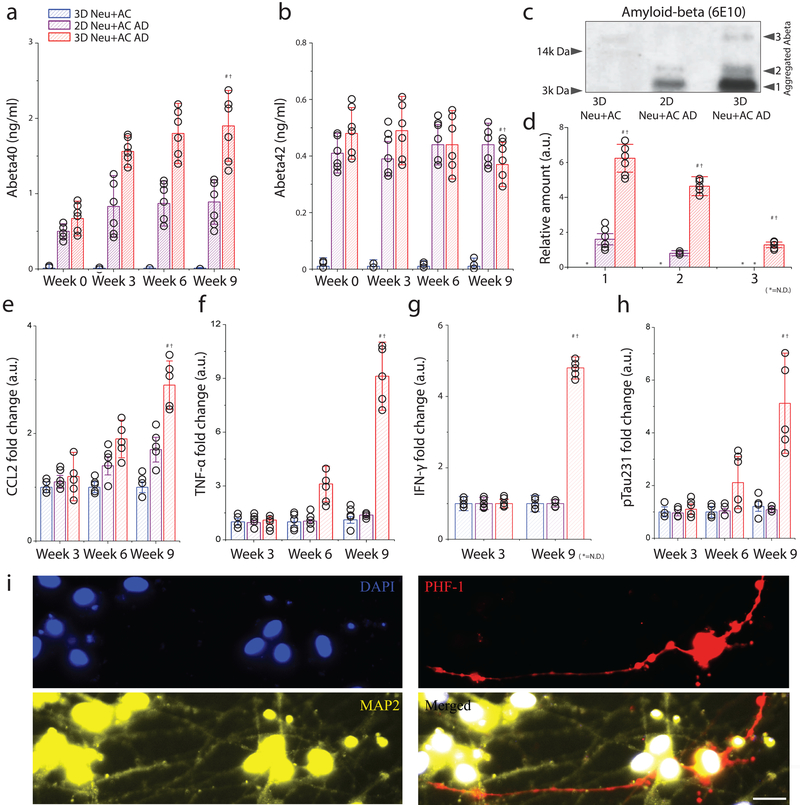
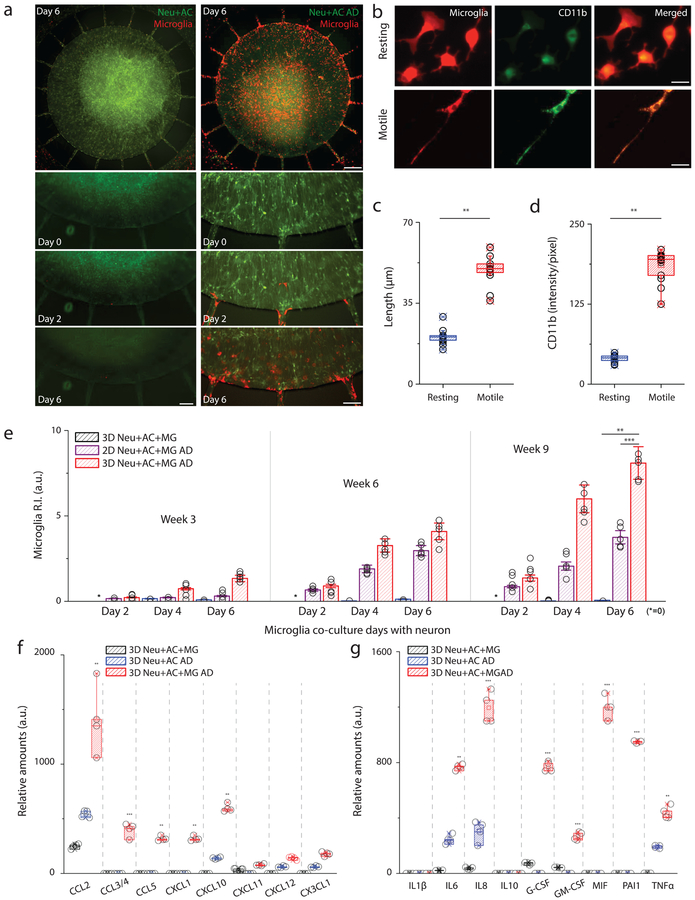
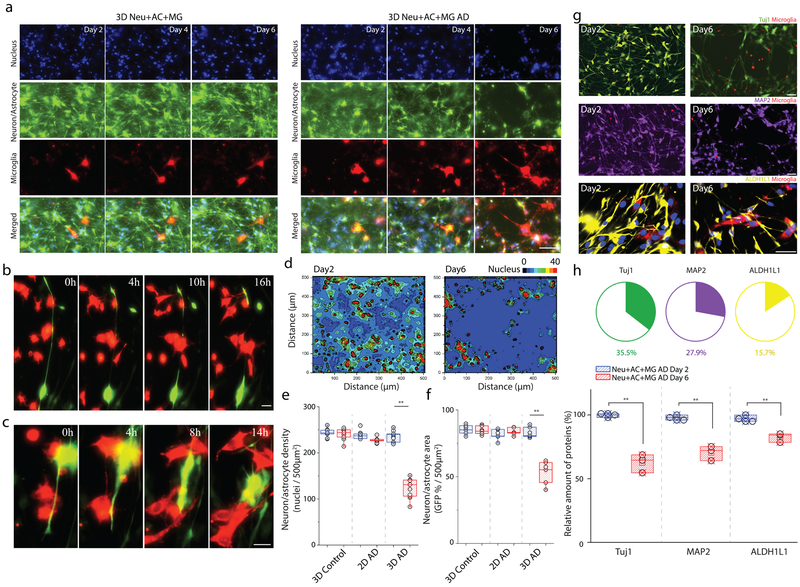
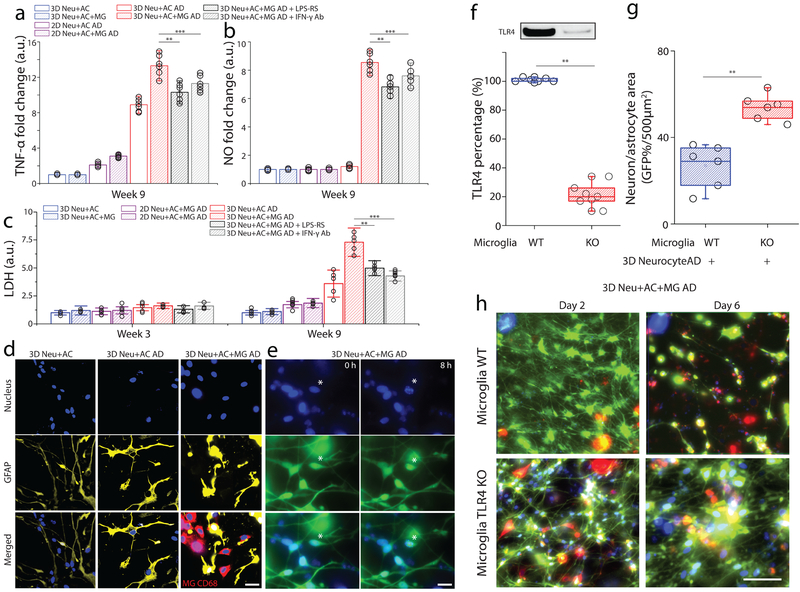
Alzheimer's disease (AD) is characterized by beta-amyloid accumulation, phosphorylated tau formation, hyperactivation of glial cells, and neuronal loss. The mechanisms of AD pathogenesis, however, remain poorly understood, partially due to the lack of relevant models that can comprehensively recapitulate multistage intercellular interactions in human AD brains. Here we present a new three-dimensional (3D) human AD triculture model using neurons, astrocytes, and microglia in a 3D microfluidic platform. Our model provided key representative AD features: beta-amyloid aggregation, phosphorylated tau accumulation, and neuroinflammatory activity. In particular, the model mirrored microglial recruitment, neurotoxic activities such as axonal cleavage, and NO release damaging AD neurons and astrocytes. Our model will serve to facilitate the development of more precise human brain models for basic mechanistic studies in neural-glial interactions and drug discovery.
阿尔茨海默病(AD)的特征是β-淀粉样蛋白积累、磷酸化 tau 形成、神经胶质细胞过度激活和神经元丧失。然而,AD 发病机制的机制仍不清楚,部分原因是缺乏能够全面再现人类 AD 大脑中多阶段细胞间相互作用的相关模型。在这里,我们使用神经元、星形胶质细胞和小胶质细胞在 3D 微流控平台上展示了一种新的 3D 人类 AD 三细胞培养模型。我们的模型提供了关键的代表性 AD 特征:β-淀粉样蛋白聚集、磷酸化 tau 积累和神经炎症活性。特别是,该模型反映了小胶质细胞的募集、轴突切割等神经毒性活性以及一氧化氮(NO)释放对 AD 神经元和星形胶质细胞的损伤。我们的模型将有助于开发更精确的人类大脑模型,用于神经-胶质相互作用和药物发现的基础机制研究。