Key Laboratory of Medical Cell Biology, Institute of Translational Medicine, China Medical University, Shenyang, Liaoning, China (mainland).
Clinical Research Center, He Eye Hospital of He University, Shenyang, Liaoning, China (mainland).
Med Sci Monit. 2020 Mar 28;26:e921184. doi: 10.12659/MSM.921184.
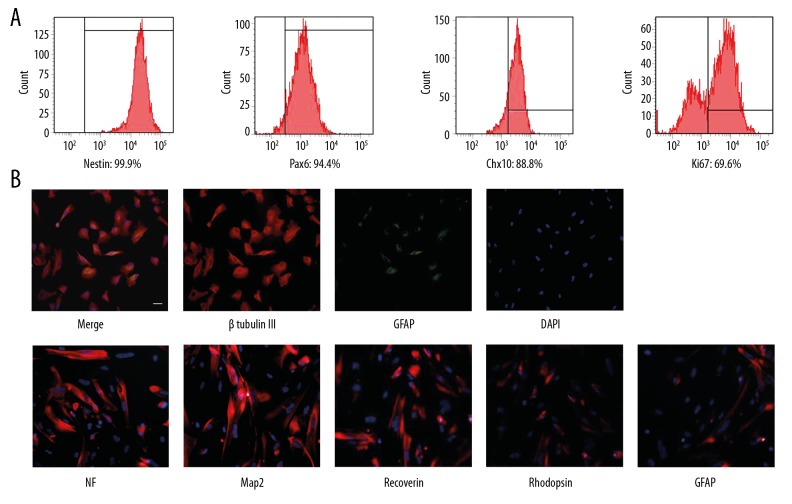
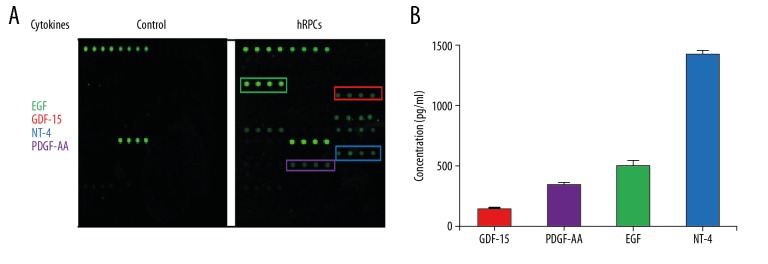
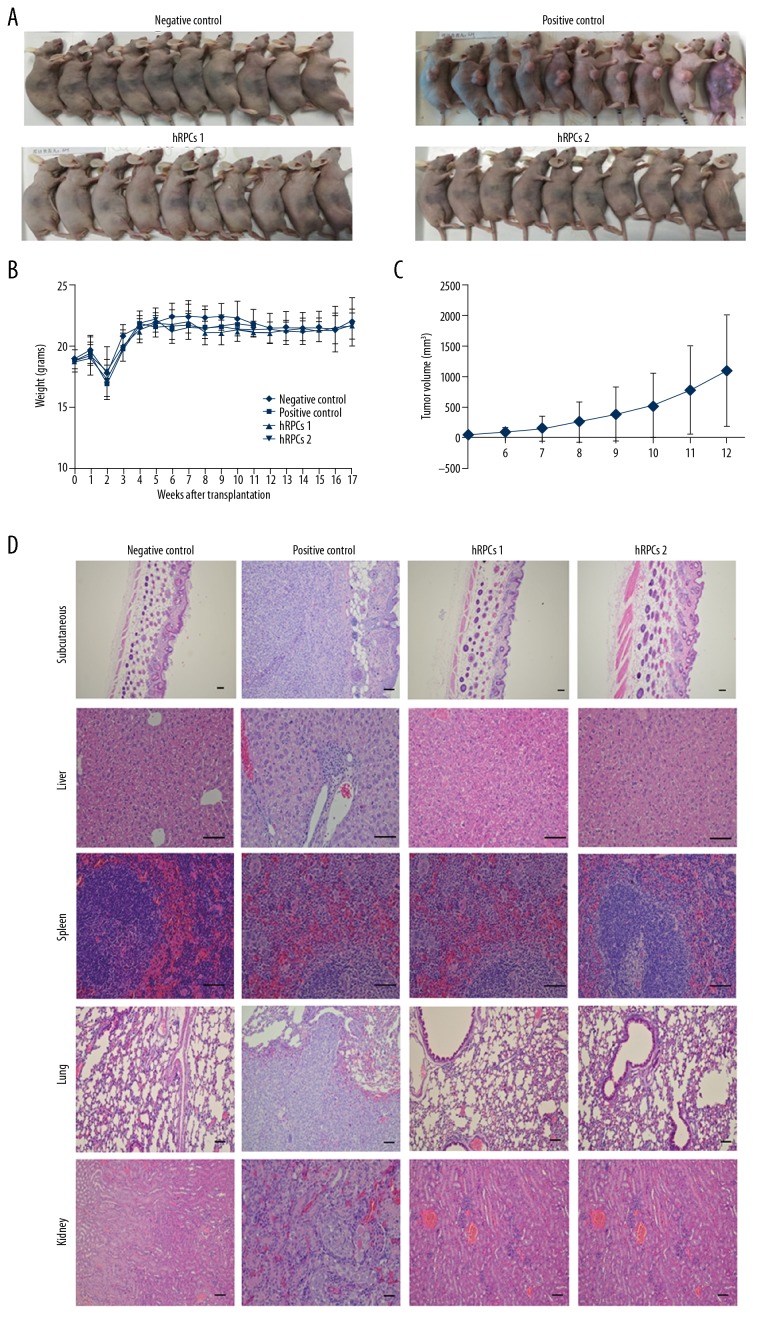
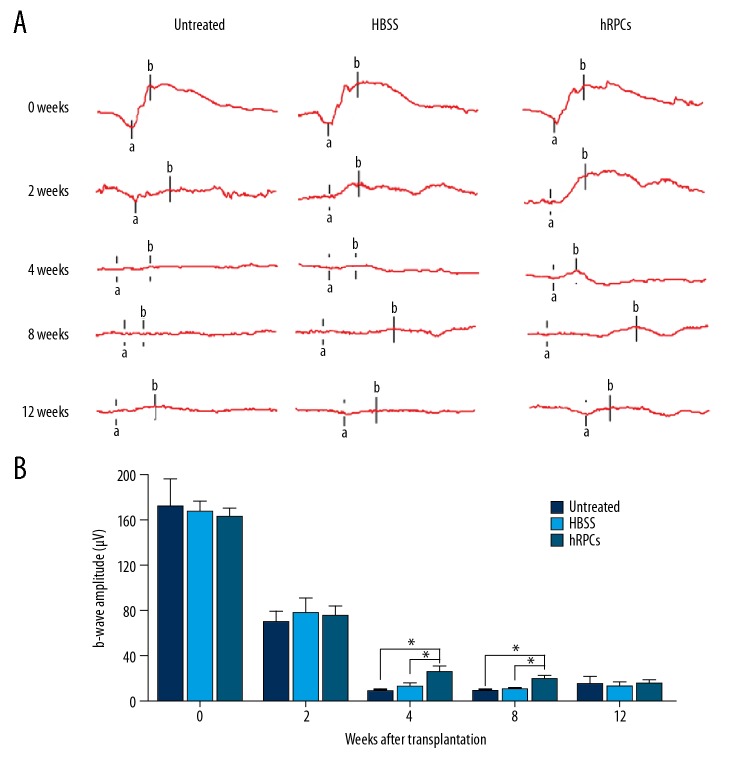
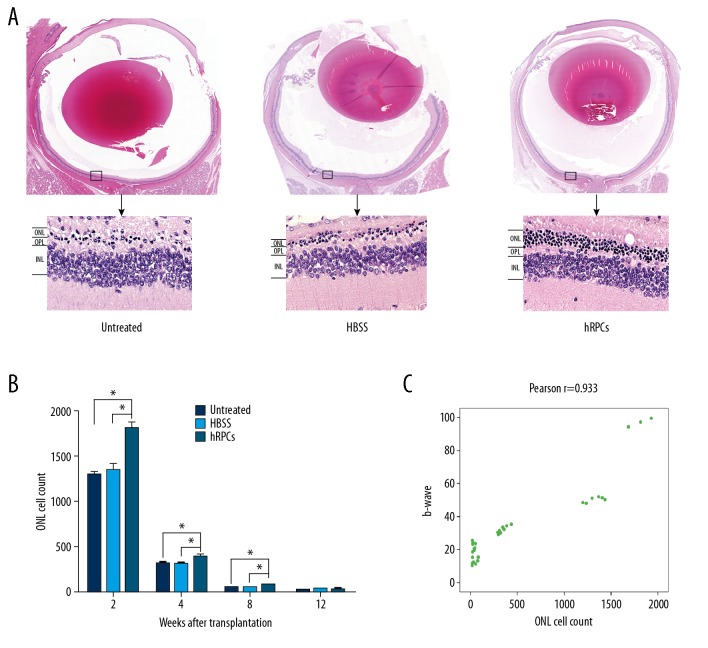
BACKGROUND Retinal degeneration causes irreversible blindness. Human retinal progenitor cells (hRPCs) have the potential to treat retinal diseases. The vitreous cavity is a relatively immune-privileged site that is suitable for stem cell transplantation in the treatment of retinal diseases. This study aimed to evaluate the therapeutic efficacy and safety of intravitreal injection of hRPCs in retinal degeneration therapy. MATERIAL AND METHODS hRPCs were primary-cultured and injected into the vitreous cavity of RCS rats. To determine whether hRPCs formed teratomas in immune-deficient mice, hRPCs at different passages were transplanted into BALB/c-nu mice. The visual function was detected by electroretinography recording. Changes in the outer nuclear layer (ONL) were analyzed by histological testing and cell counting. The protective mechanism was further assessed by cytokine antibody array. RESULTS Intravitreal transplantation of hRPCs maintained retinal function and preserved retinal morphology. Importantly, grafted cells in the vitreous cavity were well tolerated, with no adverse effects. Teratoma was not formed in BALB/c-nu mice after hRPCs transplantation. The number of hRPCs-injected eyes and thickness of ONL in the hRPCs-treated group were higher than those in the untreated group and HBSS injection group. The cytokine antibody array revealed that hRPCs expressed GDF-15, PDGF-AA, EGF, and NT-4. CONCLUSIONS Our findings show that intravitreal injection of hRPCs is effective and safe in protecting photoreceptor cells in RCS rats, but were no longer effective at 12 weeks after transplantation. Moreover, hRPCs released multiple neurotrophic factors that may be involved in treating retinal disease.
视网膜变性导致不可逆转的失明。人视网膜祖细胞(hRPCs)有潜力治疗视网膜疾病。玻璃体腔是一个相对免疫特惠的部位,适合于干细胞移植治疗视网膜疾病。本研究旨在评估玻璃体内注射 hRPCs 治疗视网膜变性的疗效和安全性。
原代培养 hRPCs 并注射到 RCS 大鼠的玻璃体腔中。为了确定 hRPCs 是否在免疫缺陷小鼠中形成畸胎瘤,将不同传代的 hRPCs 移植到 BALB/c-nu 小鼠中。通过视网膜电图记录检测视觉功能。通过组织学检测和细胞计数分析外核层(ONL)的变化。进一步通过细胞因子抗体阵列评估保护机制。
玻璃体内移植 hRPCs 维持了视网膜功能并保留了视网膜形态。重要的是,玻璃体内移植的细胞被很好地耐受,没有不良反应。hRPCs 移植后,BALB/c-nu 小鼠未形成畸胎瘤。hRPCs 处理组的 hRPCs 注射眼数和 ONL 厚度均高于未处理组和 HBSS 注射组。细胞因子抗体阵列显示 hRPCs 表达 GDF-15、PDGF-AA、EGF 和 NT-4。
我们的研究结果表明,玻璃体内注射 hRPCs 对 RCS 大鼠的光感受器细胞具有保护作用,且安全有效,但在移植后 12 周时效果不再。此外,hRPCs 释放多种神经营养因子,可能参与治疗视网膜疾病。