World Health Organization, Department of Health Products Policy and Standards, Avenue Appia 20, CH-1211, Geneva, Switzerland.
Independent Expert, Welwyn, United Kingdom.
Biologicals. 2020 May;65:1-9. doi: 10.1016/j.biologicals.2020.02.005. Epub 2020 Mar 27.
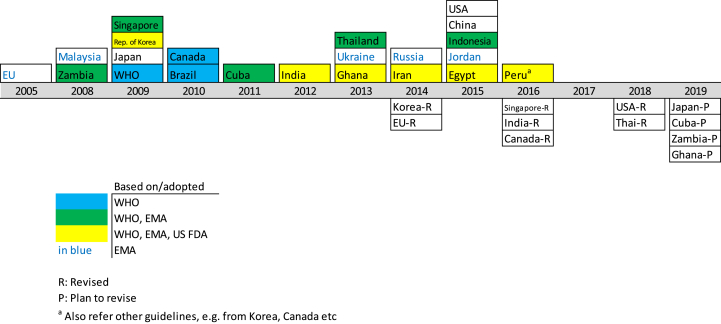
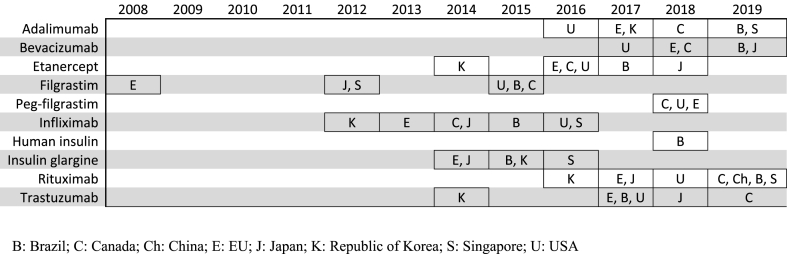
The World Health Assembly in 2014 adopted a resolution that mandates both Member States and the WHO Secretariat to facilitate access to biotherapeutic products in a way that ensures their quality, safety and efficacy. The availability of biosimilars is expected to increase access to biotherapeutic products by providing more treatment options triggering competition which would lead to a consistent reduction in the average price of treatment. Since the WHO guidelines for regulatory evaluation of biosimilars were issued in 2009, WHO has provided immense effort towards harmonizing the terminology and the regulatory framework for biosimilars globally. This article describes the progress made and the regulatory landscape changes for biosimilars in 21 countries during the past ten years. Based on the information from regulators and from publicly available data, the following has been identified: 1) WHO guidelines have contributed to setting the regulatory framework for biosimilars in countries and increasing regulatory convergence at global level; 2) terminology used for biosimilars is more consistent than in the past; 3) biosimilars are now approved in all participating countries; and 4) the dominant product class for candidate biosimilars under development is monoclonal antibodies.
2014 年世界卫生大会通过了一项决议,要求会员国和世卫组织秘书处以确保生物治疗产品质量、安全性和疗效的方式促进获得这些产品。预计生物类似药的供应将增加生物治疗产品的可及性,提供更多的治疗选择,引发竞争,从而导致治疗平均价格持续下降。自 2009 年世卫组织发布生物类似药监管评估指南以来,世卫组织在全球协调生物类似药的术语和监管框架方面做出了巨大努力。本文描述了过去十年中 21 个国家在生物类似药方面取得的进展和监管格局的变化。根据监管机构和公开数据,确定了以下几点:1)世卫组织指南有助于为各国的生物类似药监管框架设定标准,并提高全球监管趋同度;2)生物类似药使用的术语比过去更加一致;3)所有参与国都已批准生物类似药;4)正在开发的候选生物类似药中主要产品类别是单克隆抗体。