School of Human Sciences, the University of Western Australia, Perth, WA 6009, Australia
School of Molecular Sciences, the University of Western Australia, Perth, WA 6009, Australia.
Dis Model Mech. 2020 Mar 2;13(2):dmm043638. doi: 10.1242/dmm.043638.
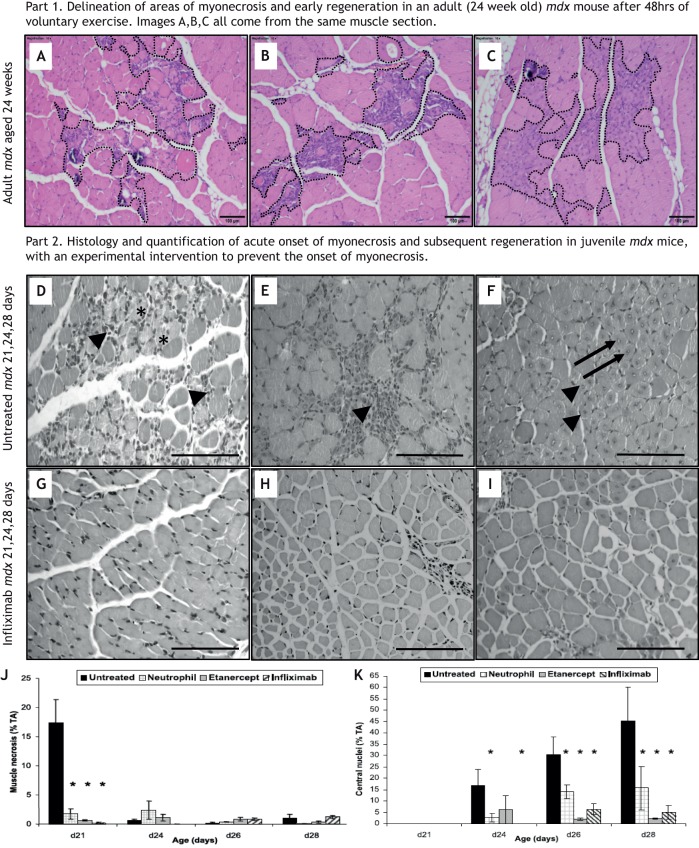
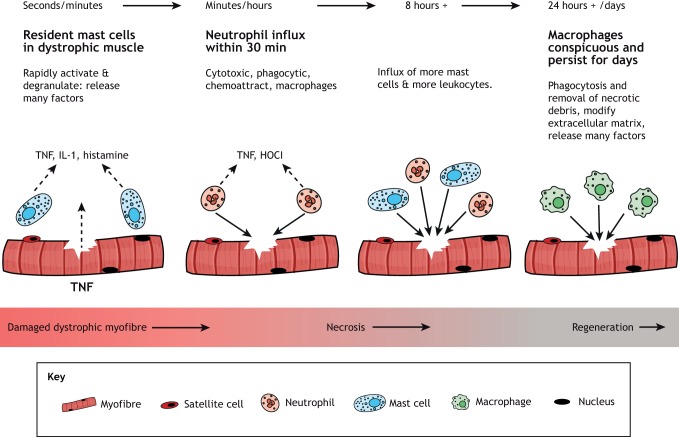
Duchenne muscular dystrophy (DMD) is a lethal, X-linked disease that causes severe loss of muscle mass and function in young children. Promising therapies for DMD are being developed, but the long lead times required when using clinical outcome measures are hindering progress. This progress would be facilitated by robust molecular biomarkers in biofluids, such as blood and urine, which could be used to monitor disease progression and severity, as well as to determine optimal drug dosing before a full clinical trial. Many candidate DMD biomarkers have been identified, but there have been few follow-up studies to validate them. This Review describes the promising biomarkers for dystrophic muscle that have been identified in muscle, mainly using animal models. We strongly focus on myonecrosis and the associated inflammation and oxidative stress in DMD muscle, as the lack of dystrophin causes repeated bouts of myonecrosis, which are the key events that initiate the resultant severe dystropathology. We discuss the early events of intrinsic myonecrosis, along with early regeneration in the context of histological and other measures that are used to quantify its incidence. Molecular biomarkers linked to the closely associated events of inflammation and oxidative damage are discussed, with a focus on research related to protein thiol oxidation and to neutrophils. We summarise data linked to myonecrosis in muscle, blood and urine of dystrophic animal species, and discuss the challenge of translating such biomarkers to the clinic for DMD patients, especially to enhance the success of clinical trials.
杜氏肌营养不良症(DMD)是一种致命的 X 连锁疾病,会导致幼儿严重的肌肉质量和功能丧失。目前正在开发针对 DMD 的有前景的治疗方法,但使用临床结果测量方法所需的长前置时间阻碍了进展。如果生物流体(如血液和尿液)中有强大的分子生物标志物,可以用于监测疾病进展和严重程度,以及确定在全面临床试验之前的最佳药物剂量,这将有助于取得进展。已经确定了许多候选 DMD 生物标志物,但很少有后续研究来验证它们。这篇综述描述了在肌肉中发现的有希望的肌营养不良生物标志物,主要是使用动物模型。我们强烈关注 DMD 肌肉中的肌坏死以及相关的炎症和氧化应激,因为缺乏肌营养不良蛋白会导致反复发生肌坏死,这是引发严重肌病理的关键事件。我们讨论了内在肌坏死的早期事件,以及在组织学和其他用于量化其发生率的措施的背景下的早期再生。讨论了与炎症和氧化损伤密切相关的分子生物标志物,重点是与蛋白巯基氧化和中性粒细胞相关的研究。我们总结了与肌肉、血液和尿液中的肌营养不良动物物种的肌坏死相关的数据,并讨论了将这些生物标志物转化为 DMD 患者的临床应用的挑战,特别是为了提高临床试验的成功率。