Department of Oral Biochemistry, Academic Centre for Dentistry Amsterdam (ACTA), University of Amsterdam (UvA) and Vrije Universiteit Amsterdam (VU), Gustav Mahlerlaan 3004, 1081 LA Amsterdam, The Netherlands.
Laboratory for Myology, Department of Human Movement Sciences, Faculty of Behavioral and Movement Sciences, Amsterdam Movement Sciences, Vrije Universiteit, Van der Boechorststraat 7, 1081 BT Amsterdam (VU), The Netherlands.
Cells. 2020 Mar 26;9(4):795. doi: 10.3390/cells9040795.
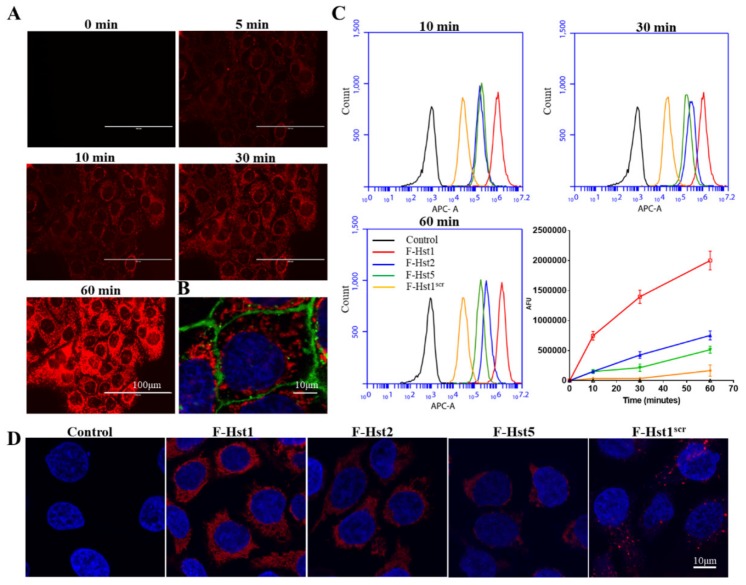
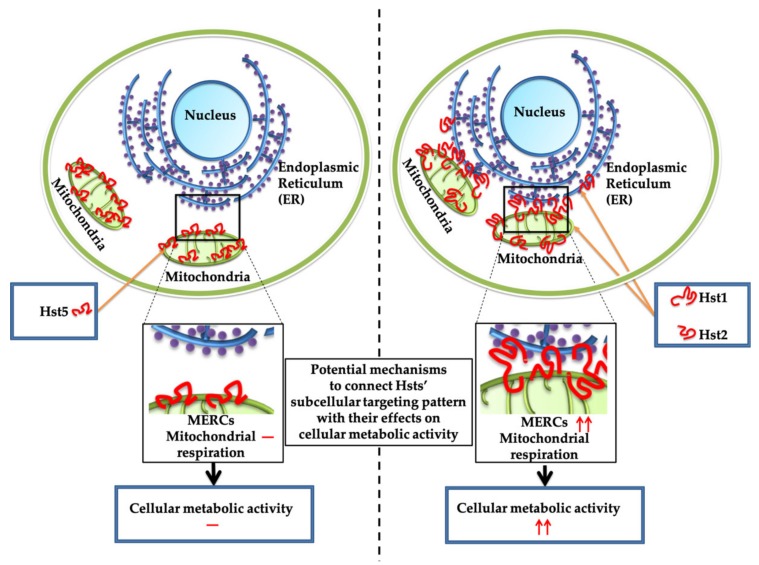
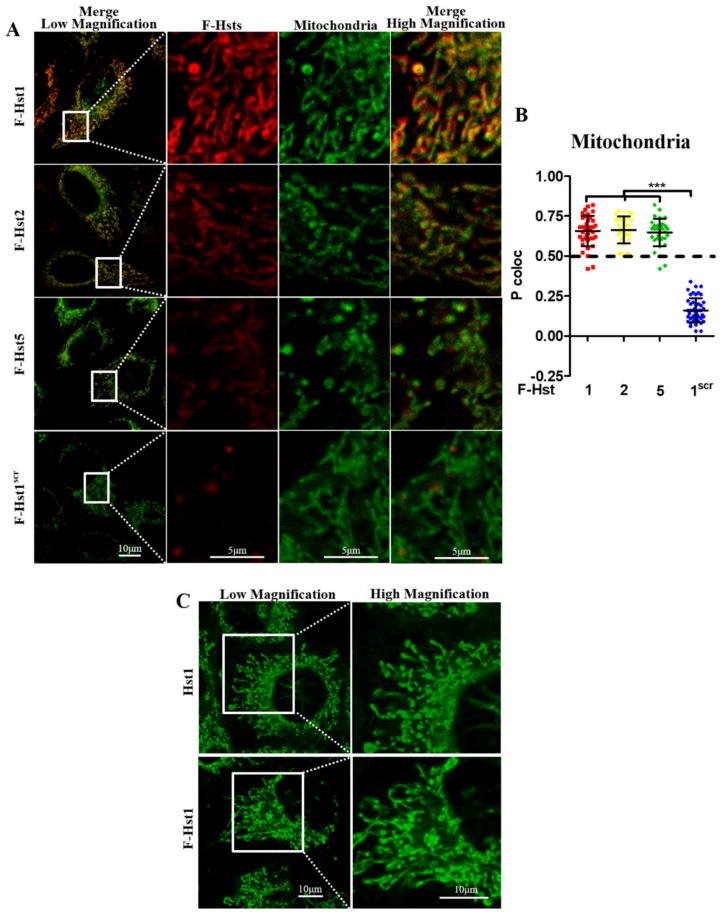
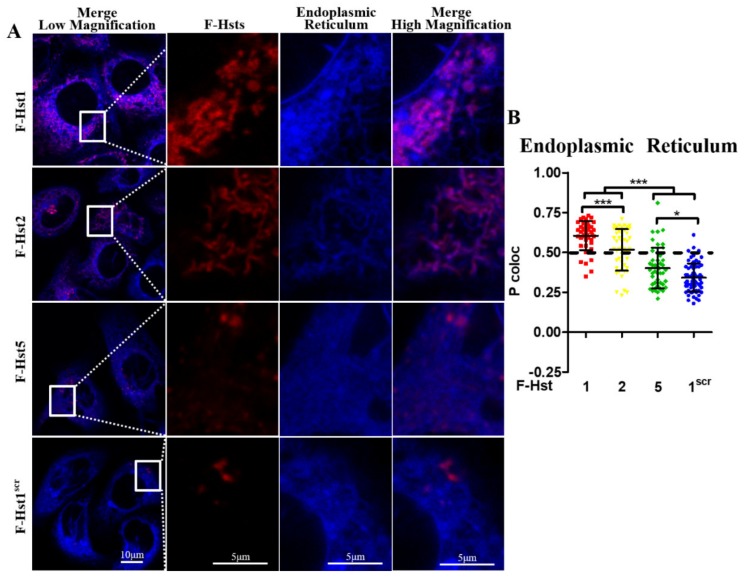
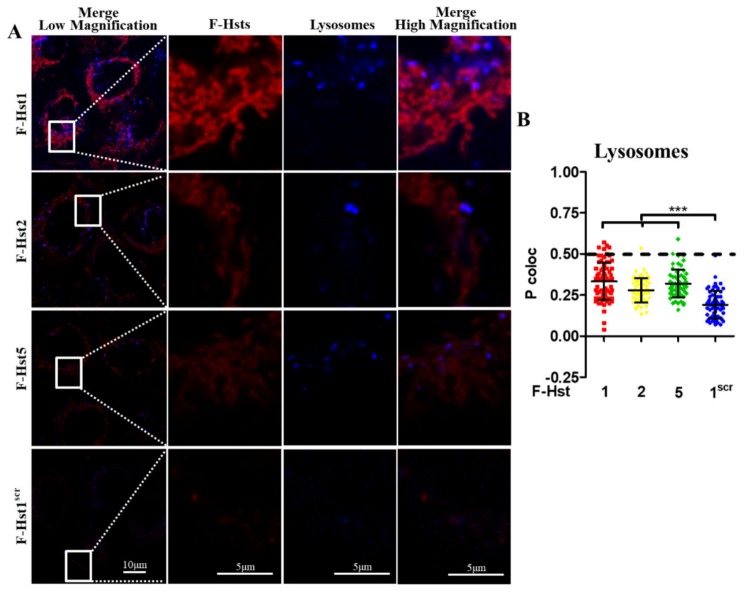
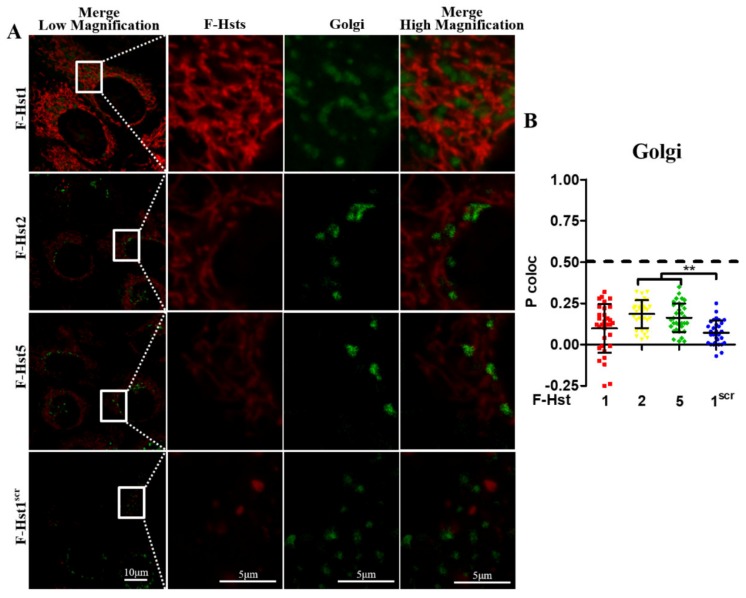
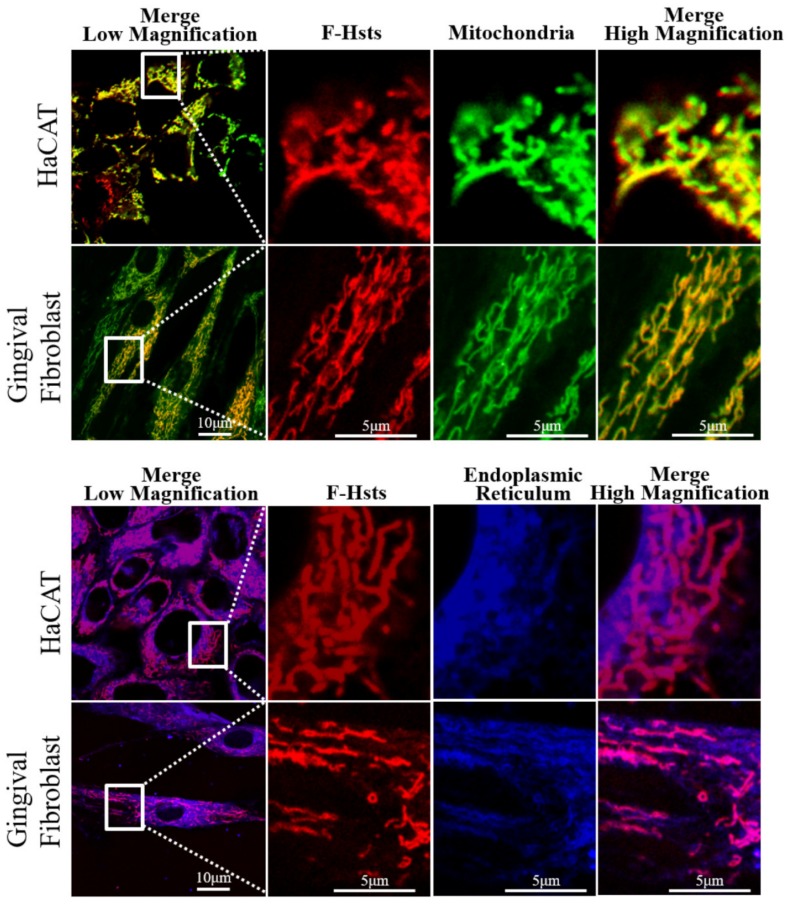
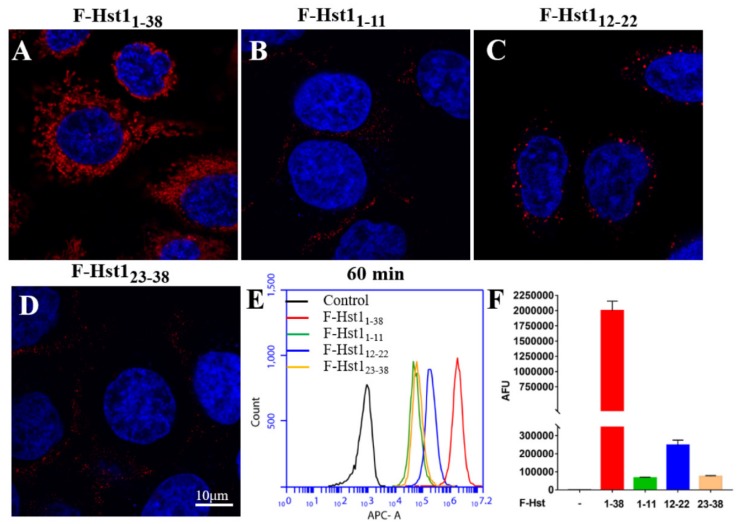
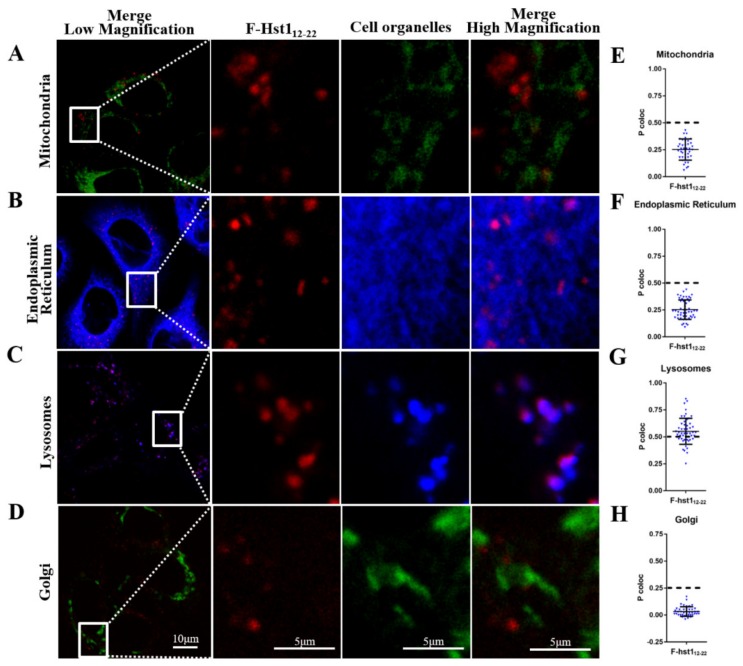
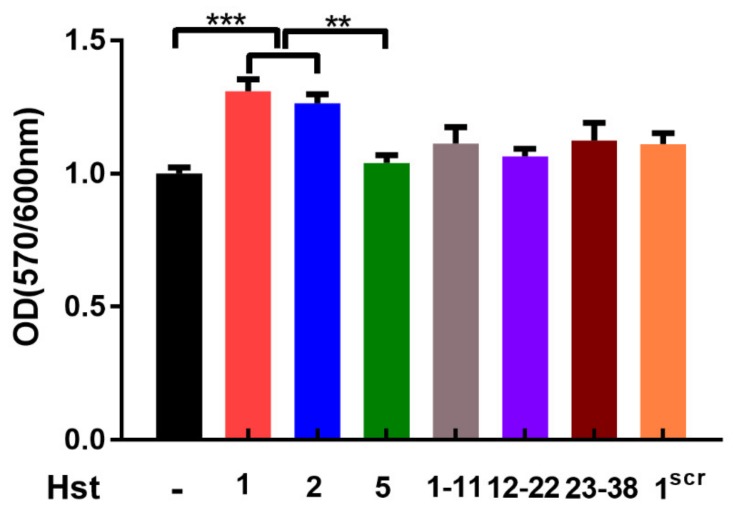
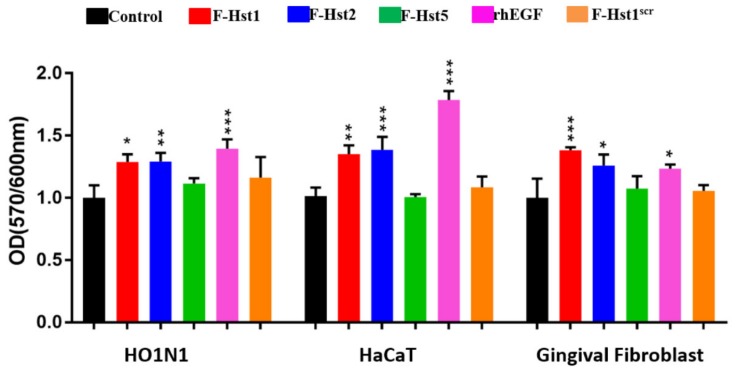
Human salivary histatin 1 (Hst1) and Hst2 exhibit a series of cell-activating properties (e.g., promoting adhesion, spreading, migration and metabolic activity of mammalian cells). In contrast, Hst5 shows an anti-fungal property but no cell-activating properties. Previous findings suggest that their uptake and association with subcellular targets may play a determinant role in their functions. In this study, we studied the uptake dynamics and subcellular targets of Hst1, Hst2 and Hst5 in epithelial cells (HO1N1 human buccal carcinoma epithelial cell line). Confocal laser scanning microscopy (CLSM) revealed that fluorescently labeled Hst1 (F-Hst1) was taken up into the intracellular space of epithelial cells. Then, 60 min post-incubation, the total fluorescence of cell-associated F-Hst1, as measured using flow cytometry, was significantly higher compared to those of F-Hst2 and F-Hst5. In contrast, virtually no association occurred using the negative control-scrambled F-Hst1 (F-Hst). CLSM images revealed that F-Hst1, 2 and 5 co-localized with mitotracker-labeled mitochondria. In addition, F-Hst1 and F-Hst2 but neither F-Hst5 nor F-Hst1 co-localized with the ER-tracker-labeled endoplasmic reticulum. No co-localization of Hst1, 2 and 5 with lysosomes or the Golgi apparatus was observed. Furthermore, Hst1 and Hst2 but not Hst5 or Hst1 significantly promoted the metabolic activity of both human epithelial cell lines, HaCaT human keratinocytes and primary human gingival fibroblasts.
人唾液组蛋白 1(Hst1)和 Hst2 表现出一系列细胞激活特性(例如,促进哺乳动物细胞的黏附、铺展、迁移和代谢活性)。相比之下,Hst5 具有抗真菌特性,但没有细胞激活特性。先前的研究结果表明,它们的摄取和与亚细胞靶标的结合可能在其功能中起决定性作用。在这项研究中,我们研究了 Hst1、Hst2 和 Hst5 在上皮细胞(HO1N1 人颊癌细胞系)中的摄取动力学和亚细胞靶标。共聚焦激光扫描显微镜(CLSM)显示,荧光标记的 Hst1(F-Hst1)被摄取到上皮细胞的细胞内空间。然后,在用流式细胞术测量时,孵育 60 分钟后,与 F-Hst2 和 F-Hst5 相比,细胞相关的 F-Hst1 的总荧光明显更高。相比之下,使用阴性对照 scrambled F-Hst1(F-Hst)几乎没有发生关联。CLSM 图像显示,F-Hst1、2 和 5 与线粒体标记的 mitotracker 共定位。此外,F-Hst1 和 F-Hst2 但不是 F-Hst5 或 F-Hst1 与内质网标记的内质网共定位。未观察到 Hst1、2 和 5 与溶酶体或高尔基体的共定位。此外,Hst1 和 Hst2 但不是 Hst5 或 Hst1 显著促进了两种人上皮细胞系(HaCaT 人角质形成细胞和原代人牙龈成纤维细胞)的代谢活性。