Department of Geriatrics, Tongji Hospital, Tongji University School of Medicine, Shanghai 200065, China.
Department of Geriatrics, Jiangxi Provincial People's Hospital Affiliated to Nanchang University, Nanchang 330006, Jiangxi, China.
Int J Biol Sci. 2020 Feb 24;16(9):1481-1494. doi: 10.7150/ijbs.41641. eCollection 2020.
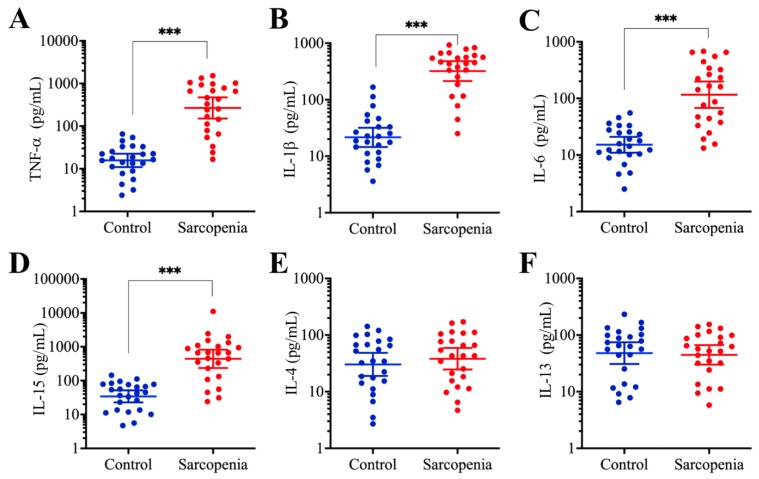
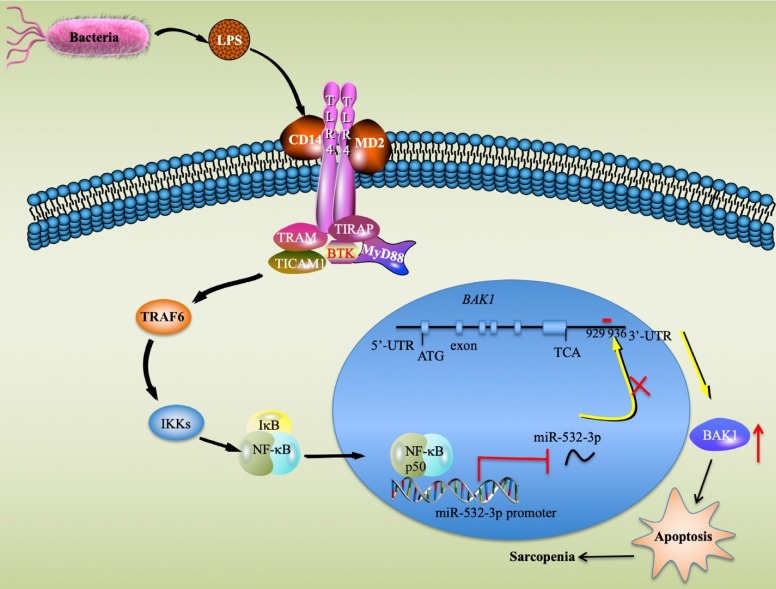
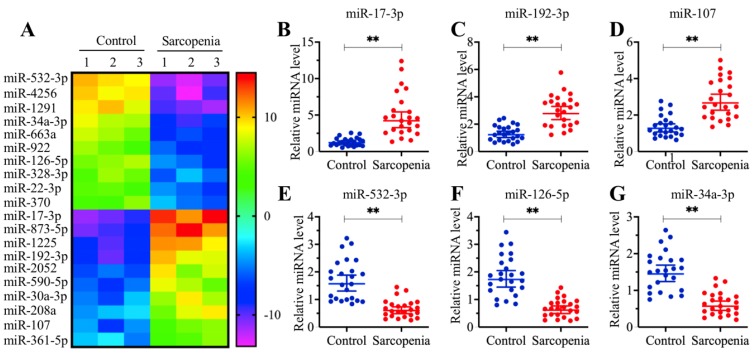
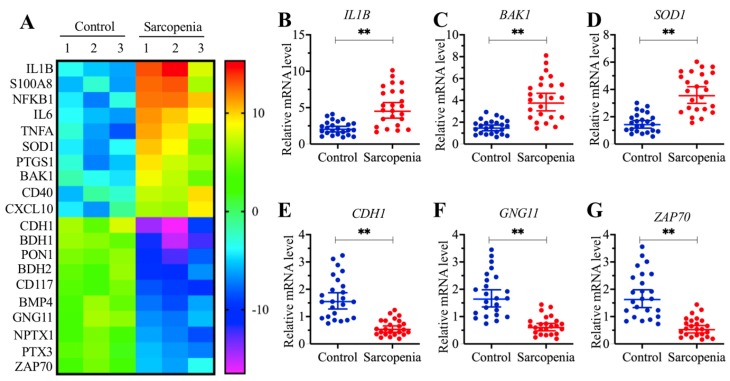
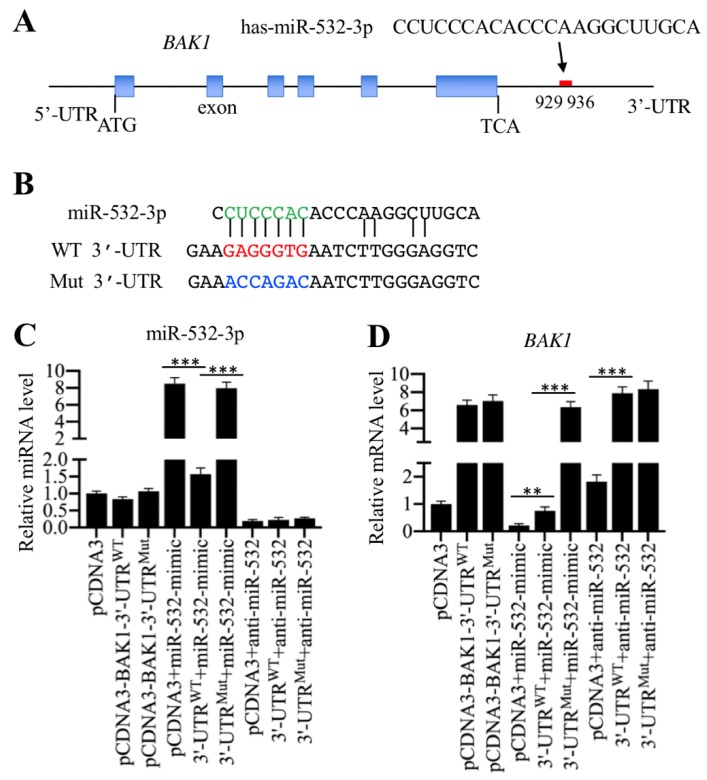
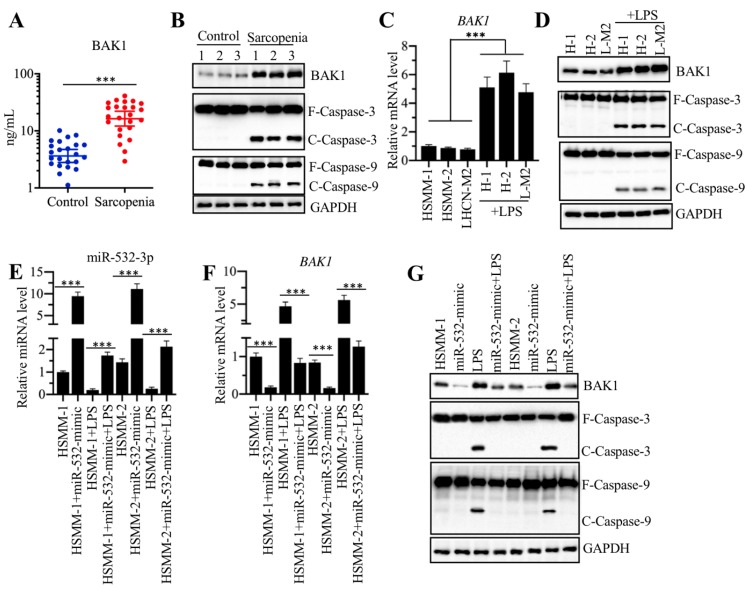
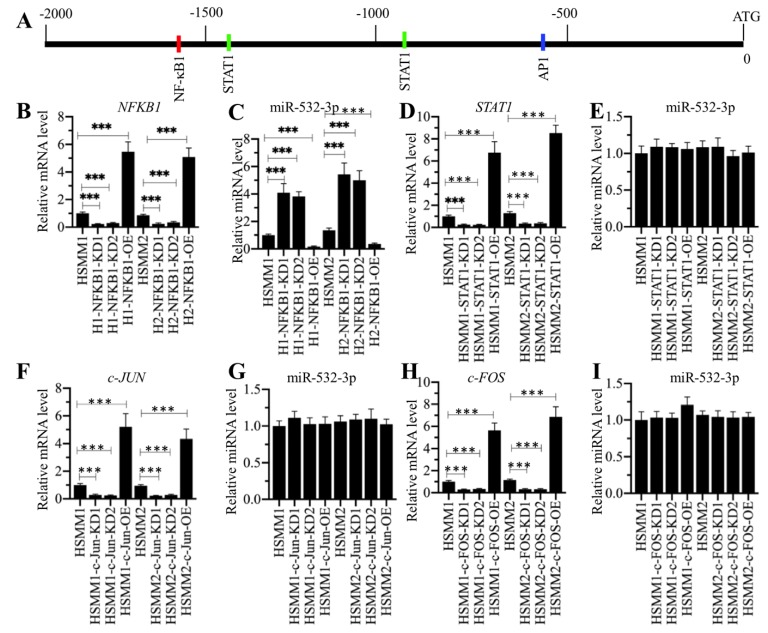
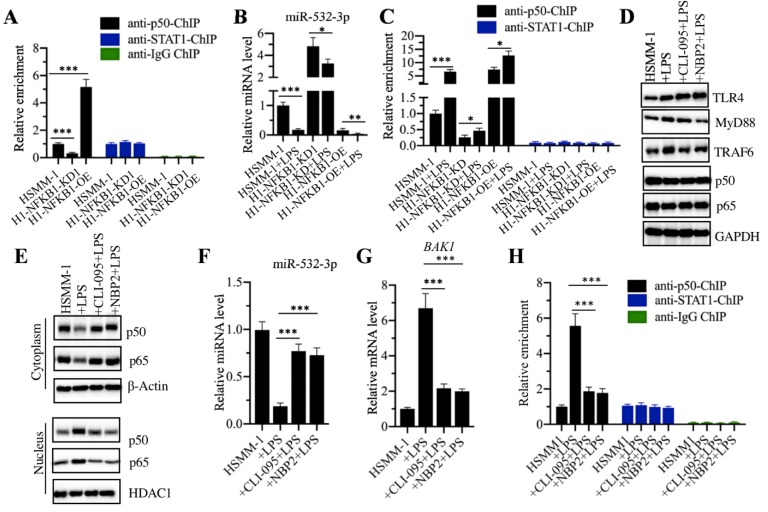
Inflammation and apoptosis are considered as two major pathological causes of human sarcopenia. The current understanding based on different models recognizes that apoptosis does not trigger inflammation, while emerging evidence indicates that inflammation can induce apoptosis. Here, we provide solid evidence to suggest that the inflammation-dependent downregulation of miR-532 causes apoptosis through targeting a proapoptotic gene (BCL2 antagonist/killer 1). To identify miRNAs and genes that are aberrantly expressed in the muscle tissues of sarcopenia patients, we conducted two independent microarray analyses. In total, we identified 53 miRNAs and 69 genes with differential expression levels. Of these aberrantly expressed miRNAs, miR-532-3p showed the most obvious changes in sarcopenia tissues, and more importantly, it can be repressed by the well-known inflammatory inducer lipopolysaccharide () . According to gene-based microarray results and the predicted targets of miR-532-3p, we presumed that was a putative target of miR-532-3p. Further and analyses verified that miR-532-3p could directly bind to the three prime untranslated region (3'-UTR) of through the seed sequence CUCCCAC. In addition, we found that NFKB1 (also known as p50), a subunit of the transcription factor NF-κB ( kappa-light-chain-enhancer of activated B cells), could specifically bind to the promoter region of miR-532-3p and repress its expression. Further analysis revealed that the activation of TLR4 (Toll-like receptor 4) signaling led to the translocation of p50 from the cytoplasm to the nucleus, where it repressed miR-532-3p expression and thus led to an increase of . The accumulated BAK1 activated its downstream apoptotic signaling pathways and resulted in apoptosis, eventually causing the pathogenesis underlying sarcopenia. Overall, our results uncovered a new mechanism by which the inflammation-dependent downregulation of miR-532-3p contributed to the pathogenesis of sarcopenia through mediating expression.
炎症和细胞凋亡被认为是人类肌肉减少症的两个主要病理原因。基于不同模型的现有认识认为,细胞凋亡不会引发炎症,而新出现的证据表明,炎症可以诱导细胞凋亡。在这里,我们提供了确凿的证据表明,炎症依赖性下调 miR-532 通过靶向促凋亡基因 (BCL2 拮抗剂/杀伤 1) 引起细胞凋亡。为了确定肌肉减少症患者肌肉组织中异常表达的 miRNA 和基因,我们进行了两项独立的微阵列分析。总共鉴定出 53 个 miRNA 和 69 个具有差异表达水平的基因。在这些异常表达的 miRNA 中,miR-532-3p 在肌肉减少症组织中的变化最为明显,更重要的是,它可以被众所周知的炎症诱导剂脂多糖 () 抑制。根据基于基因的微阵列结果和 miR-532-3p 的预测靶点,我们推测 是 miR-532-3p 的一个潜在靶点。进一步的双荧光素酶和 Western blot 分析验证了 miR-532-3p 可以通过种子序列 CUCCCAC 直接结合到 的 3'-UTR。此外,我们发现转录因子 NF-κB (kappa-轻链增强子激活的 B 细胞) 的亚基 NFKB1 (也称为 p50) 可以特异性结合到 miR-532-3p 的启动子区域并抑制其表达。进一步分析表明,TLR4 (Toll 样受体 4) 信号的激活导致 p50 从细胞质易位到细胞核,在细胞核中 p50 抑制 miR-532-3p 的表达,从而导致 的增加。积累的 BAK1 激活其下游凋亡信号通路并导致细胞凋亡,最终导致肌肉减少症的发病机制。总的来说,我们的结果揭示了一种新的机制,即炎症依赖性下调 miR-532-3p 通过调节 表达参与肌肉减少症的发病机制。