Lei Junjun, Glynne-Jones Peter, Hill Martyn
Faculty of Engineering and the Environment, University of Southampton, University Road, Southampton, SO17 1BJ UK.
Microfluid Nanofluidics. 2017;21(2):23. doi: 10.1007/s10404-017-1865-z. Epub 2017 Feb 7.
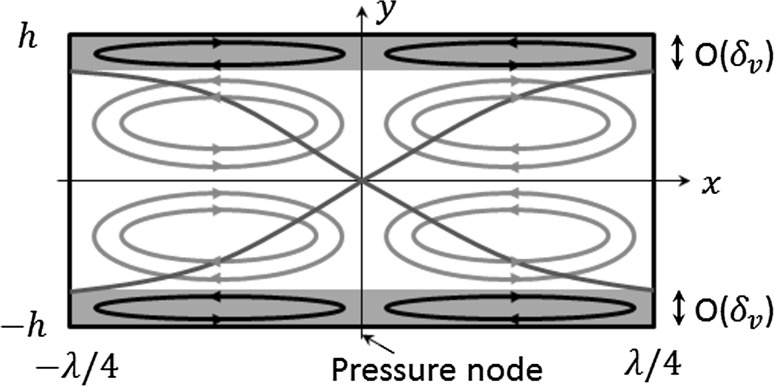
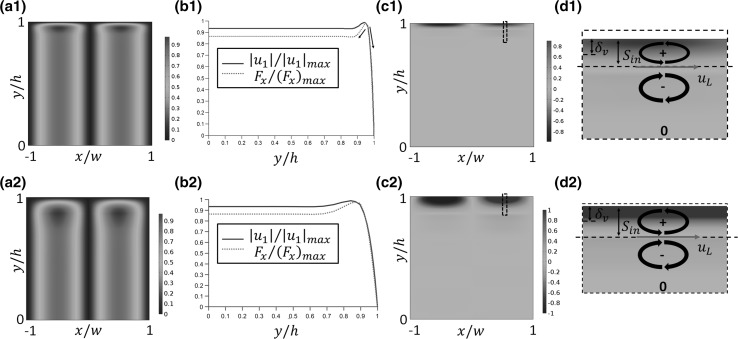
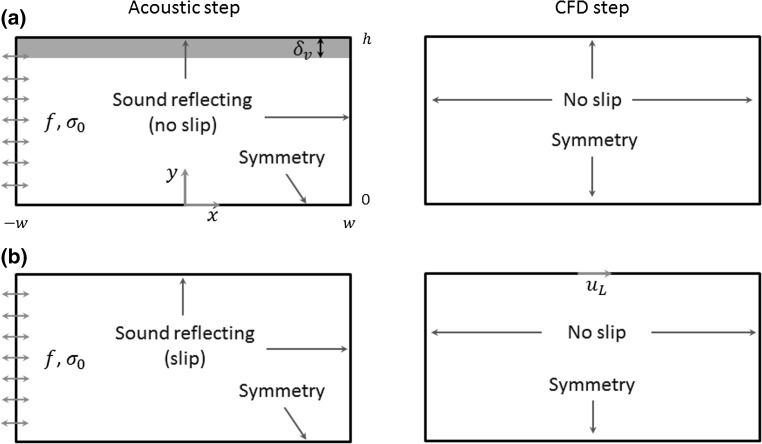
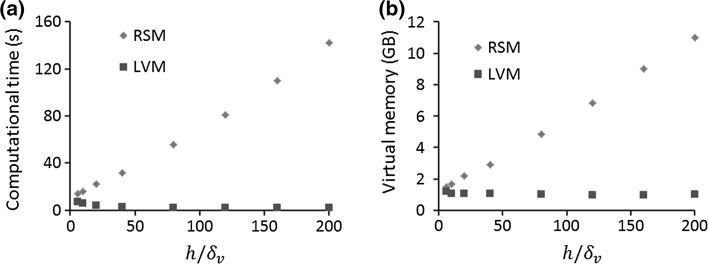
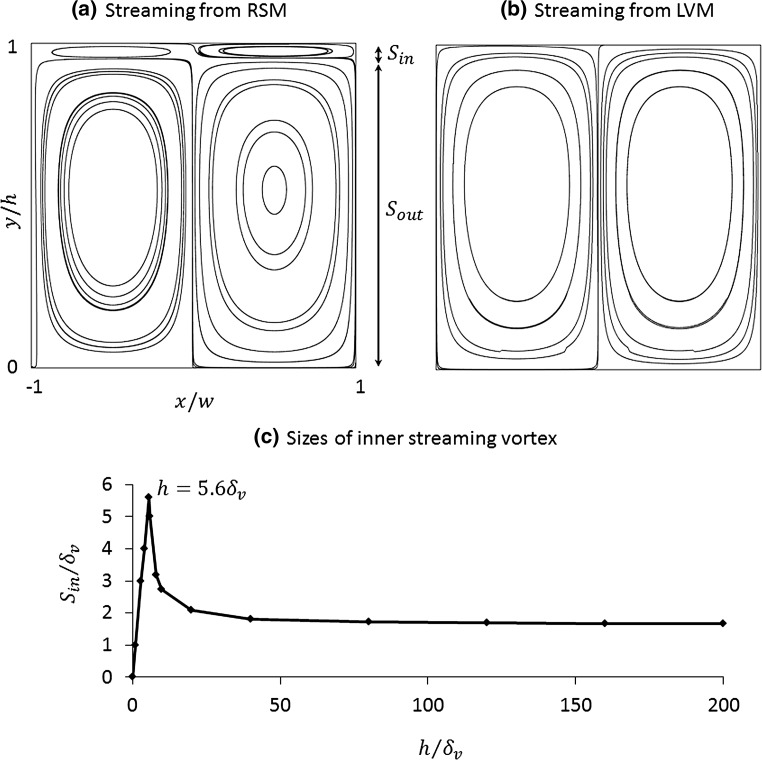
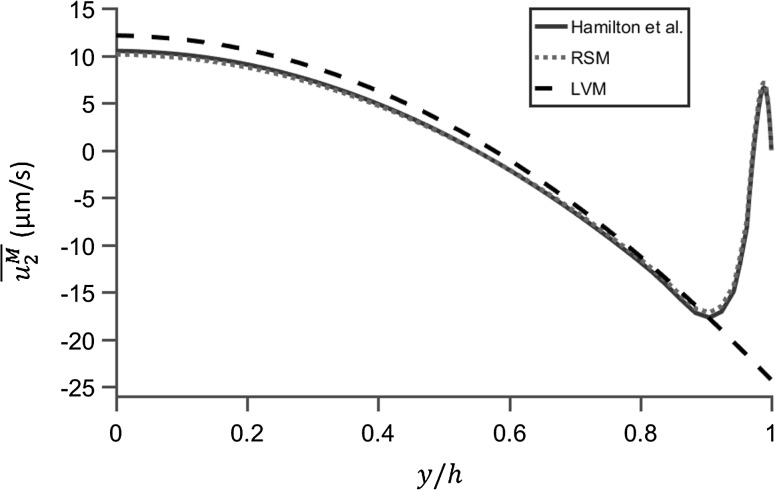
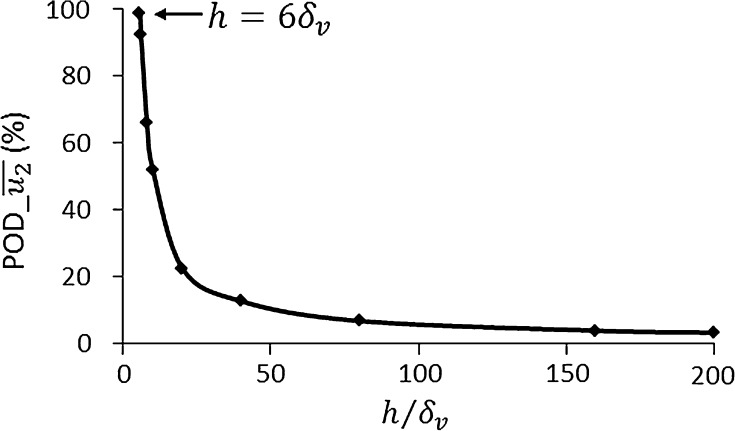
Numerical simulations of acoustic streaming flows can be used not only to explain the complex phenomena observed in acoustofluidic manipulation devices, but also to predict and optimise their performances. In this paper, two numerical methods based on perturbation theory are compared in order to demonstrate their viability and applicability for modelling boundary-driven streaming flows in acoustofluidic systems. It was found that the Reynolds stress method, which predicts the streaming fields from their driving terms, can effectively resolve both the inner and outer streaming fields and can be used to demonstrate the driving mechanisms of a broad range of boundary-driven streaming flows. However, computational efficiency typically limits its useful application to two-dimensional models. We highlight the close relationship between the classical boundary-driven streaming vortices and the rotationality of the Reynolds stress force field. The limiting velocity method, which ignores the acoustic boundary layer and solves the outer streaming fields by applying the 'limiting velocities' as boundary conditions, is more computationally efficient and can be used for predicting three-dimensional outer streaming fields and provide insight into their origins, provided that the radius of curvature of the channel surfaces is much greater than the acoustic boundary layer thickness ( ). We also show that for the limiting velocity method to be valid the channel scales must exceed a value of approximately 100 (for an error of ~5% on the streaming velocity magnitudes) for the case presented in this paper. Comparisons of these two numerical methods can provide effective guidance for researchers in the field of acoustofluidics on choosing appropriate methods to predict boundary-driven streaming fields in the design of acoustofluidic particle manipulation devices.
声流的数值模拟不仅可用于解释在声流体操控装置中观察到的复杂现象,还可用于预测和优化其性能。本文对两种基于微扰理论的数值方法进行了比较,以证明它们在模拟声流体系统中边界驱动的声流方面的可行性和适用性。研究发现,雷诺应力法通过驱动项预测声流场,能够有效解析内部和外部声流场,可用于阐明各种边界驱动声流的驱动机制。然而,计算效率通常限制了其在二维模型中的有效应用。我们强调了经典的边界驱动声流涡旋与雷诺应力力场的旋度之间的密切关系。极限速度法忽略了声边界层,并通过将“极限速度”作为边界条件来求解外部声流场,计算效率更高,可用于预测三维外部声流场并深入了解其起源,前提是通道表面的曲率半径远大于声边界层厚度( )。我们还表明,对于本文所呈现的情况,为使极限速度法有效,通道尺度必须超过约100 的值(声流速度大小的误差约为5%)。这两种数值方法的比较可为声流体领域的研究人员在设计声流体粒子操控装置时选择合适的方法来预测边界驱动声流场提供有效指导。