Department of Orthopedic Surgery, Xinhua Hospital, School of Medicine, Shanghai Jiao Tong University, Shanghai 200092, China.
The Key Laboratory of Stem Cell Biology, Shanghai Institutes for Biological Sciences (SIBS), Chinese Academy of Sciences (CAS); University of Chinese Academy of Sciences, Shanghai 200031, China.
Theranostics. 2020 Mar 4;10(9):3925-3938. doi: 10.7150/thno.41378. eCollection 2020.
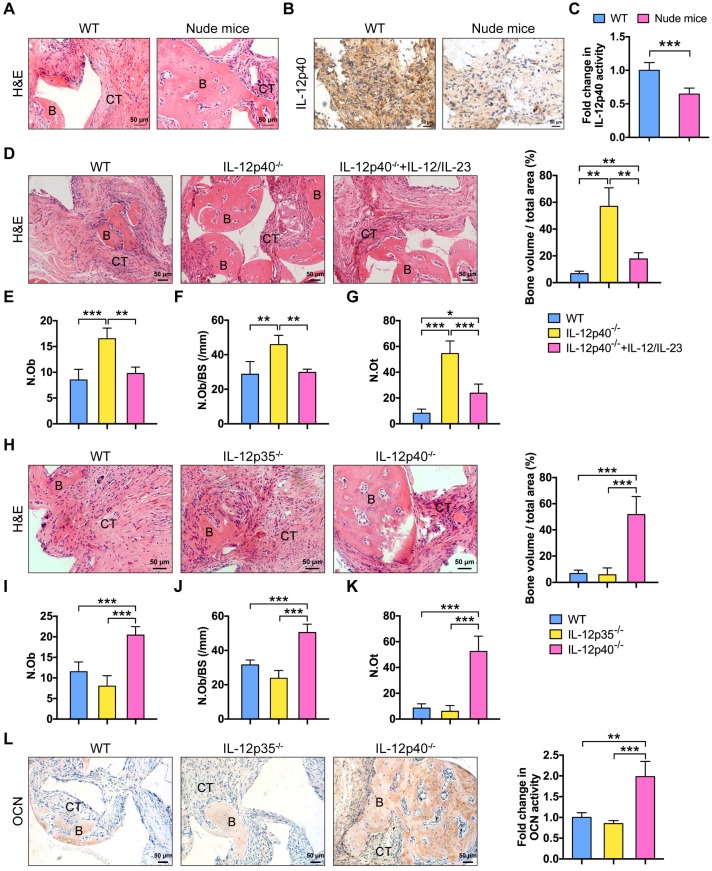
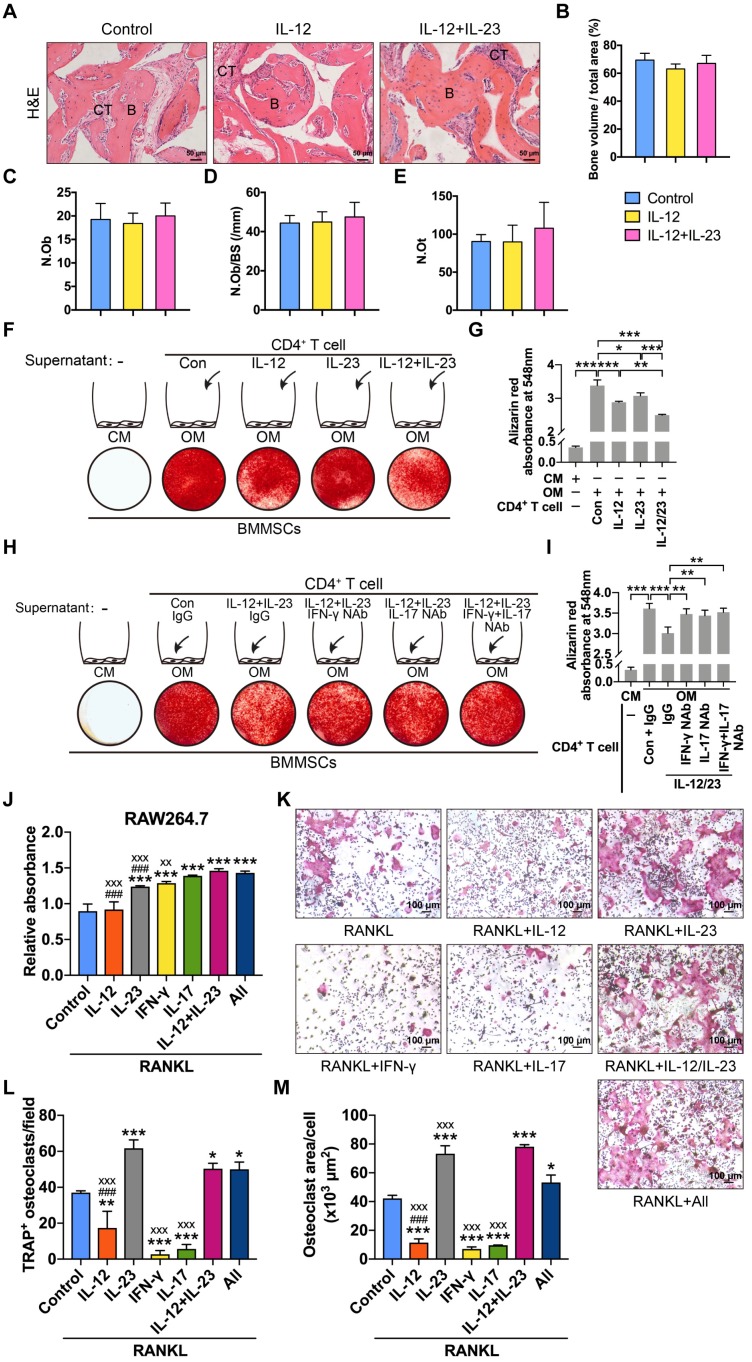
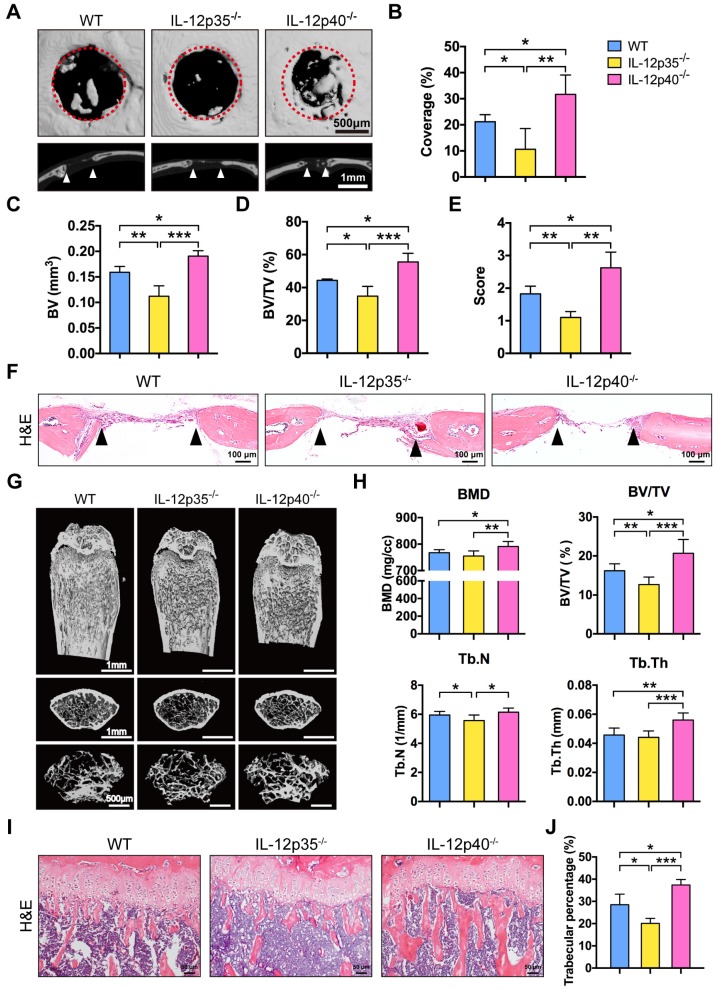
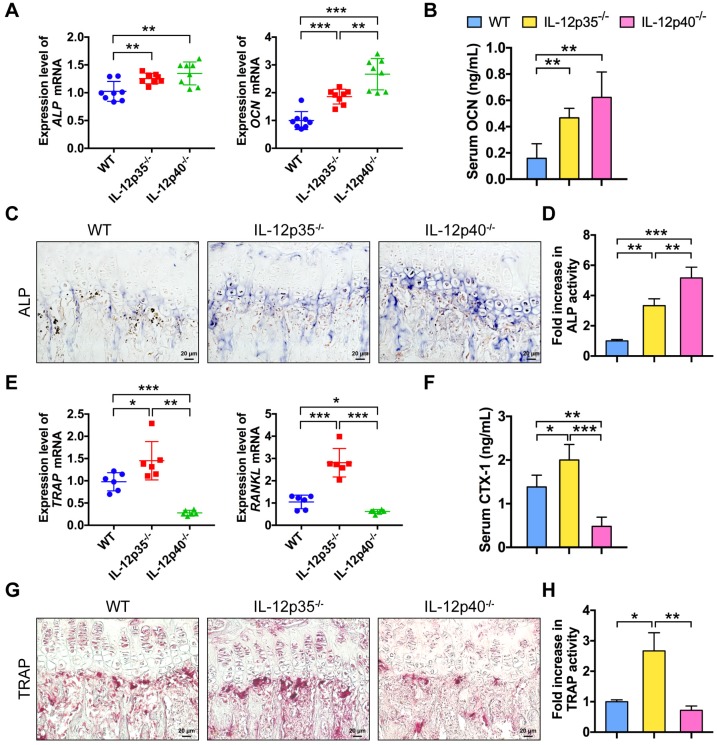
Interleukin-12 (IL-12) and IL-23 are thought to have central roles in inflammation and are critical to pathologies associated with inflammation-induced bone disorders. The deletion of IL-12p40 (a common subunit of IL-12 and IL-23) can improve bone regeneration. However, the relative roles of IL-12 and IL-23 in bone disorders are largely unknown. : Ectopic bone formation and skull defect models were established to evaluate the relative roles of IL-12 and IL-23 in inflammatory bone disorders. Differences in bone mass among WT, IL-12p35, and IL-12p40 mice (young and elderly) were detected by micro-CT. Osteogenic and osteoclastic activities were explored using ELISA, qRT-PCR, and histological analysis. Moreover, the mechanisms by which IL-12 and IL-23 regulated the differentiation of BMMSCs and RAW264.7 cells were explored using Alizarin Red and tartrate-resistant acid phosphatase staining . Apilimod was used to inhibit IL-12 and IL-23 production . : Mice deficient in IL-12p40 promoted bone formation and protected against aging-related bone loss. By contrast, bone loss was aggravated in IL-12 mice, suggesting that IL-23 may play a dominant role in inflammation-related bone disorders. Mechanistically, IL-12 and IL-23 coupled osteogenesis and osteoclastic activities to regulate bone homeostasis and repair. IL-23 deficiency increased bone formation and inhibited bone resorption. Finally, apilimod treatment significantly improved bone regeneration and calvarial defect repair. : These data collectively uncover a previously unrecognized role of IL-23 in skeletal tissue engineering. Thus, IL-23 can act as a biomarker to predict diseases and treatment efficacy, and apilimod can be used as an effective therapeutic drug to combat inflammatory bone disorders.
白细胞介素-12(IL-12)和白细胞介素-23(IL-23)被认为在炎症中具有核心作用,对于与炎症诱导的骨疾病相关的病理至关重要。IL-12p40(IL-12 和 IL-23 的共同亚基)的缺失可以改善骨再生。然而,IL-12 和 IL-23 在骨疾病中的相对作用在很大程度上尚不清楚。:建立异位骨形成和颅骨缺损模型,以评估 IL-12 和 IL-23 在炎症性骨疾病中的相对作用。通过 micro-CT 检测 WT、IL-12p35 和 IL-12p40 小鼠(年轻和老年)之间的骨量差异。使用 ELISA、qRT-PCR 和组织学分析探讨成骨和破骨活性。此外,使用茜素红和抗酒石酸酸性磷酸酶染色探讨 IL-12 和 IL-23 调节 BMMSCs 和 RAW264.7 细胞分化的机制。使用 Apilimod 抑制 IL-12 和 IL-23 的产生。:缺乏 IL-12p40 的小鼠促进骨形成并防止与年龄相关的骨丢失。相比之下,IL-12 小鼠的骨丢失加剧,表明 IL-23 可能在炎症相关的骨疾病中起主导作用。在机制上,IL-12 和 IL-23 耦联成骨和破骨活性以调节骨稳态和修复。IL-23 缺乏增加了骨形成并抑制了骨吸收。最后,Apilimod 治疗显著改善了骨再生和颅骨缺损修复。:这些数据共同揭示了 IL-23 在骨骼组织工程中的先前未被认识的作用。因此,IL-23 可以作为预测疾病和治疗效果的生物标志物,Apilimod 可用作治疗炎症性骨疾病的有效治疗药物。