Huff Andrew G, Beyeler Walter E, Kelley Nicholas S, McNitt Joseph A
EcoHealth Alliance, New York, NY USA.
J Environ Stud Sci. 2015;5(3):337-347. doi: 10.1007/s13412-015-0275-3. Epub 2015 Jun 6.
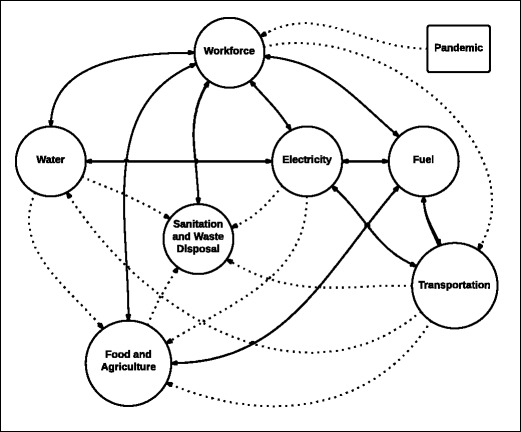
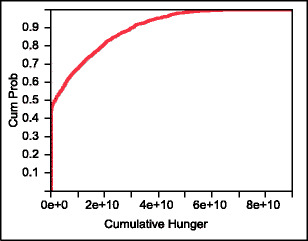
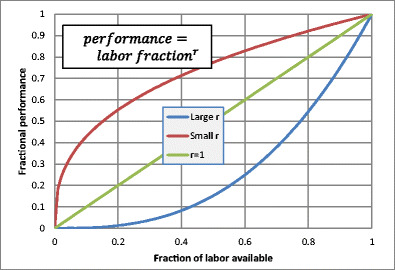
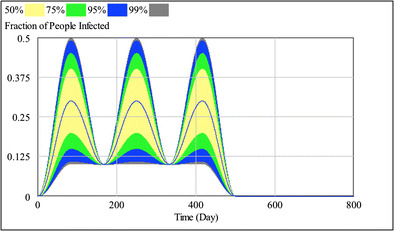
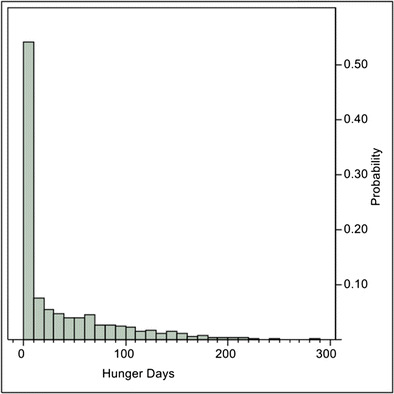
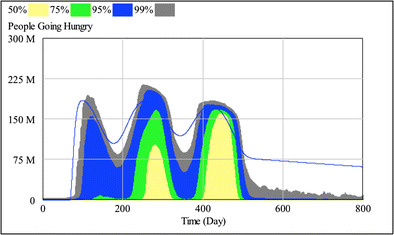
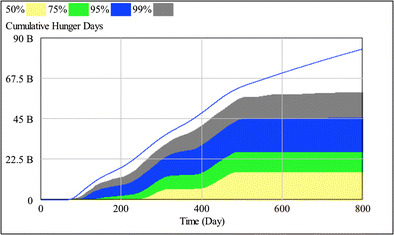
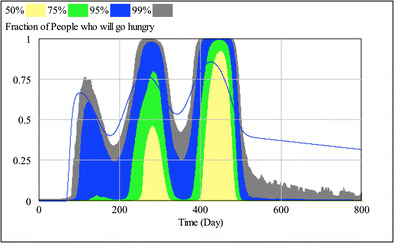
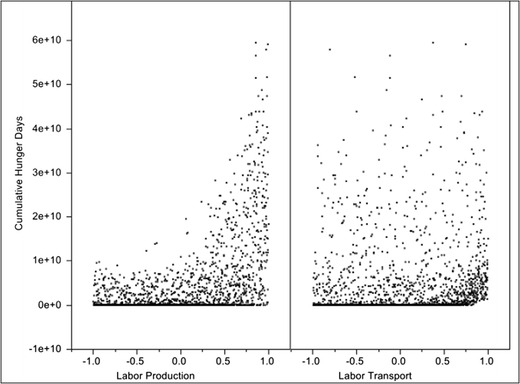
Rarely have studies focused on the second- and third-order effects of pandemics. Limiting the disruption of critical infrastructures during a pandemic is important for the survival and health of society (i.e., electricity, water, and food) as most medical and public health responses to a pandemic depend on these infrastructures. The studies that have looked at this issue have highlighted alarming gaps in preparedness. This study used a system dynamics model to demonstrate the likely effects of a pandemic on the USA's food system. The model reveals that a severe pandemic with greater than a 25 % reduction in labor availability can create significant and widespread food shortages. The Ebola epidemic that began in 2014 has caused severe food shortages in West Africa, which are similar to the effects that this model predicts in the USA. The likely effects of the reduction in the amount of available food are difficult to specifically predict; however, it is likely to have severe negative consequences on society. The resilience of the food system must be improved against this hazard and others.
很少有研究关注大流行的二阶和三阶效应。在大流行期间限制关键基础设施的中断对社会的生存和健康(即电力、水和食物)很重要,因为大多数针对大流行的医疗和公共卫生应对措施都依赖于这些基础设施。研究这一问题的研究突出了准备工作中令人担忧的差距。本研究使用系统动力学模型来证明大流行对美国食品系统可能产生的影响。该模型显示,劳动力可用性下降超过25%的严重大流行会造成严重且广泛的粮食短缺。2014年开始的埃博拉疫情在西非造成了严重的粮食短缺,这与该模型在美国预测的影响类似。可用食物量减少可能产生的影响很难具体预测;然而,这可能会对社会产生严重的负面后果。必须提高食品系统抵御这种危害和其他危害的复原力。