Department of Sociology, Princeton University, Princeton, NJ 08544;
Department of Sociology, Princeton University, Princeton, NJ 08544.
Proc Natl Acad Sci U S A. 2020 Apr 14;117(15):8398-8403. doi: 10.1073/pnas.1915006117. Epub 2020 Mar 30.
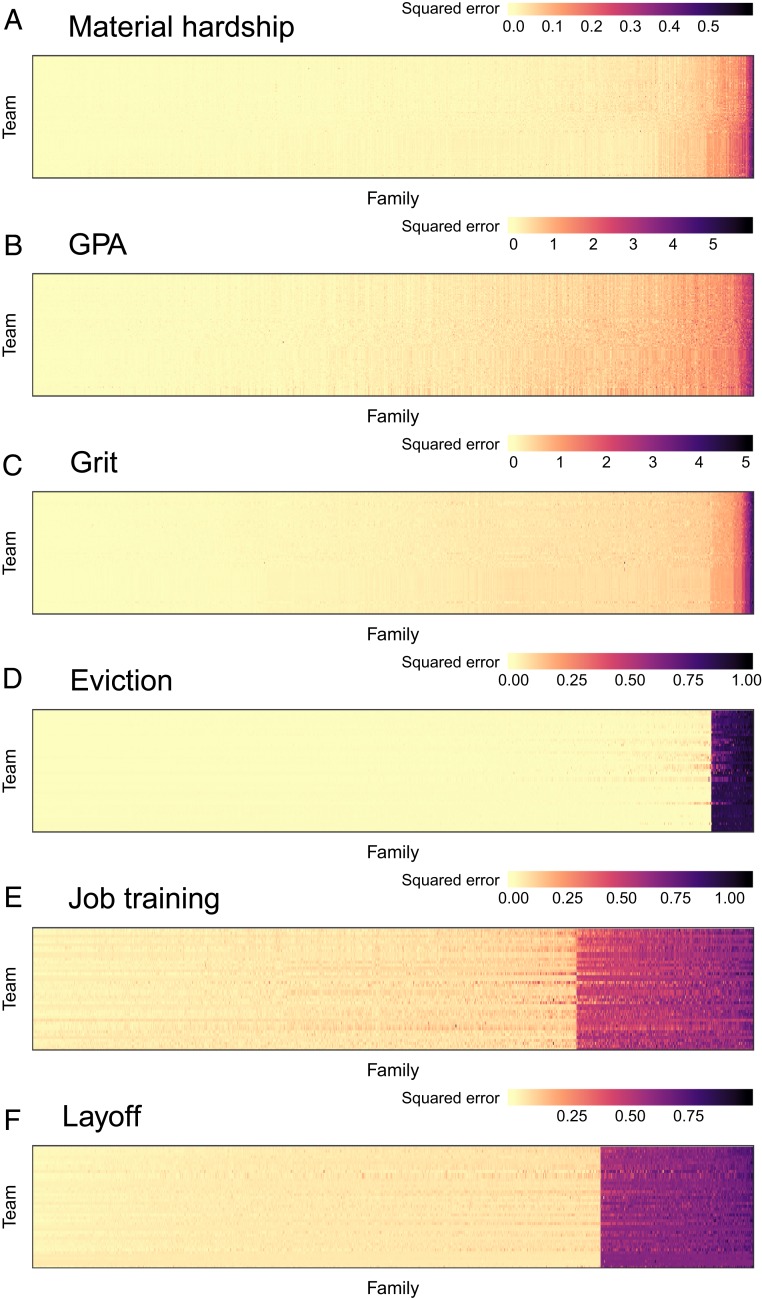
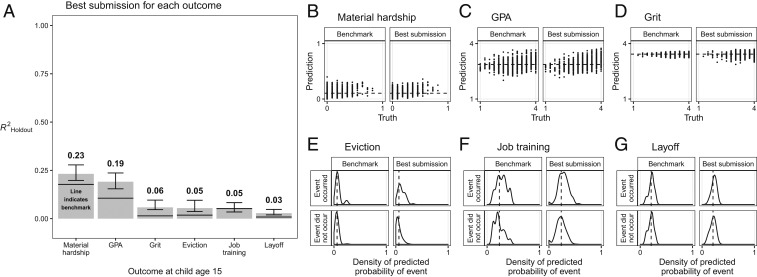
How predictable are life trajectories? We investigated this question with a scientific mass collaboration using the common task method; 160 teams built predictive models for six life outcomes using data from the Fragile Families and Child Wellbeing Study, a high-quality birth cohort study. Despite using a rich dataset and applying machine-learning methods optimized for prediction, the best predictions were not very accurate and were only slightly better than those from a simple benchmark model. Within each outcome, prediction error was strongly associated with the family being predicted and weakly associated with the technique used to generate the prediction. Overall, these results suggest practical limits to the predictability of life outcomes in some settings and illustrate the value of mass collaborations in the social sciences.
人生轨迹可预测性如何?我们通过一项科学的大众协作研究,使用常见的任务方法来探究这个问题。160 个团队使用来自高质量出生队列研究“脆弱家庭与儿童健康研究”的数据,为六个生命结果构建了预测模型。尽管使用了丰富的数据集,并应用了针对预测优化的机器学习方法,但最好的预测结果并不是非常准确,仅略优于简单基准模型的预测结果。在每个结果中,预测误差与要预测的家庭高度相关,而与生成预测的技术弱相关。总体而言,这些结果表明,在某些情况下,人生结果的可预测性存在实际限制,并说明了大众协作在社会科学中的价值。