Department of Clinical Neurosciences, The University of Cambridge, Cambridge, United Kingdom
Department of Clinical Neurosciences, The University of Cambridge, Cambridge, United Kingdom.
J Neurol Neurosurg Psychiatry. 2020 Jun;91(6):622-630. doi: 10.1136/jnnp-2019-322038. Epub 2020 Mar 30.
Alterations in dopamine neurotransmission underlie some of the clinical features of Huntington's disease (HD) and as such are a target for therapeutic intervention, especially for the treatment of chorea and some behavioural problems. However, justification for such an intervention is mainly based on case reports and small open label studies and the effects these drugs have on cognition in HD remain unclear.
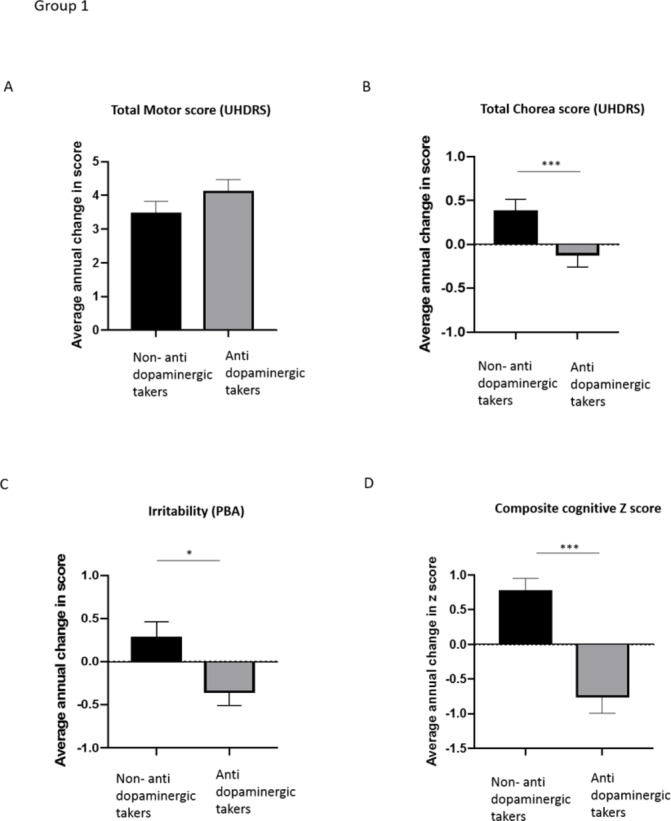
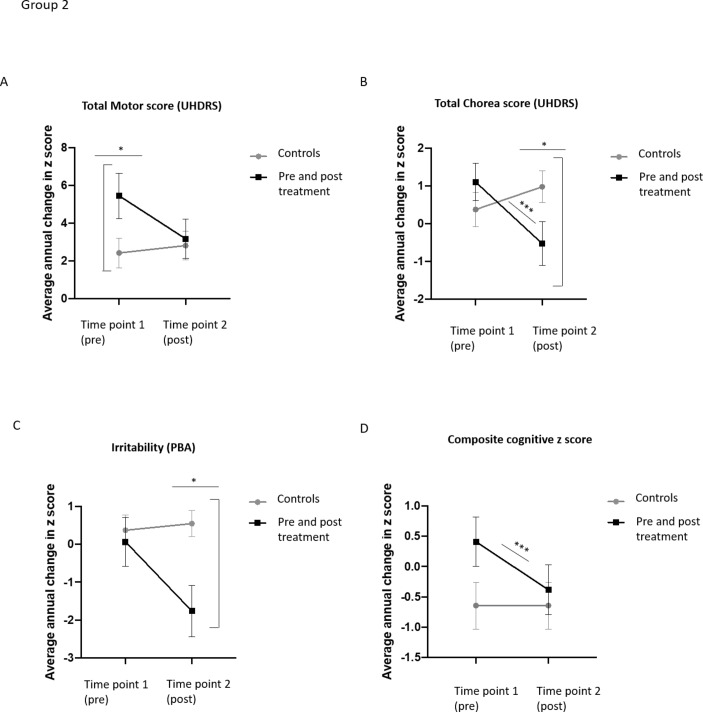
In this study, we used the Enroll-HD observational database to assess the effects of antidopaminergic medication on motor, psychiatric and cognitive decline, over a 3-year period. We first looked at the annual rate of decline of a group of HD patients taking antidopaminergic medication (n=466) compared with an untreated matched group (n=466). The groups were matched on specified clinical variables using propensity score matching. Next, we studied a separate group of HD patients who were prescribed such medications part way through the study (n=90) and compared their rate of change before and after the drugs were introduced and compared this to a matched control group.
We found that HD patients taking antidopaminergic medication had a slower progression in chorea and irritability compared with those not taking such medications. However, this same group of patients also displayed significantly greater rate of decline in a range of cognitive tasks.
In conclusion we found that antidopaminergic treatment is associated with improvements in the choreic movements and irritability of HD but worsens cognition. However, further research is required to prospectively investigate this and whether these are causally linked, ideally in a double-blind placebo-controlled trial.
多巴胺神经传递的改变是亨廷顿病(HD)部分临床特征的基础,因此是治疗干预的目标,特别是对于舞蹈病和一些行为问题的治疗。然而,这种干预的合理性主要基于病例报告和小型开放标签研究,这些药物对 HD 认知的影响仍不清楚。
在这项研究中,我们使用 Enroll-HD 观察性数据库,在 3 年的时间内评估了抗多巴胺药物对运动、精神和认知下降的影响。我们首先比较了一组服用抗多巴胺药物的 HD 患者(n=466)和未接受治疗的匹配组(n=466)的年下降率。使用倾向评分匹配对两组进行了特定临床变量的匹配。接下来,我们研究了在研究过程中开始服用此类药物的另一组 HD 患者(n=90),并比较了他们在药物引入前后的变化率,并将其与匹配的对照组进行了比较。
我们发现,与未服用此类药物的患者相比,服用抗多巴胺药物的 HD 患者的舞蹈病和易怒症状进展较慢。然而,同一组患者在一系列认知任务中的下降速度也明显加快。
总之,我们发现抗多巴胺治疗与 HD 的舞蹈病运动和易怒改善有关,但会恶化认知。然而,需要进一步的前瞻性研究来调查这是否存在因果关系,理想情况下是在双盲安慰剂对照试验中。