Li Xiaoya, Lu Cheng, Fan Danping, Lu Xiangchen, Xia Ya, Zhao Hongyan, Xu Huihui, Zhu Yongliang, Li Jingtao, Liu Honglin, Xiao Cheng
Department of Emergency, China-Japan Friendship Hospital, Beijing, China.
Institute of Clinical Medical Sciences, China-Japan Friendship Hospital, Beijing, China.
Front Cell Dev Biol. 2020 Mar 13;8:131. doi: 10.3389/fcell.2020.00131. eCollection 2020.
Rheumatoid arthritis (RA) is an autoimmune disease that may be associated with gut microbiota the aryl hydrocarbon receptor (AhR). Human umbilical mesenchymal stem cells (HUMSCs) have therapeutic potential against RA, but the underlying mechanism has not been fully elucidated. The purpose of this study was to explore the mechanism of action of HUMSCs in rats with collagen-induced arthritis (CIA).
HUMSCs (1 × 10) were transplanted into each rat with CIA. The tissue localization of HUMSCs and the therapeutic effects in the ankles were assessed. The immune status and expression of immune-related genes and proteins in related lymphoid tissues were subsequently tested. Furthermore, the levels of immune-related factors in serum and the changes in gut microbiota in the ileum were detected, and the levels of indole and their derivatives in plasma and the levels of AhR in the ileum were evaluated.
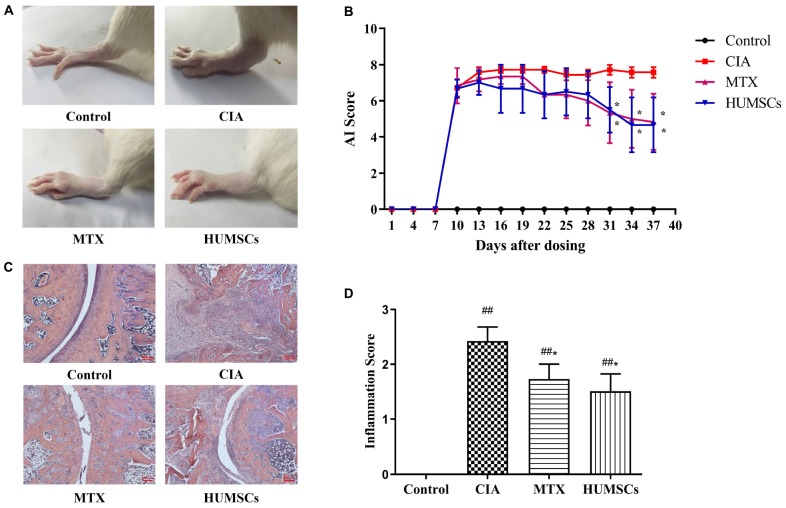
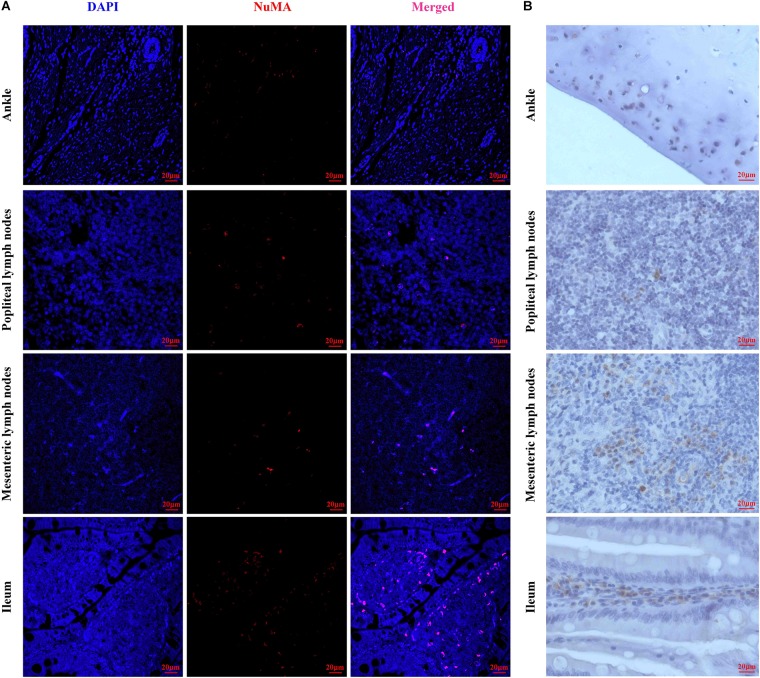
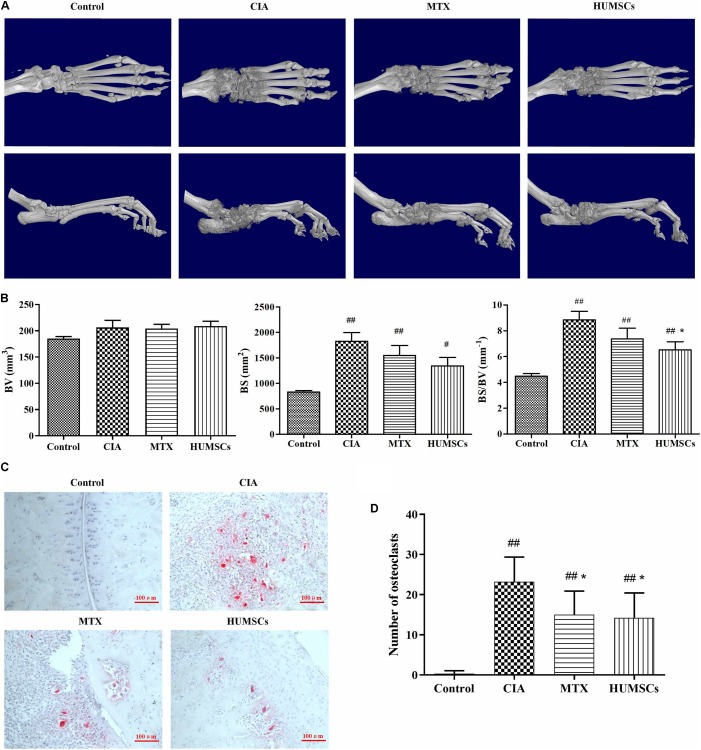
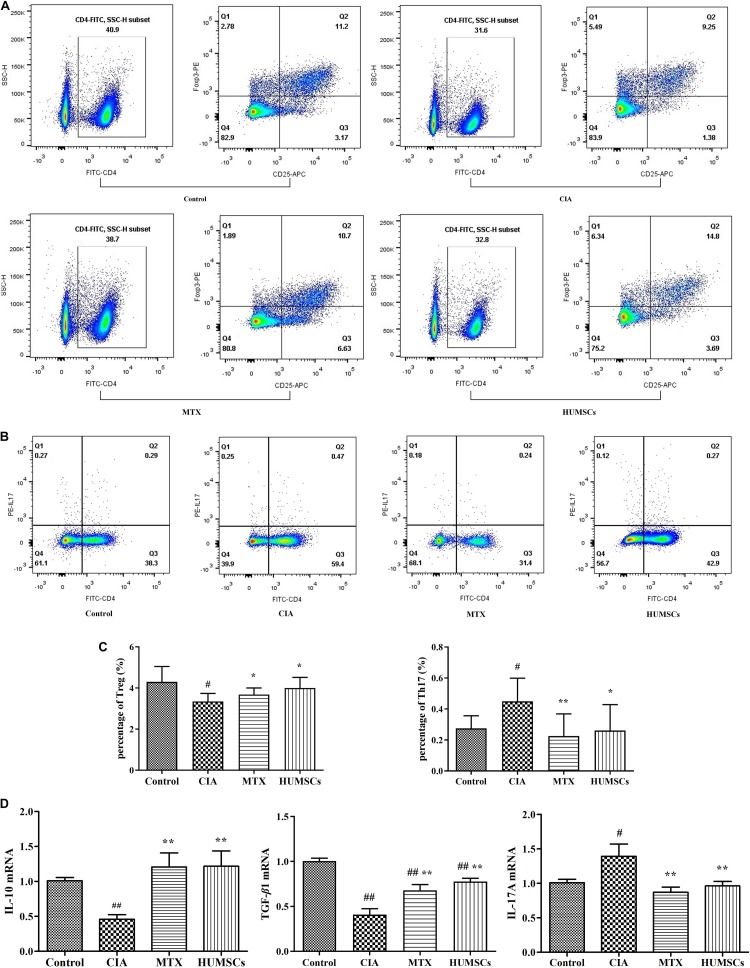
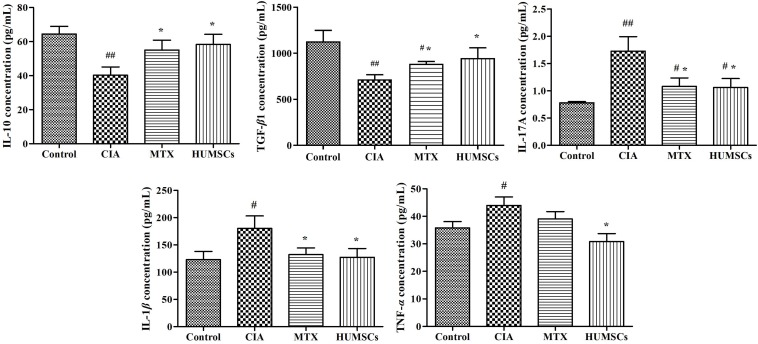
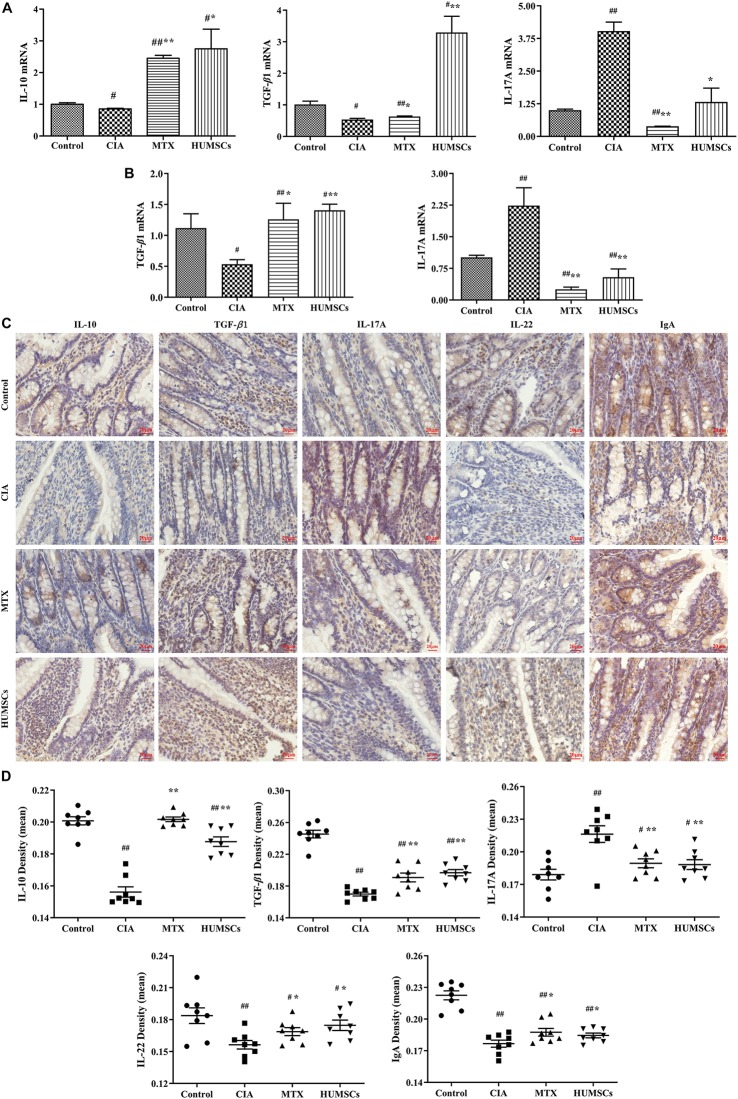
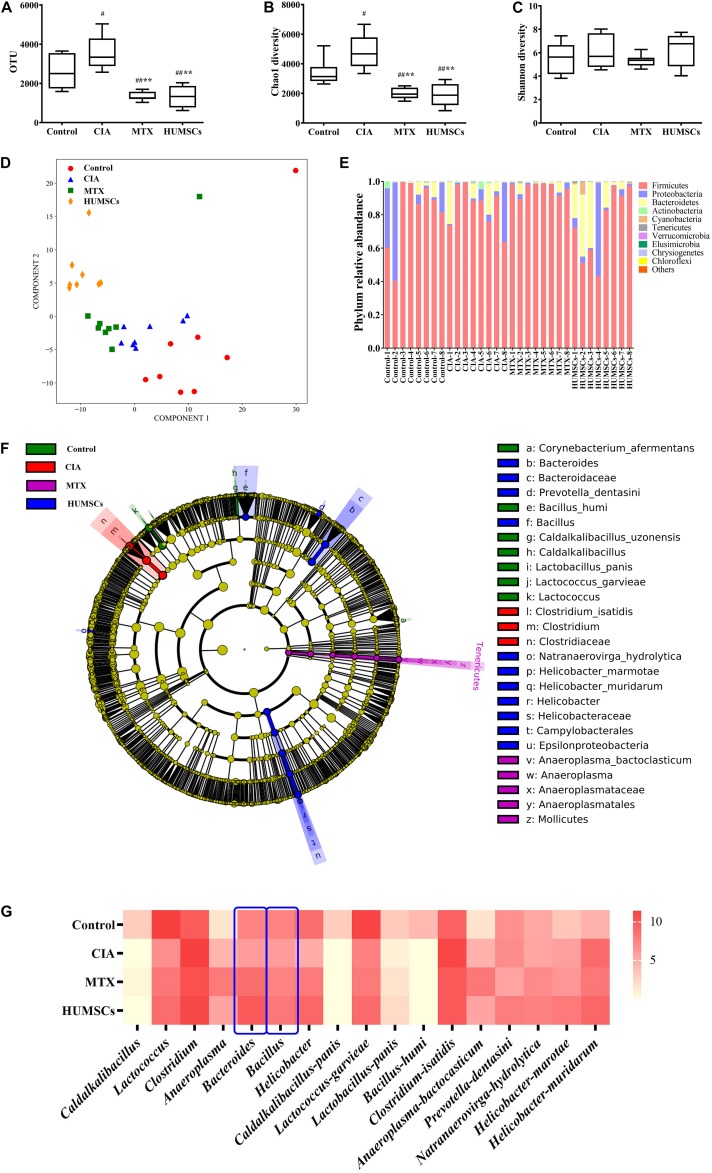
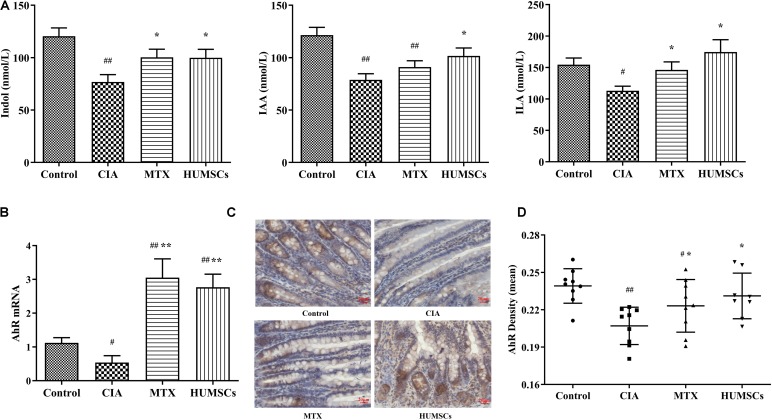
HUMSCs homed to the popliteal lymph node (PLN), mesenteric lymph node (MLN), ankle cartilage, and ileum mucosa in rats with CIA. The transplantation of HUMSCs reduced the pathology scores and the degree of bone damage in the ankles. The immune status of T regulatory cells (Tregs) and T helper (Th)17 cells and the gene expression levels of interleukin (IL)-10, transforming growth factor (TGF)-β, and IL-17A were altered in the PLN, which is the lymph tissue closest to the nidus, and the MLN, which is one of the gut-associated lymphoid tissues (GALTs). The proportion and function of B cells, Tregs, and Th17 cells were regulated in other GALTs, namely, Peyer's patches and the lamina propria. The gene expression of TGF-β and IL-17A and protein expression of IL-10, TGF-β, IL-17A, IL-22, and immunoglobulin A (IgA) were modulated in the ileum, and the serum levels of IL-10, TGF-β1, IL-17A, IL-1β, and tumor necrosis factor (TNF)-α were regulated in the rats with CIA. The relative abundances of the genera and were increased in the HUMSCs-treated rat with CIA; in addition, the levels of indole, indoleacetic acid, and indole-3-lactic acid were consistently upregulated, and this upregulation was accompanied by increases in AhR gene and protein expression.
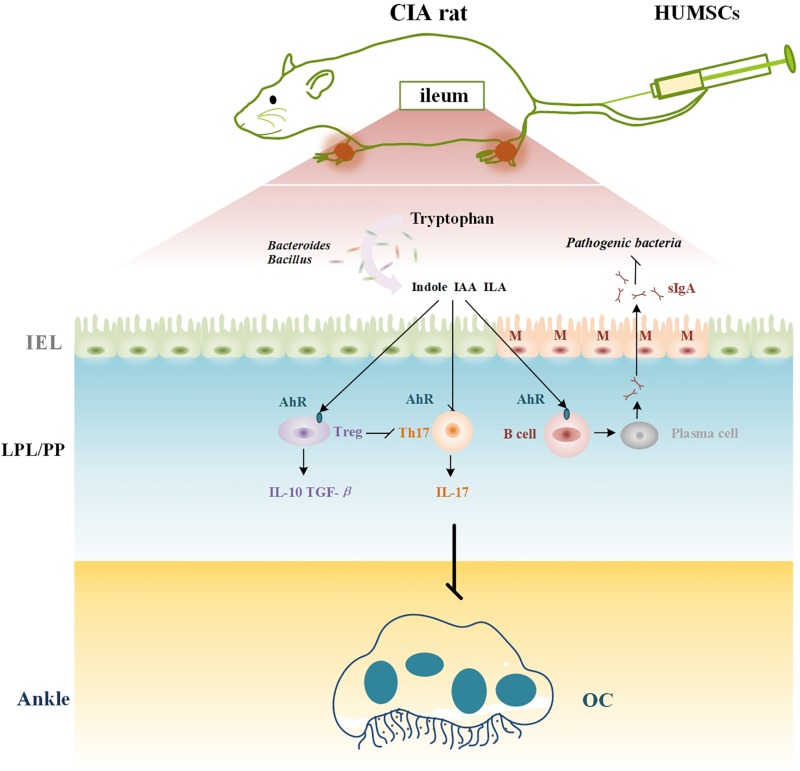
Our study demonstrates that HUMSCs play a therapeutic role in rats with CIA by regulating the interactions between host immunity and gut microbiota the AhR.
类风湿关节炎(RA)是一种自身免疫性疾病,可能与肠道微生物群和芳烃受体(AhR)有关。人脐间充质干细胞(HUMSCs)对RA具有治疗潜力,但其潜在机制尚未完全阐明。本研究旨在探讨HUMSCs对胶原诱导性关节炎(CIA)大鼠的作用机制。
将HUMSCs(1×10)移植到每只CIA大鼠体内。评估HUMSCs的组织定位及对踝关节的治疗效果。随后检测相关淋巴组织中的免疫状态以及免疫相关基因和蛋白质的表达。此外,检测血清中免疫相关因子水平及回肠中肠道微生物群的变化,并评估血浆中吲哚及其衍生物水平和回肠中AhR水平。
在CIA大鼠中,HUMSCs归巢至腘淋巴结(PLN)、肠系膜淋巴结(MLN)、踝关节软骨和回肠黏膜。HUMSCs移植降低了踝关节的病理评分和骨损伤程度。在最接近病灶的淋巴组织PLN和作为肠道相关淋巴组织(GALT)之一的MLN中,调节性T细胞(Tregs)和辅助性T细胞(Th)17细胞的免疫状态以及白细胞介素(IL)-10、转化生长因子(TGF)-β和IL-17A基因表达水平发生改变。在其他GALT,即派尔集合淋巴结和固有层中,B细胞、Tregs和Th17细胞的比例及功能受到调节。回肠中TGF-β和IL-17A基因表达以及IL-10、TGF-β、IL-17A、IL-22和免疫球蛋白A(IgA)的蛋白表达受到调节,CIA大鼠血清中IL-10、TGF-β1、IL-17A、IL-1β和肿瘤坏死因子(TNF)-α水平受到调节。在接受HUMSCs治疗的CIA大鼠中,属和属的相对丰度增加;此外,吲哚、吲哚乙酸和吲哚-3-乳酸水平持续上调,且这种上调伴随着AhR基因和蛋白表达增加。
我们的研究表明,HUMSCs通过调节宿主免疫与肠道微生物群及AhR之间的相互作用,对CIA大鼠发挥治疗作用。