Faculty of Environmental, Geomatic and Energy Engineering, Kielce University of Technology, Tysiąclecia Państwa Polskiego 7, 25-314 Kielce, Poland.
Faculty of Civil and Environmental Engineering, Gdansk University of Technology, Narutowicza 11/12, 80-233 Gdansk, Poland.
Sensors (Basel). 2020 Mar 30;20(7):1941. doi: 10.3390/s20071941.
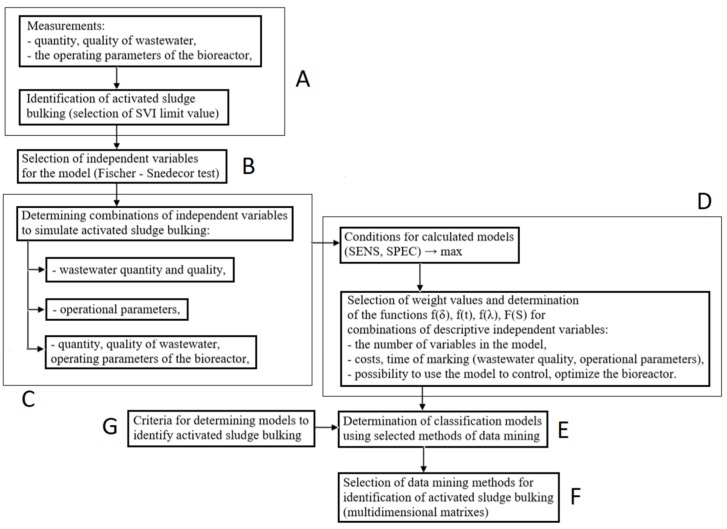
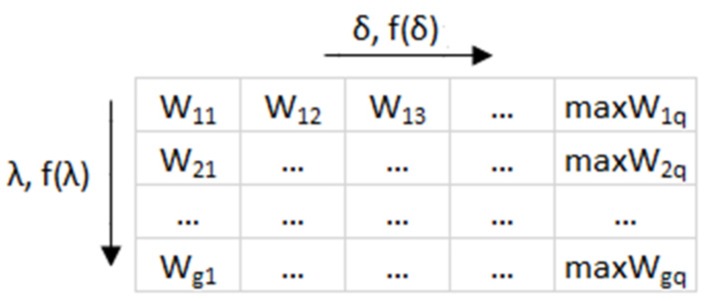
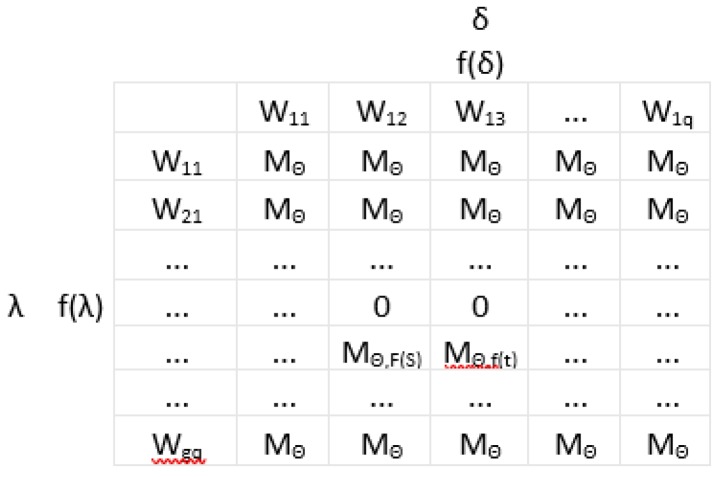
The paper presented the methodology for the construction of a soft sensor used for activated sludge bulking identification. Devising such solutions fits within the current trends and development of a smart system and infrastructure within smart cities. In order to optimize the selection of the data-mining method depending on the data collected within a wastewater treatment plant (WWTP), a number of methods were considered, including: artificial neural networks, support vector machines, random forests, boosted trees, and logistic regression. The analysis conducted sought the combinations of independent variables for which the devised soft sensor is characterized with high accuracy and at a relatively low cost of determination. With the measurement results pertaining to the quantity and quality of wastewater as well as the temperature in the activated sludge chambers, a good fit can be achieved with the boosted trees method. In order to simplify the selection of an optimal method for the identification of activated sludge bulking depending on the model requirements and the data collected within the WWTP, an original system of weight estimation was proposed, enabling a reduction in the number of independent variables in a model-quantity and quality of wastewater, operational parameters, and the cost of conducting measurements.
本文提出了一种用于活性污泥膨胀识别的软传感器构建方法。设计这种解决方案符合当前智能系统和智慧城市基础设施的发展趋势。为了根据污水处理厂(WWTP)内收集的数据优化数据挖掘方法的选择,考虑了多种方法,包括:人工神经网络、支持向量机、随机森林、提升树和逻辑回归。进行的分析寻求了设计的软传感器具有高精度且确定成本相对较低的独立变量组合。使用与废水的数量和质量以及活性污泥腔室的温度有关的测量结果,可以与提升树方法很好地拟合。为了简化根据 WWTP 内收集的模型要求和数据选择用于识别活性污泥膨胀的最佳方法,提出了一种原始的权重估计系统,从而减少了模型中的独立变量数量——废水的数量和质量、操作参数以及进行测量的成本。