Department of Molecular and Cell Biology, University of California. Berkeley, Berkeley, CA 94720-3200.
Helen Wills Neuroscience Institute, University of California, Berkeley, Berkeley, CA 94720-3200.
eNeuro. 2020 Apr 22;7(2). doi: 10.1523/ENEURO.0175-19.2020. Print 2020 Mar/Apr.
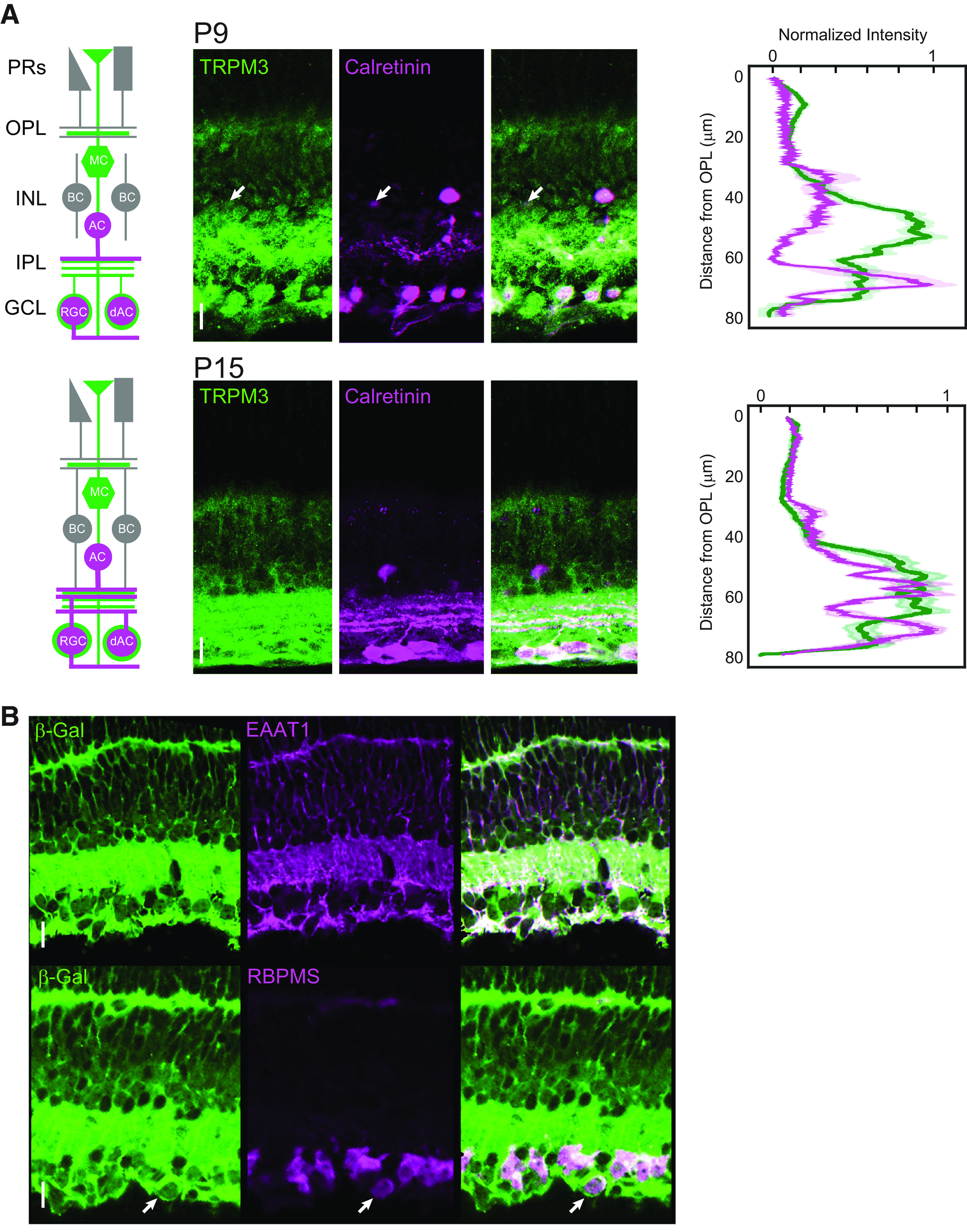
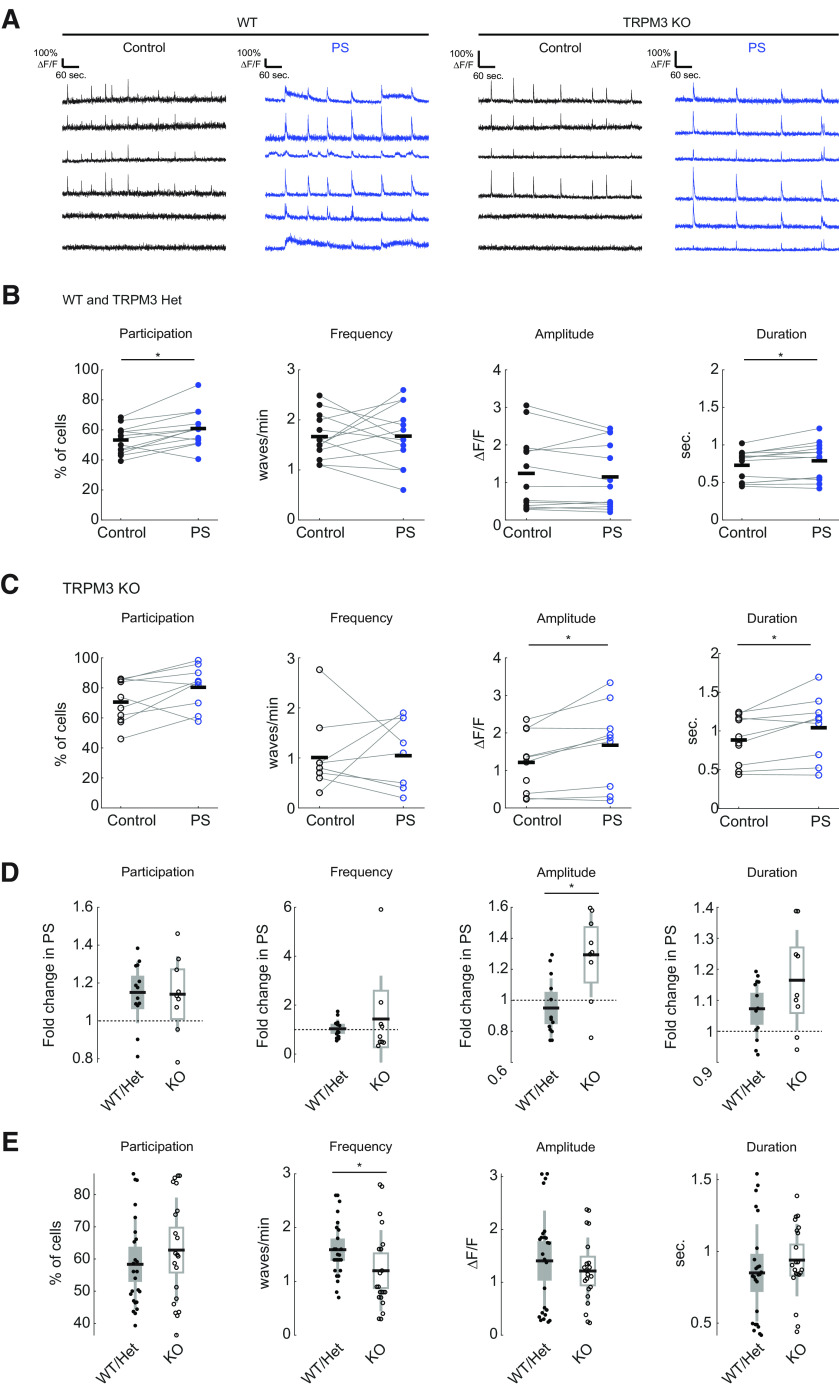
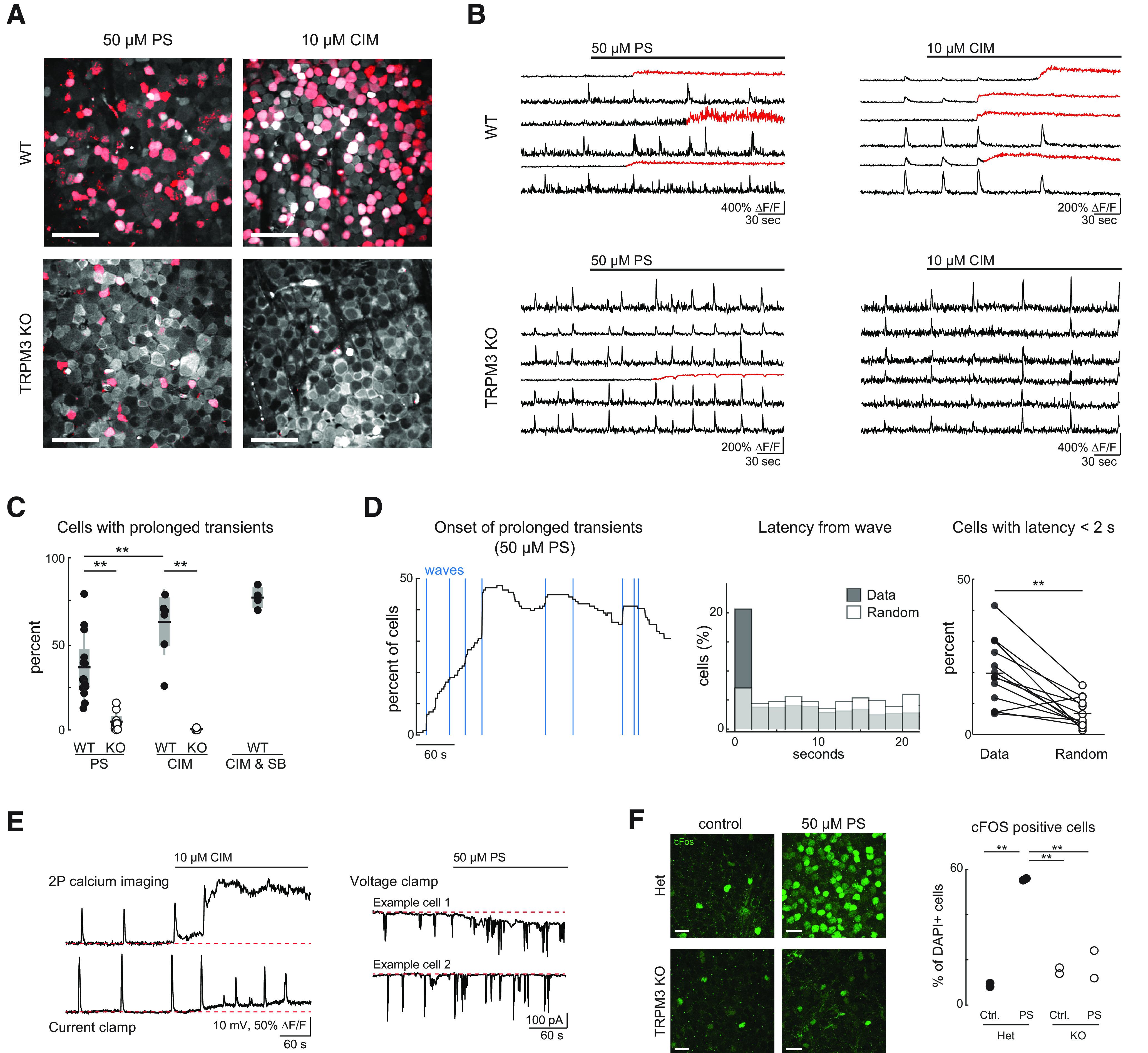
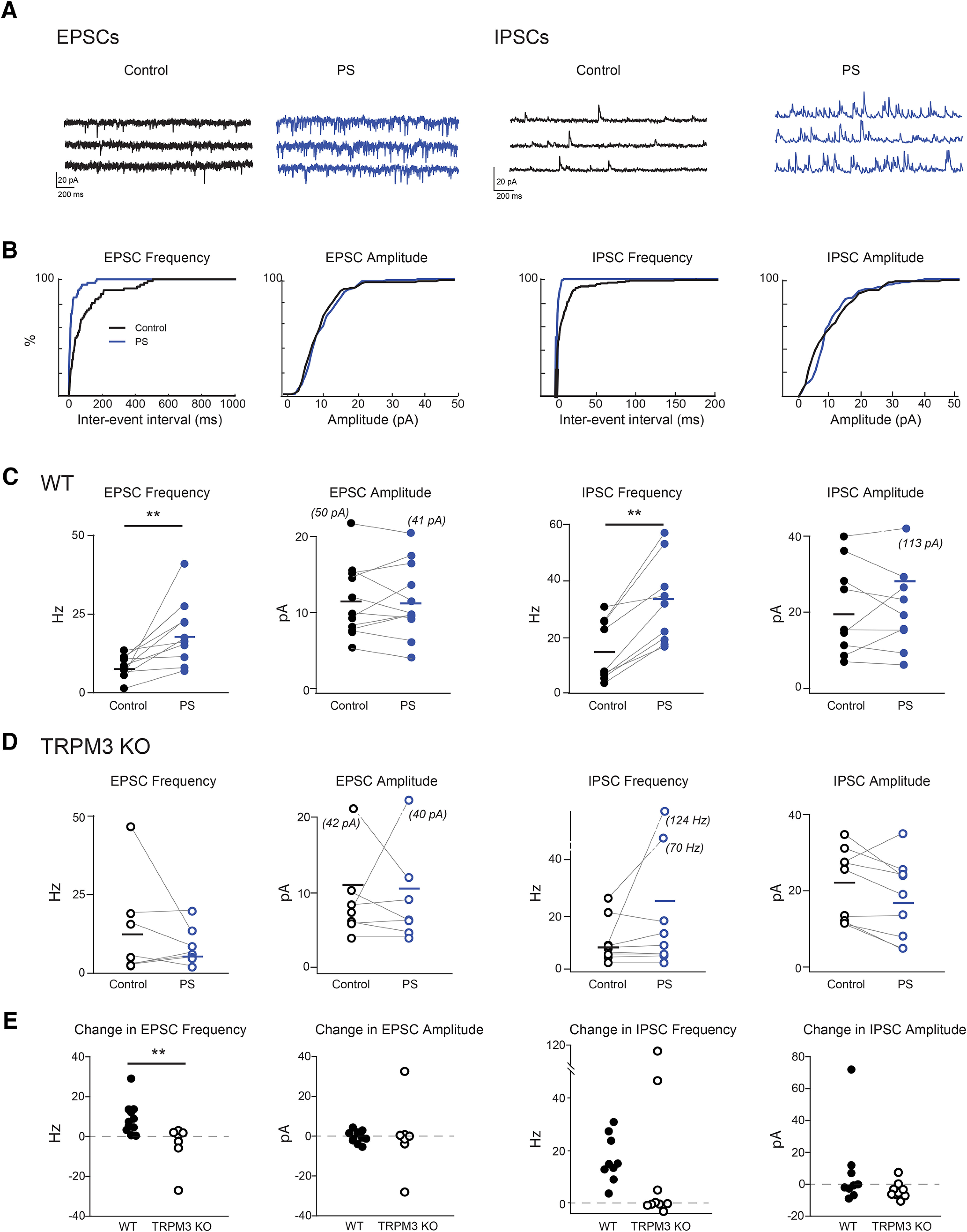
In the central nervous system, melastatin transient receptor potential (TRPM) channels function as receptors for the neurosteroid pregnenolone sulfate (PregS). The expression and function of TRPM3 has been explored in adult retina, although its role during development is unknown. We found, during the second postnatal week in mice, TRPM3 immunofluorescence labeled distinct subsets of inner retinal neurons, including a subset of retinal ganglion cells (RGCs), similar to what has been reported in the adult. Labeling for a TRPM3 promoter-driven reporter confirmed expression of the TRPM3 gene in RGCs and revealed additional expression in nearly all Müller glial cells. Using two-photon calcium imaging, we show that PregS and the synthetic TRPM3 agonist CIM0216 (CIM) induced prolonged calcium transients in RGCs, which were mostly absent in TRPM3 knock-out (KO) mice. These prolonged calcium transients were not associated with strong membrane depolarizations but induced c-Fos expression. To elucidate the impact of PregS-activation of TRPM3 on retinal circuits we took two sets of physiological measurements. First, PregS induced a robust increase in the frequency but not amplitude of spontaneous postsynaptic currents (PSCs). This increase was absent in the TRPM3 KO mice. Second, PregS induced a small increase in cell participation and duration of retinal waves, but this modulation persisted in TRPM3 KO mice, indicating PregS was acting on wave generating circuits independent of TRPM3 channels. Though baseline frequency of retinal waves was slightly reduced in the TRPM3 KO mice, other properties of waves were indistinguishable from wildtype. Together, these results indicate that the presence of neurosteroids impact spontaneous synaptic activity and retinal waves during development via both TRPM3-dependent and independent mechanisms.
在中枢神经系统中,黑色素瘤短暂受体电位 (TRPM) 通道作为神经甾体孕烯醇酮硫酸盐 (PregS) 的受体发挥作用。TRPM3 的表达和功能已在成年视网膜中得到探索,尽管其在发育过程中的作用尚不清楚。我们发现在小鼠出生后第二周,TRPM3 免疫荧光标记了内视网膜神经元的不同亚群,包括一部分视网膜神经节细胞 (RGCs),这与成年时的报道相似。TRPM3 启动子驱动报告基因的标记证实了 RGCs 中 TRPM3 基因的表达,并显示在几乎所有的 Müller 胶质细胞中都有额外的表达。使用双光子钙成像,我们表明 PregS 和合成的 TRPM3 激动剂 CIM0216 (CIM) 在 RGC 中诱导了延长的钙瞬变,而在 TRPM3 敲除 (KO) 小鼠中则很少见。这些延长的钙瞬变与强烈的膜去极化无关,但诱导了 c-Fos 的表达。为了阐明 PregS 激活 TRPM3 对视网膜回路的影响,我们进行了两组生理测量。首先,PregS 诱导自发突触后电流 (PSC) 的频率显著增加,但幅度没有增加。在 TRPM3 KO 小鼠中,这种增加是不存在的。其次,PregS 诱导视网膜波的细胞参与和持续时间略有增加,但在 TRPM3 KO 小鼠中这种调制仍然存在,表明 PregS 作用于独立于 TRPM3 通道的波产生回路。尽管在 TRPM3 KO 小鼠中视网膜波的基线频率略有降低,但波的其他特性与野生型无异。总的来说,这些结果表明,神经甾体的存在通过 TRPM3 依赖和非依赖的机制影响发育过程中的自发突触活动和视网膜波。