Museum of Nature South Tyrol, Bolzano, Italy.
Museo delle Scienze, Sezione Zoologia dei Vertebrati, Trento, Italy.
Sci Rep. 2020 Apr 1;10(1):5747. doi: 10.1038/s41598-020-62661-0.
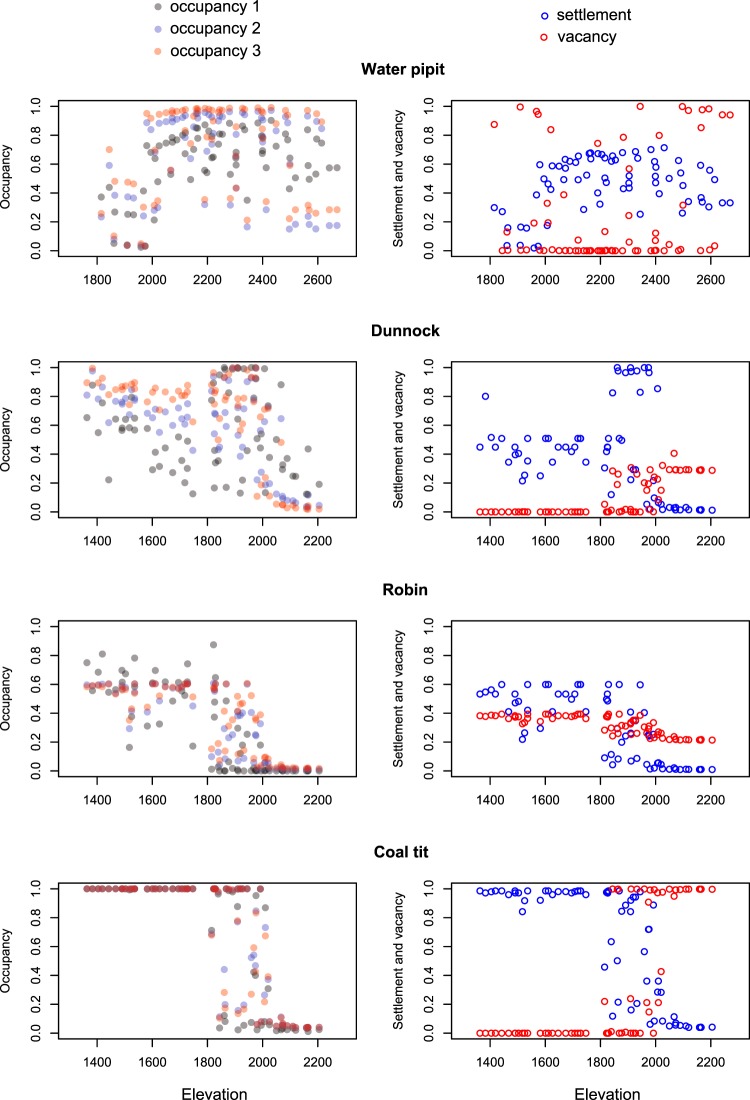
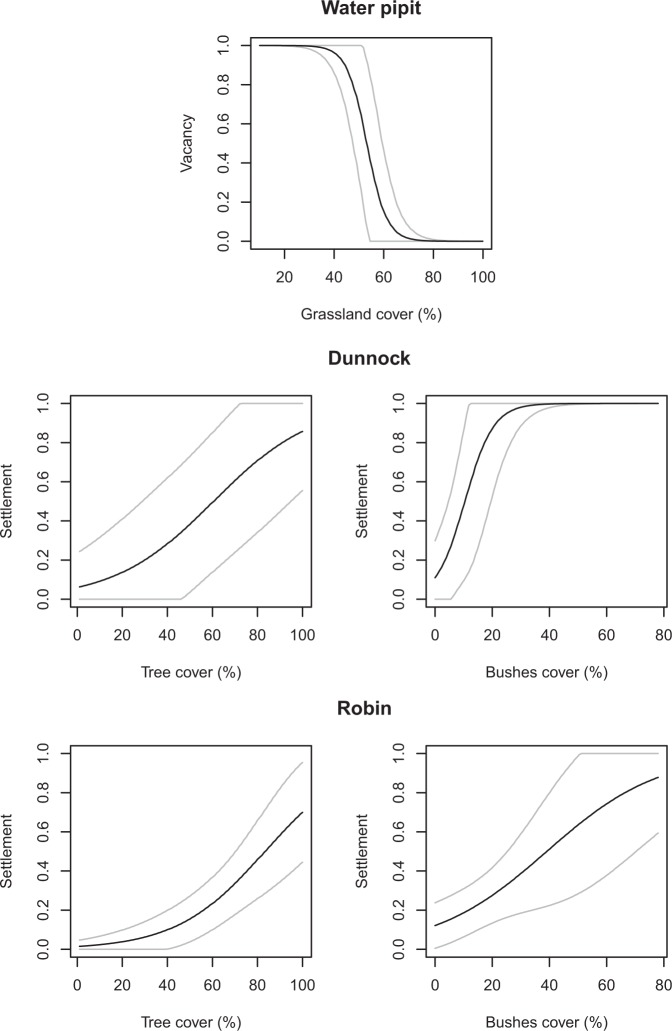
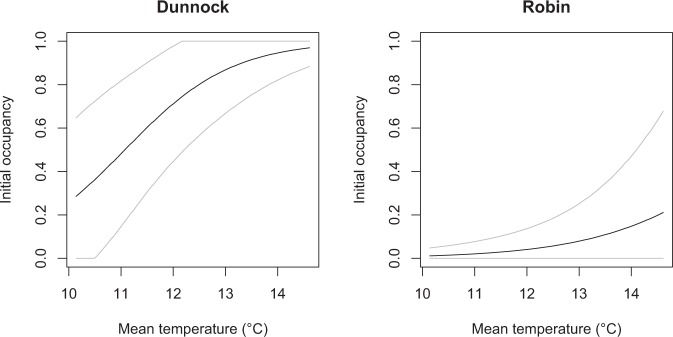
Information about distribution and habitat use of organisms is crucial for conservation. Bird distribution within the breeding season has been usually considered static, but this assumption has been questioned. Within-season movements may allow birds to track changes in habitat quality or to adjust site choice between subsequent breeding attempts. Such movements are especially likely in temperate mountains, given the substantial environmental heterogeneity and changes occurring during bird breeding season. We investigated the within-season movements of breeding songbirds in the European Alps in spring-summer 2018, using repeated point counts and dynamic occupancy models. For all the four species for which we obtained sufficient data, changes in occupancy during the season strongly indicated the occurrence of within-season movements. Species occupancy changed during the season according to fine-scale vegetation/land-cover types, while microclimate (mean temperature) affected initial occupancy in two species. The overall occupancy rate increased throughout the season, suggesting the settlement of new individuals coming from outside the area. A static distribution cannot be assumed during the breeding season for songbirds breeding in temperate mountains. This needs to be considered when planning monitoring and conservation of Alpine birds, as within-season movements may affect the proportion of population/distribution interested by monitoring or conservation programs.
有关生物分布和生境利用的信息对保护至关重要。鸟类在繁殖季节内的分布通常被认为是静态的,但这种假设受到了质疑。在繁殖季节内的移动可能使鸟类能够跟踪生境质量的变化,或者在随后的繁殖尝试中调整选址。在温带山区,这种移动尤其可能发生,因为那里存在大量的环境异质性和鸟类繁殖季节发生的变化。我们在 2018 年春季和夏季使用重复点计数和动态占有模型,调查了欧洲阿尔卑斯山繁殖鸣禽的繁殖季节内的移动。对于我们获得足够数据的所有四个物种,季节内占有情况的变化强烈表明存在繁殖季节内的移动。物种占有情况根据细尺度的植被/土地覆盖类型在季节内发生变化,而微气候(平均温度)在两个物种中影响初始占有情况。整个季节的总占有率增加,表明有新的个体从该地区以外的地方定居。在温带山区繁殖的鸣禽在繁殖季节不能假设其分布是静态的。在规划阿尔卑斯山鸟类的监测和保护时需要考虑这一点,因为繁殖季节内的移动可能会影响监测或保护计划所关注的种群/分布的比例。