GSK, Wavre, Belgium.
College of Medicine, University of Malawi, Blantyre, Malawi.
Drug Saf. 2020 Jun;43(6):583-593. doi: 10.1007/s40264-020-00925-4.
Pharmacovigilance (PV) systems to monitor drug and vaccine safety are often inadequate in sub-Saharan Africa. In Malawi, a PV enhancement initiative was introduced to address major barriers to PV.
The objective of this initiative was to improve reporting of adverse events (AEs) by strengthening passive safety surveillance via PV training and mentoring of local PV stakeholders and healthcare providers (HCPs) at their own healthcare facilities (HCFs).
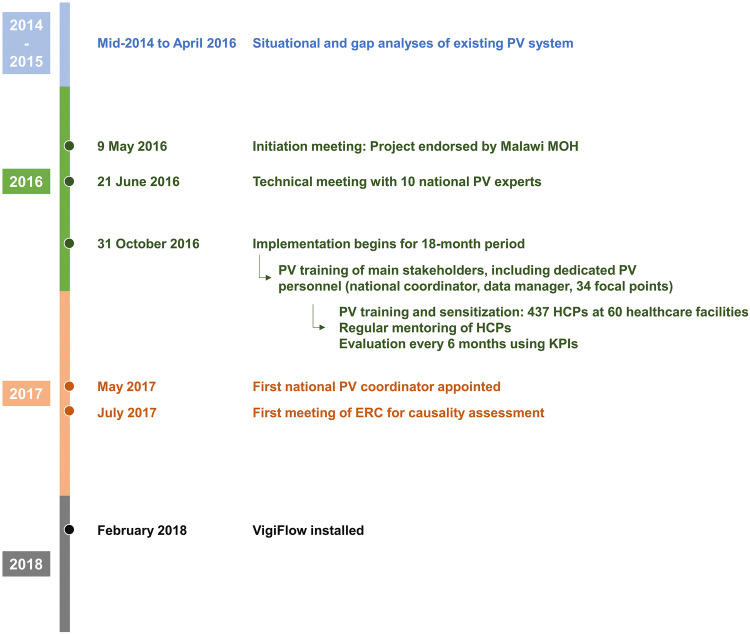
An 18-month PV training and mentoring programme was implemented in collaboration with national stakeholders, and in partnership with the Ministry of Health, GSK and PATH. Two-day training was provided to Expanded Programme on Immunisation coordinators, identified as responsible for AE reporting, and four National Regulatory Authority representatives. Abridged PV training and mentoring were provided regularly to HCPs. Support was given in upgrading the national PV system. Key performance indicators included the number of AEs reported, transmission of AE forms, completeness of reports, serious AEs reported and timeliness of recording into VigiFlow.
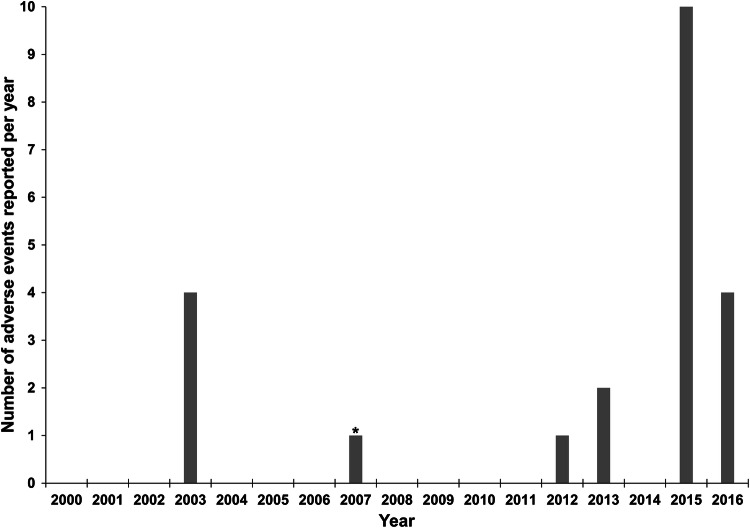
In 18 months, 443 HCPs at 61 HCFs were trained. The number of reported AEs increased from 22 (January 2000 to October 2016) to 228 (November 2016 to May 2018), enabling Malawi to become a member of the World Health Organization Programme for International Drug Monitoring. Most (98%) AE report forms contained mandatory information on reporter, event, patient and product, but under 1% were transmitted to the national PV office within 48 h.
Regular PV training and mentoring of HCPs were effective in enhancing passive safety surveillance in Malawi, but the transmission of reports to the national PV centre requires further improvement.
在撒哈拉以南非洲地区,药物和疫苗安全监测的药物警戒(PV)系统通常不够完善。在马拉维,引入了一项 PV 增强倡议,以解决 PV 面临的主要障碍。
该倡议的目的是通过加强对当地 PV 利益攸关方和医疗保健提供者(HCPs)的被动安全监测,来改善不良事件(AE)的报告。通过在其自己的医疗保健设施(HCFs)中对 PV 进行培训和指导来实现。
与国家利益攸关方合作,与卫生部、GSK 和 PATH 合作,实施了为期 18 个月的 PV 培训和指导计划。为负责 AE 报告的扩大免疫规划协调员和 4 名国家监管机构代表提供为期两天的培训。向 HCPs 定期提供简化的 PV 培训和指导。为升级国家 PV 系统提供支持。关键绩效指标包括报告的 AE 数量、AE 表格的传输、报告的完整性、报告的严重 AE 数量和记录到 VigiFlow 的及时性。
在 18 个月内,61 家 HCFs 的 443 名 HCP 接受了培训。报告的 AE 数量从 2000 年 1 月至 2016 年 10 月的 22 例增加到 2016 年 11 月至 2018 年 5 月的 228 例,使马拉维成为世界卫生组织国际药物监测计划的成员。大多数(98%)AE 报告表包含有关报告人、事件、患者和产品的强制性信息,但不到 1%的报告表在 48 小时内传输到国家 PV 办公室。
定期对 HCP 进行 PV 培训和指导,有效地加强了马拉维的被动安全监测,但报告向国家 PV 中心的传输仍需进一步改进。