Cardiothoracic Department, Civil Hospitals; Department of Medical and Surgical Specialities, Radioloogical Sciences, Public Health, University of Brescia, Brescia, Italy.
Department of Medicine, Duke University Medical Center, Durham, NC, USA.
ESC Heart Fail. 2020 Apr;7(2):381-399. doi: 10.1002/ehf2.12586. Epub 2020 Apr 1.
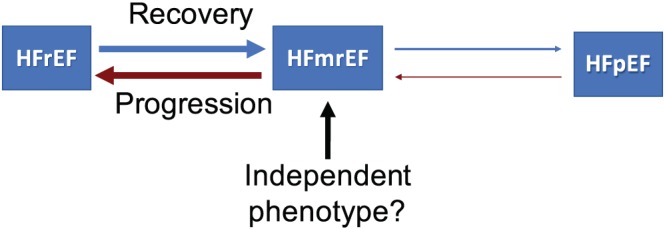
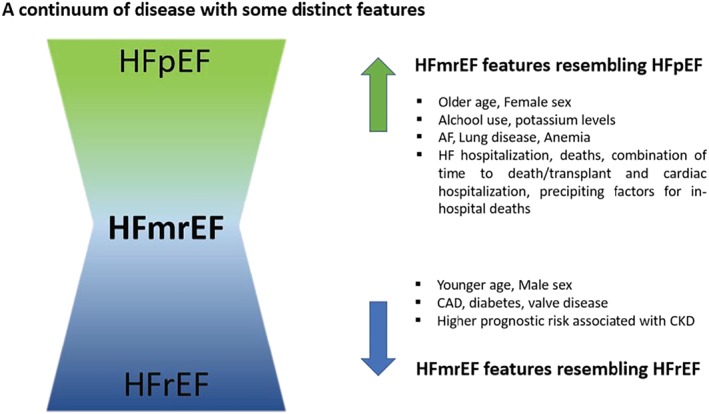
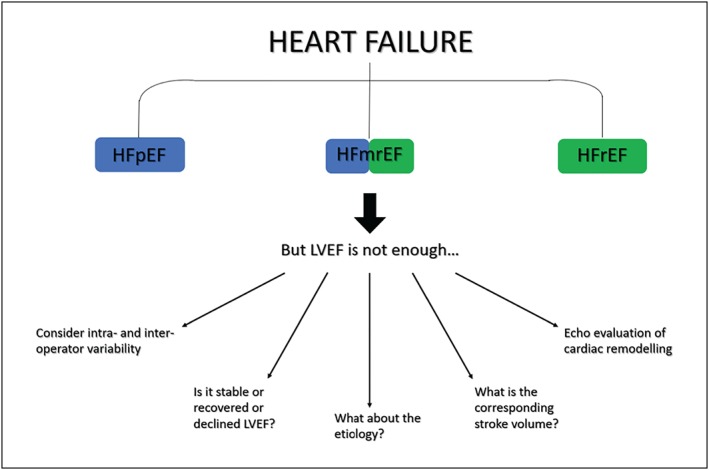
Currently, the assessment of left ventricular ejection fraction (LVEF) is the cornerstone of the classification of patients with heart failure (HF). The mid-range LVEF (HFmrEF) category was identified in an attempt to uncover specific characteristics of these patients. So far, the analysis of trials, registries, and observational studies have demonstrated that patients with mid-range LVEF belong to a patient cohort with generally intermediate clinical profile as compared with other groups but with a remarkable variety of intrinsic phenotypes. This is due to the limitations of LVEF as the sole criterion to categorize patients with HF and characterize their prognosis, above all when it is >40%. To better define the HFmrEF phenotype, it is reasonable to consider other parameters, such as LVEF changes over time, HF aetiology, co-morbidities, and other imaging parameters. A multiparametric evaluation may contextualize a patient with HFmrEF in a more defined phenotype with a specific prognosis.
目前,左心室射血分数(LVEF)的评估是心力衰竭(HF)患者分类的基石。中范围 LVEF(HFmrEF)类别是为了揭示这些患者的特定特征而确定的。到目前为止,对试验、登记处和观察性研究的分析表明,与其他组相比,中范围 LVEF 的患者属于一般临床特征处于中间水平的患者队列,但具有显著不同的内在表型。这是由于 LVEF 作为唯一标准来对 HF 患者进行分类并描述其预后的局限性所致,尤其是当 LVEF >40%时。为了更好地定义 HFmrEF 表型,可以考虑其他参数,例如 LVEF 随时间的变化、HF 病因、合并症和其他成像参数。多参数评估可以将 HFmrEF 患者置于具有特定预后的更明确表型中。