Li Qingde, Hong Qingqi, Qi Quan, Ma Xinhui, Han Xie, Tian Jie
School of Engineering and Computer Science, University of Hull, Hull, HU6 7RX, UK.
Software School, Xiamen University, Xiamen, China.
Vis Comput Ind Biomed Art. 2018 Sep 5;1(1):9. doi: 10.1186/s42492-018-0009-y.
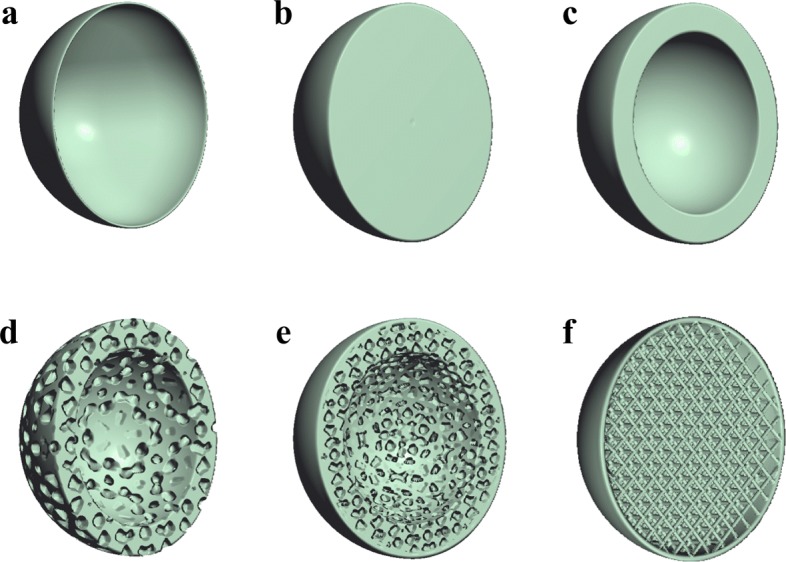
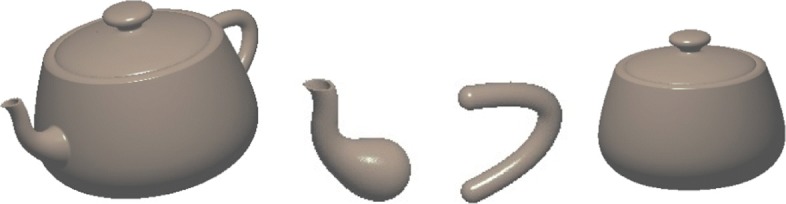
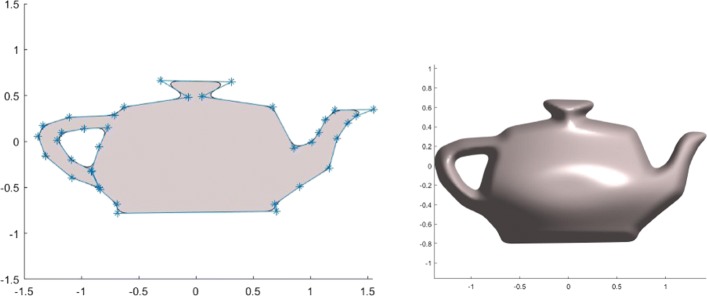
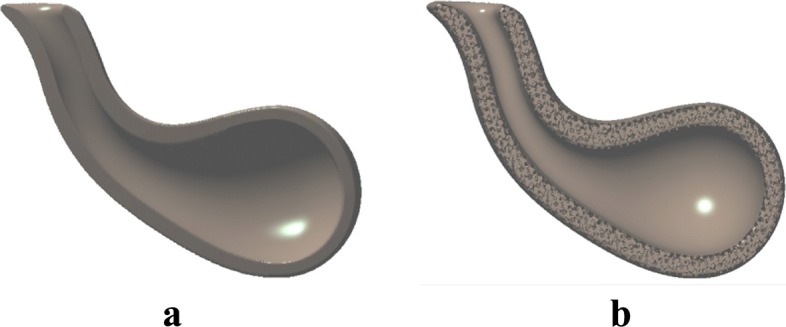
Surface-based geometric modeling has many advantages in terms of visualization and traditional subtractive manufacturing using computer-numerical-control cutting-machine tools. However, it is not an ideal solution for additive manufacturing because to digitally print a surface-represented geometric object using a certain additive manufacturing technology, the object has to be converted into a solid representation. However, converting a known surface-based geometric representation into a printable representation is essentially a redesign process, and this is especially the case, when its interior material structure needs to be considered. To specify a 3D geometric object that is ready to be digitally manufactured, its representation has to be in a certain volumetric form. In this research, we show how some of the difficulties experienced in additive manufacturing can be easily solved by using implicitly represented geometric objects. Like surface-based geometric representation is subtractive manufacturing-friendly, implicitly described geometric objects are additive manufacturing-friendly: implicit shapes are 3D printing ready. The implicit geometric representation allows to combine a geometric shape, material colors, an interior material structure, and other required attributes in one single description as a set of implicit functions, and no conversion is needed. In addition, as implicit objects are typically specified procedurally, very little data is used in their specifications, which makes them particularly useful for design and visualization with modern cloud-based mobile devices, which usually do not have very big storage spaces. Finally, implicit modeling is a design procedure that is parallel computing-friendly, as the design of a complex geometric object can be divided into a set of simple shape-designing tasks, owing to the availability of shape-preserving implicit blending operations.
基于曲面的几何建模在可视化以及使用计算机数控切割机的传统减法制造方面具有诸多优势。然而,对于增材制造而言,它并非理想的解决方案,因为要使用特定的增材制造技术对以曲面表示的几何对象进行数字打印,该对象必须转换为实体表示。然而,将已知的基于曲面的几何表示转换为可打印表示本质上是一个重新设计的过程,当需要考虑其内部材料结构时尤其如此。为了指定一个准备好进行数字制造的三维几何对象,其表示必须采用某种体形式。在本研究中,我们展示了如何通过使用隐式表示的几何对象轻松解决增材制造中遇到的一些难题。就像基于曲面的几何表示有利于减法制造一样,隐式描述的几何对象有利于增材制造:隐式形状随时可用于3D打印。隐式几何表示允许将几何形状、材料颜色、内部材料结构以及其他所需属性组合在一个单一描述中,作为一组隐式函数,无需进行转换。此外,由于隐式对象通常是通过程序指定的,其规范中使用的数据非常少,这使得它们对于使用通常存储空间不大的现代基于云的移动设备进行设计和可视化特别有用。最后,隐式建模是一种有利于并行计算的设计过程,因为由于存在保形隐式混合操作,复杂几何对象的设计可以划分为一组简单的形状设计任务。