Department of Biomedical Engineering, Worcester Polytechnic Institute, 60 Prescott Street, Worcester, MA, 01605, USA.
Department of Mechanical Engineering, Worcester Polytechnic Institute, 100 Institute Road, Worcester, MA, 01609, USA.
Ann Biomed Eng. 2020 Jun;48(6):1661-1677. doi: 10.1007/s10439-020-02496-y. Epub 2020 Apr 2.
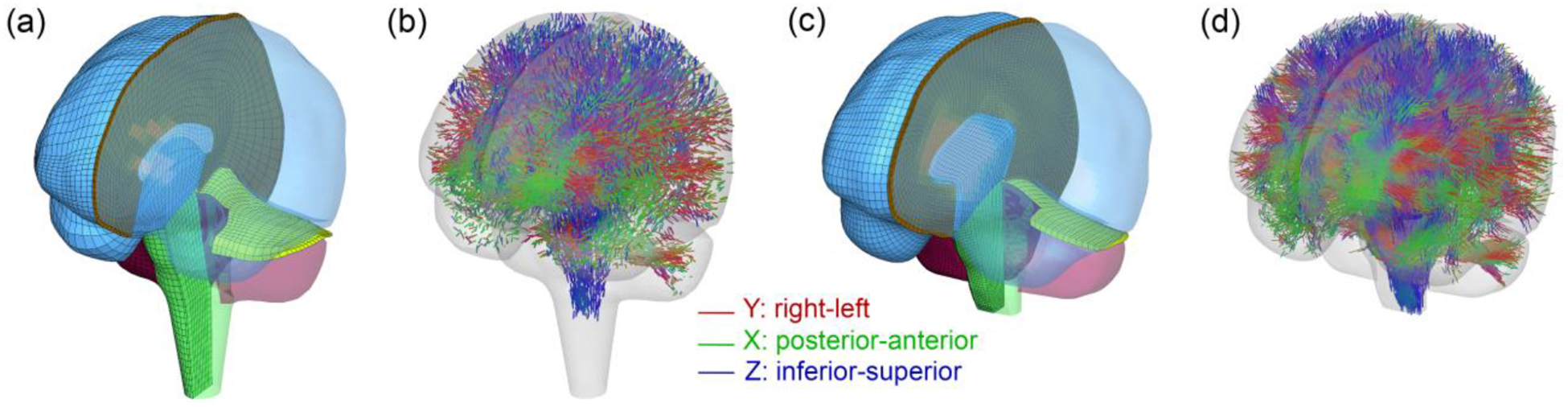
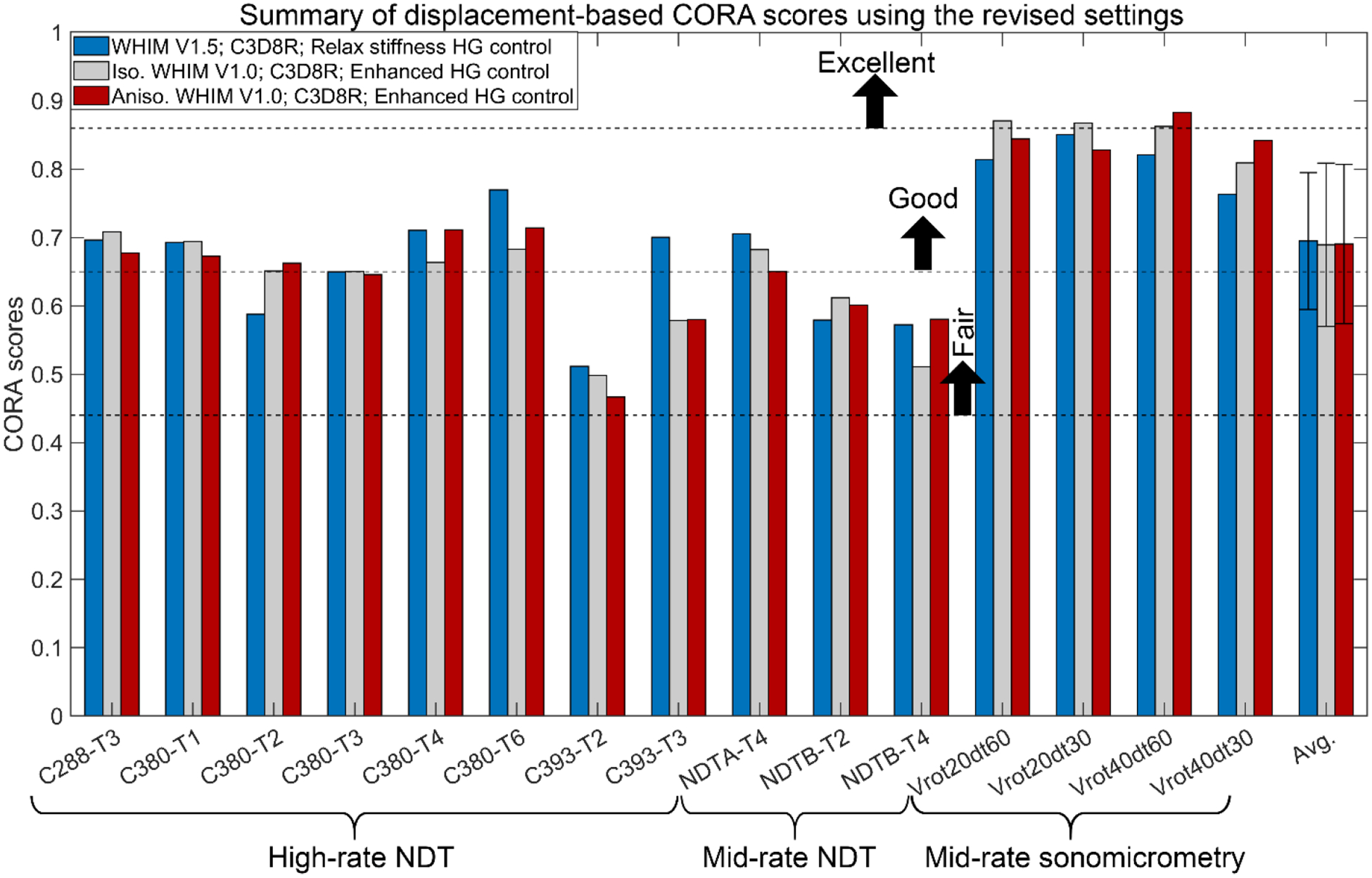
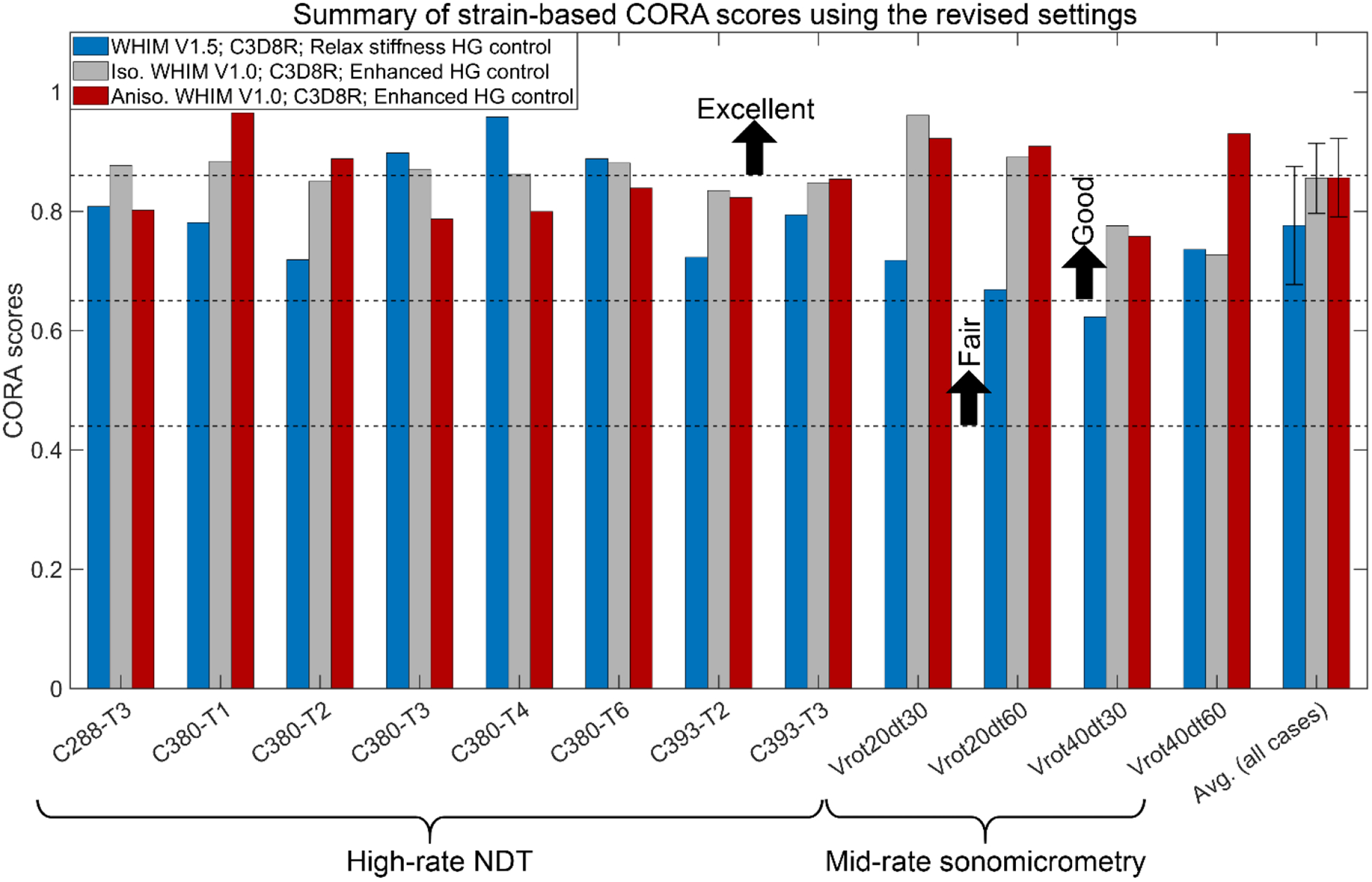
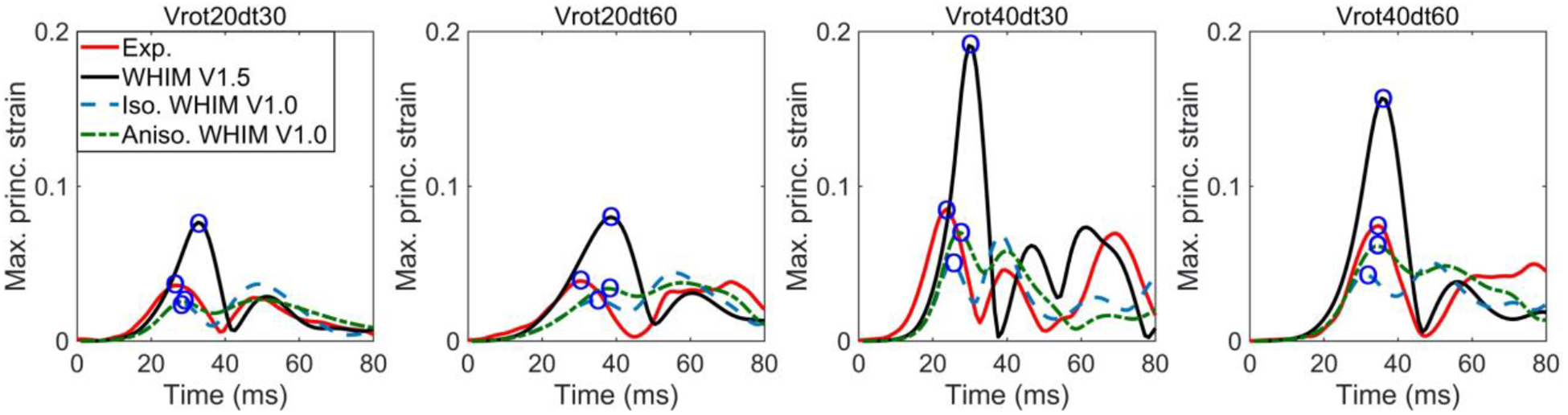
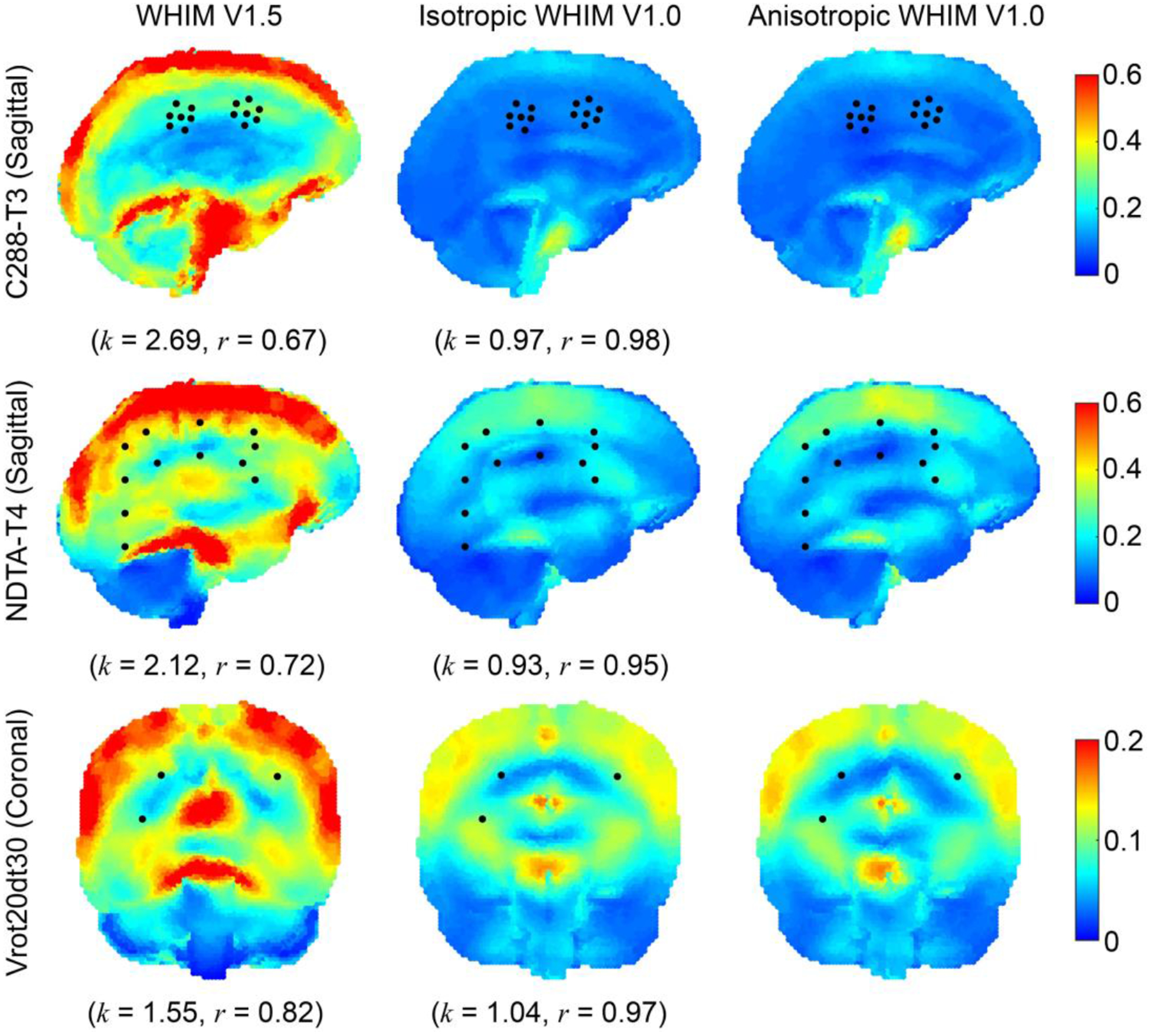
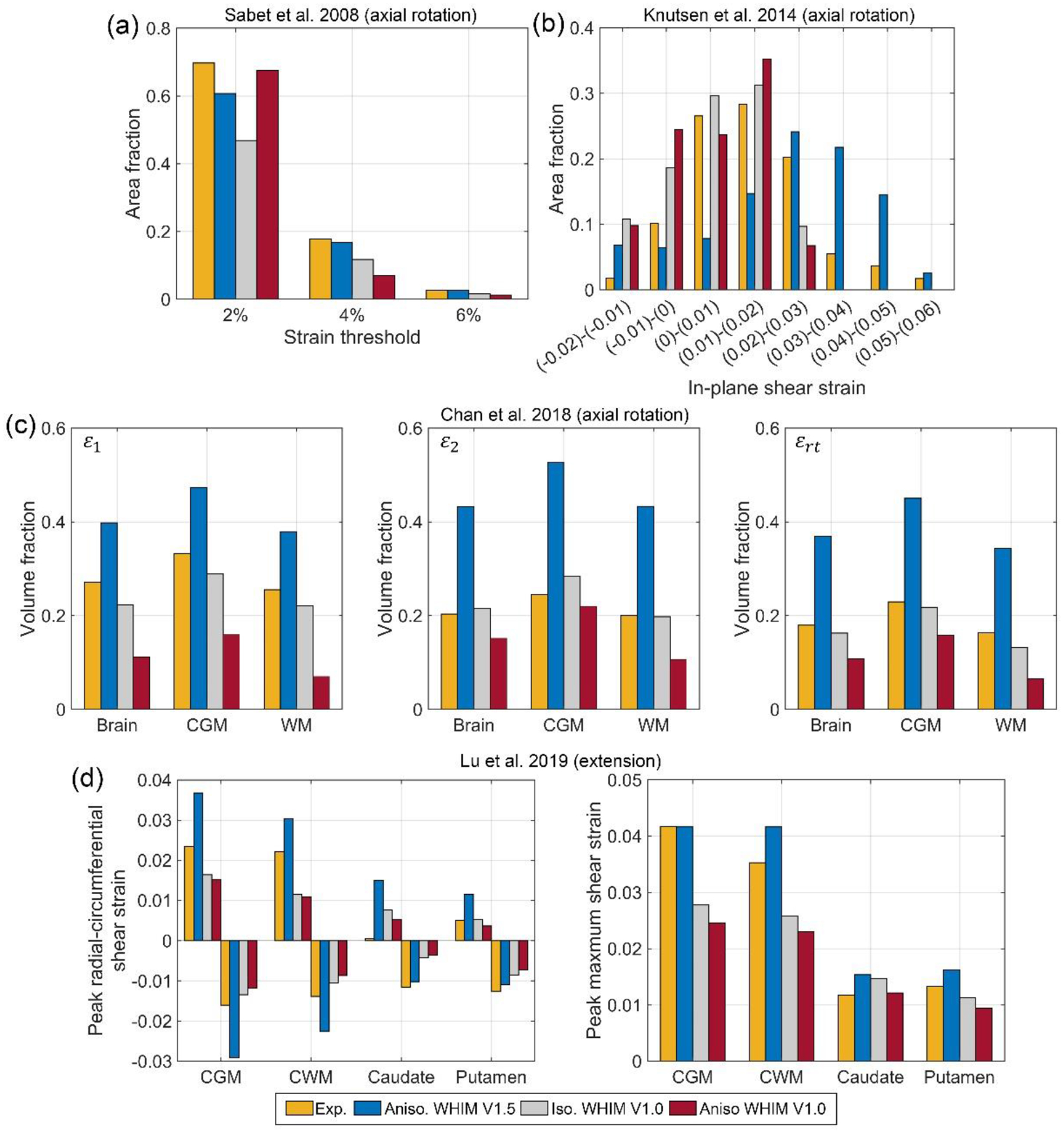
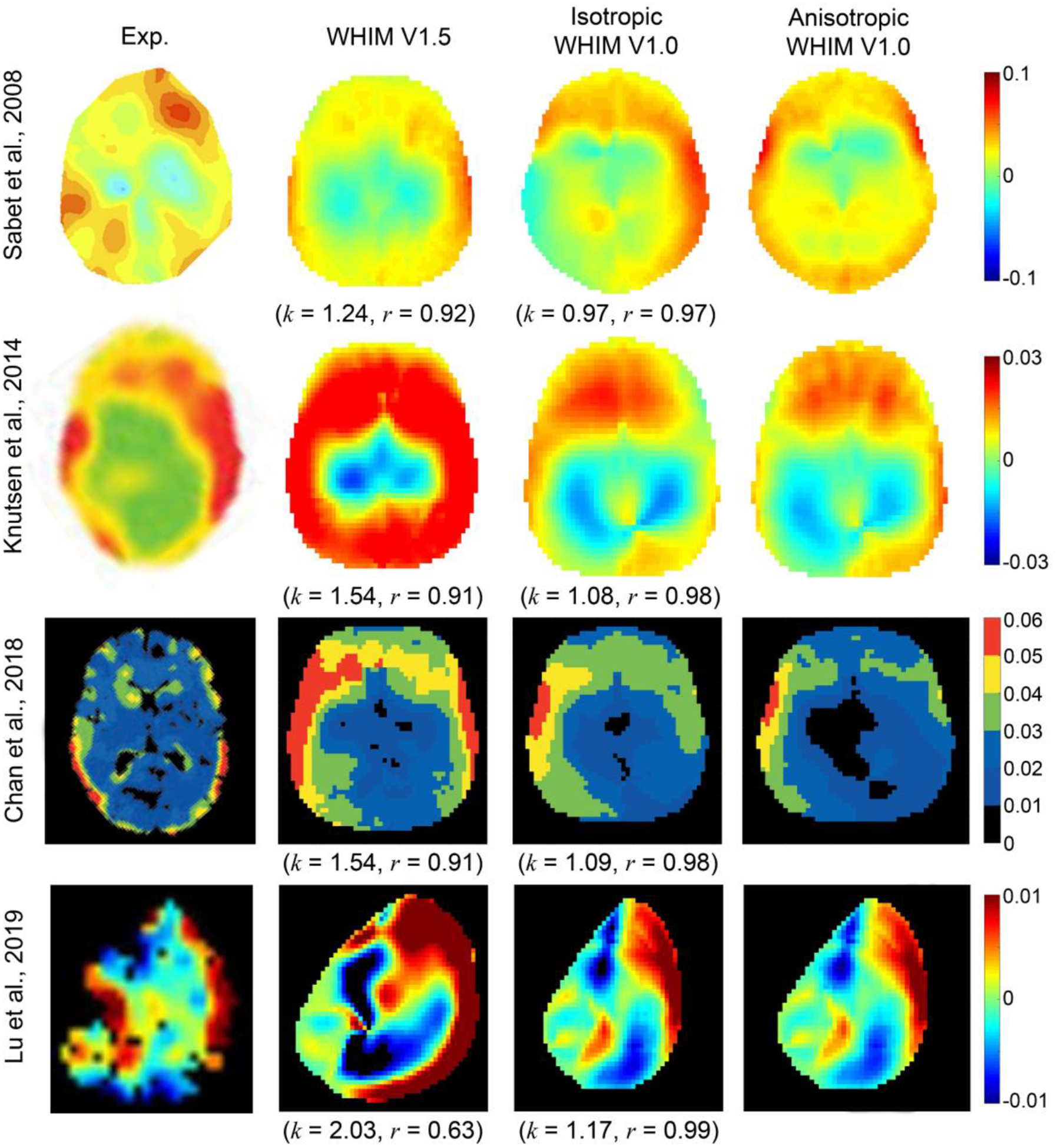
Successful validation of a head injury model is critical to ensure its biofidelity. However, there is an ongoing debate on what experimental data are suitable for model validation. Here, we report that CORrelation and Analysis (CORA) scores based on the commonly adopted relative brain-skull displacements or recent marker-based strains from cadaveric head impacts may not be effective in discriminating model-simulated whole-brain strains across a wide range of blunt conditions. We used three versions of the Worcester Head Injury Model (WHIM; isotropic and anisotropic WHIM V1.0, and anisotropic WHIM V1.5) to simulate 19 experiments, including eight high-rate cadaveric impacts, seven mid-rate cadaveric pure rotations simulating impacts in contact sports, and four in vivo head rotation/extension tests. All WHIMs achieved similar average CORA scores based on cadaveric displacement (~ 0.70; 0.47-0.88) and strain (V1.0: 0.86; 0.73-0.97 vs. V1.5: 0.78; 0.62-0.96), using the recommended settings. However, WHIM V1.5 produced ~ 1.17-2.69 times strain of the two V1.0 variants with substantial differences in strain distribution as well (Pearson correlation of ~ 0.57-0.92) when comparing their whole-brain strains across the range of blunt conditions. Importantly, their strain magnitude differences were similar to that in cadaveric marker-based strain (~ 1.32-3.79 times). This suggests that cadaveric strains are capable of discriminating head injury models for their simulated whole-brain strains (e.g., by using CORA magnitude sub-rating alone or peak strain magnitude ratio), although the aggregated CORA may not. This study may provide fresh insight into head injury model validation and the harmonization of simulation results from diverse head injury models. It may also facilitate future experimental designs to improve model validation.
成功验证头部损伤模型对于确保其生物逼真度至关重要。然而,对于哪些实验数据适合用于模型验证,目前仍存在争议。在这里,我们报告称,基于常见的相对脑颅骨位移或最近的尸体撞击标志物应变的相关性和分析(CORA)评分,可能无法有效地区分广泛钝性条件下模型模拟的全脑应变。我们使用了三个版本的伍斯特头部损伤模型(WHIM;各向同性和各向异性 WHIM V1.0 以及各向异性 WHIM V1.5)来模拟 19 个实验,包括 8 个高速尸体撞击、7 个中速尸体纯旋转模拟接触性运动中的撞击以及 4 个体内头部旋转/拉伸测试。所有 WHIM 均基于尸体位移(0.70;0.47-0.88)和应变(V1.0:0.86;0.73-0.97 与 V1.5:0.78;0.62-0.96),使用推荐的设置,均获得了相似的平均 CORA 评分。然而,当比较整个钝性条件范围内的全脑应变时,WHIM V1.5 产生的应变约为 V1.0 两种变体的 1.17-2.69 倍,且应变分布也有很大差异(0.57-0.92)。重要的是,它们的应变幅度差异与尸体标志物应变相似(~1.32-3.79 倍)。这表明,尸体应变能够区分用于模拟全脑应变的头部损伤模型(例如,仅使用 CORA 幅度亚评分或峰值应变幅度比),尽管总体 CORA 可能不行。这项研究可能为头部损伤模型验证以及来自不同头部损伤模型的模拟结果的协调提供新的见解。它也可能有助于未来的实验设计,以改善模型验证。