Department of Chemistry, University of Cambridge, Lensfield Road, Cambridge CB2 1EW, United Kingdom.
Department of Biochemistry, University of Cambridge, 80 Tennis Court Road, Cambridge CB2 1GA, United Kingdom.
J Med Chem. 2020 May 14;63(9):4749-4761. doi: 10.1021/acs.jmedchem.0c00007. Epub 2020 Apr 15.
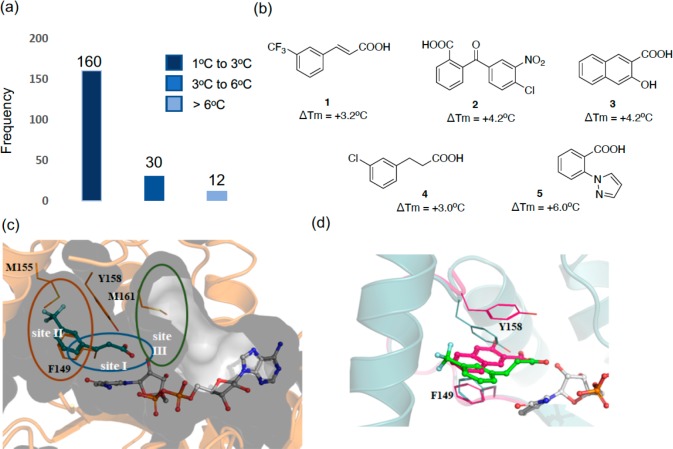
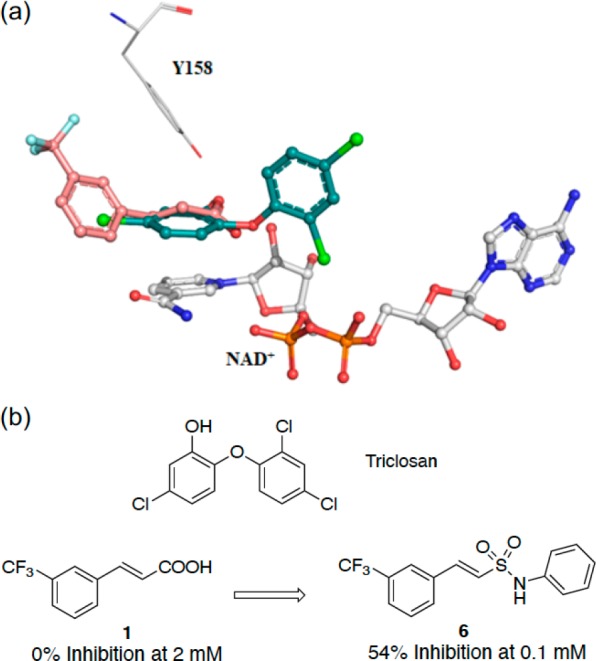
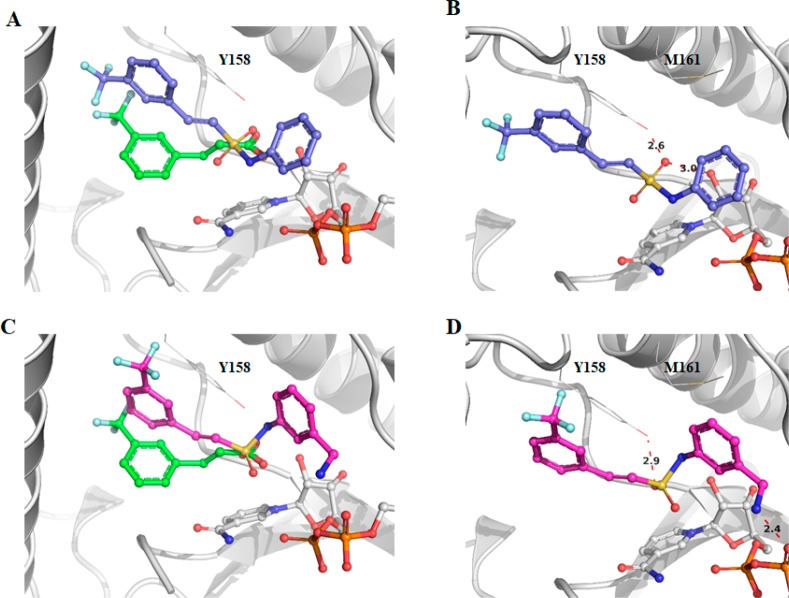
Tuberculosis (TB) remains a leading cause of mortality among infectious diseases worldwide. InhA has been the focus of numerous drug discovery efforts as this is the target of the first line pro-drug isoniazid. However, with resistance to this drug becoming more common, the aim has been to find new clinical candidates that directly inhibit this enzyme and that do not require activation by the catalase peroxidase KatG, thus circumventing the majority of the resistance mechanisms. In this work, the screening and validation of a fragment library are described, and the development of the fragment hits using a fragment growing strategy was employed, which led to the development of InhA inhibitors with affinities of up to 250 nM.
结核病(TB)仍然是全球传染病死亡的主要原因。InhA 一直是许多药物发现工作的重点,因为它是一线前药异烟肼的作用靶点。然而,随着对这种药物的耐药性越来越普遍,目标是寻找新的临床候选药物,这些药物直接抑制这种酶,并且不需要过氧化氢酶过氧化物酶 KatG 的激活,从而规避大多数耐药机制。在这项工作中,描述了一个片段文库的筛选和验证,以及使用片段生长策略开发片段命中的情况,这导致了具有高达 250 nM 亲和力的 InhA 抑制剂的开发。