Department of Psychiatry, Renmin Hospital of Wuhan University, Wuhan 430060, China.
Computer Science and Technology, Huazhong University of Science and Technology, Wuhan 430030, China.
Brain Behav Immun. 2020 Jul;87:11-17. doi: 10.1016/j.bbi.2020.03.028. Epub 2020 Mar 30.
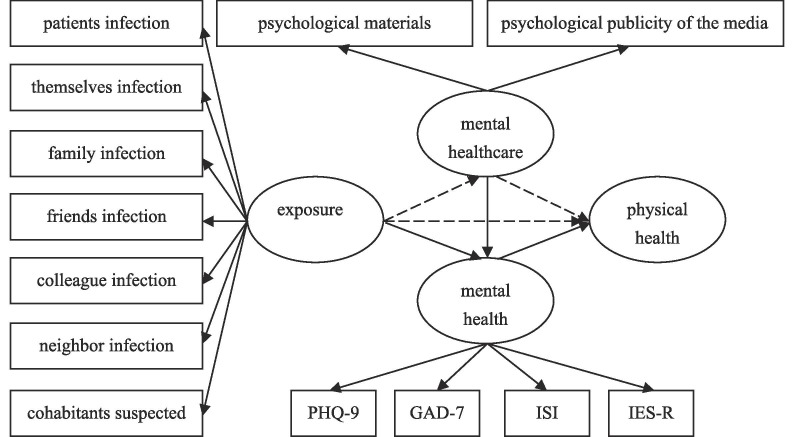
The severe 2019 outbreak of novel coronavirus disease (COVID-19), which was first reported in Wuhan, would be expected to impact the mental health of local medical and nursing staff and thus lead them to seek help. However, those outcomes have yet to be established using epidemiological data. To explore the mental health status of medical and nursing staff and the efficacy, or lack thereof, of critically connecting psychological needs to receiving psychological care, we conducted a quantitative study. This is the first paper on the mental health of medical and nursing staff in Wuhan. Notably, among 994 medical and nursing staff working in Wuhan, 36.9% had subthreshold mental health disturbances (mean PHQ-9: 2.4), 34.4% had mild disturbances (mean PHQ-9: 5.4), 22.4% had moderate disturbances (mean PHQ-9: 9.0), and 6.2% had severe disturbance (mean PHQ-9: 15.1) in the immediate wake of the viral epidemic. The noted burden fell particularly heavily on young women. Of all participants, 36.3% had accessed psychological materials (such as books on mental health), 50.4% had accessed psychological resources available through media (such as online push messages on mental health self-help coping methods), and 17.5% had participated in counseling or psychotherapy. Trends in levels of psychological distress and factors such as exposure to infected people and psychological assistance were identified. Although staff accessed limited mental healthcare services, distressed staff nonetheless saw these services as important resources to alleviate acute mental health disturbances and improve their physical health perceptions. These findings emphasize the importance of being prepared to support frontline workers through mental health interventions at times of widespread crisis.
2019 年新型冠状病毒病(COVID-19)疫情严重,最初在武汉报告,预计会影响当地医护人员的心理健康,从而导致他们寻求帮助。然而,这些结果尚未通过流行病学数据确定。为了探讨医护人员的心理健康状况,以及将心理需求与接受心理关怀紧密联系起来的效果(或缺乏效果),我们进行了一项定量研究。这是第一篇关于武汉医护人员心理健康的论文。值得注意的是,在武汉工作的 994 名医护人员中,有 36.9%存在阈下心理健康障碍(PHQ-9 均值:2.4),34.4%存在轻度障碍(PHQ-9 均值:5.4),22.4%存在中度障碍(PHQ-9 均值:9.0),6.2%存在严重障碍(PHQ-9 均值:15.1)。在病毒流行的最初阶段,年轻人的负担尤其沉重。所有参与者中,36.3%曾接触过心理材料(如心理健康书籍),50.4%曾接触过通过媒体提供的心理资源(如在线推送心理健康自助应对方法的信息),17.5%曾参加过咨询或心理治疗。研究确定了心理困扰的水平趋势以及接触感染者和心理援助等因素。尽管工作人员接触到的心理健康服务有限,但感到困扰的工作人员仍将这些服务视为缓解急性心理健康障碍和改善身体健康认知的重要资源。这些发现强调了在广泛危机时期,通过心理健康干预为一线工作人员提供支持的重要性。