Jiangsu Key Laboratory of Medical Science and Laboratory Medicine, School of Medicine, Jiangsu University, 301 Xuefu Road, 212013, Zhenjiang, Jiangsu, China.
Departmemt of Clinical Laboratory Medicine, Nantong Tumor Hospital, 30 Tongyang North Road, 226361, Nantong, Jiangsu, China.
Cell Death Dis. 2020 Apr 2;11(4):215. doi: 10.1038/s41419-020-2409-0.
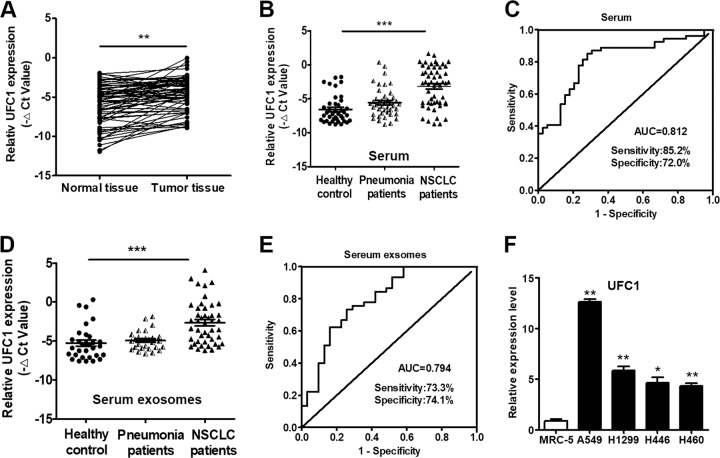
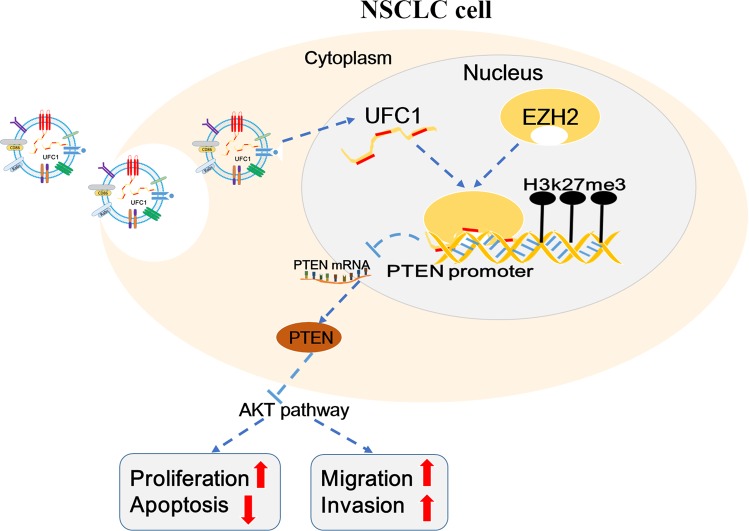
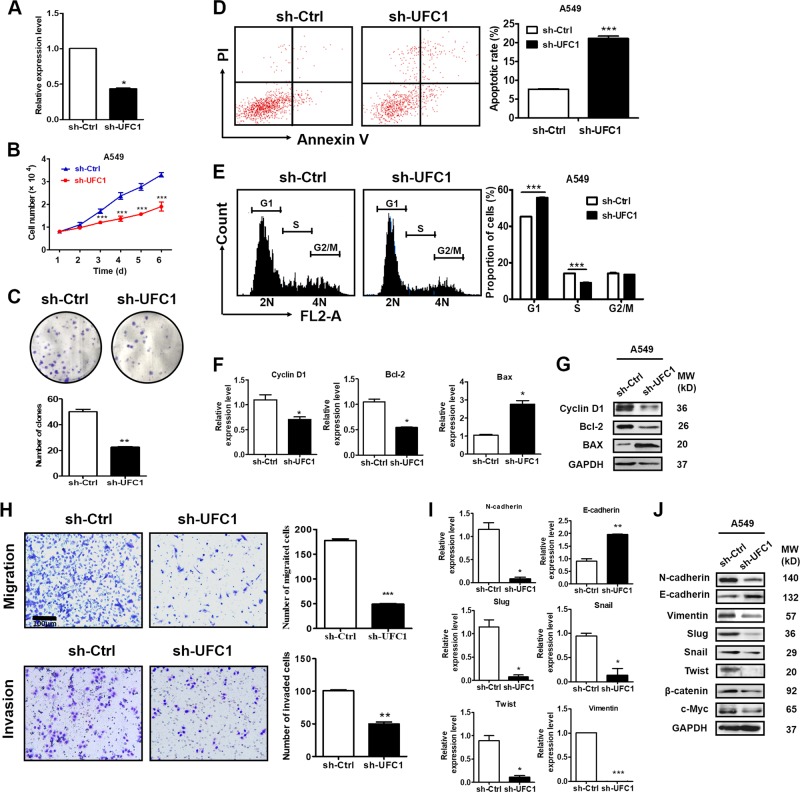
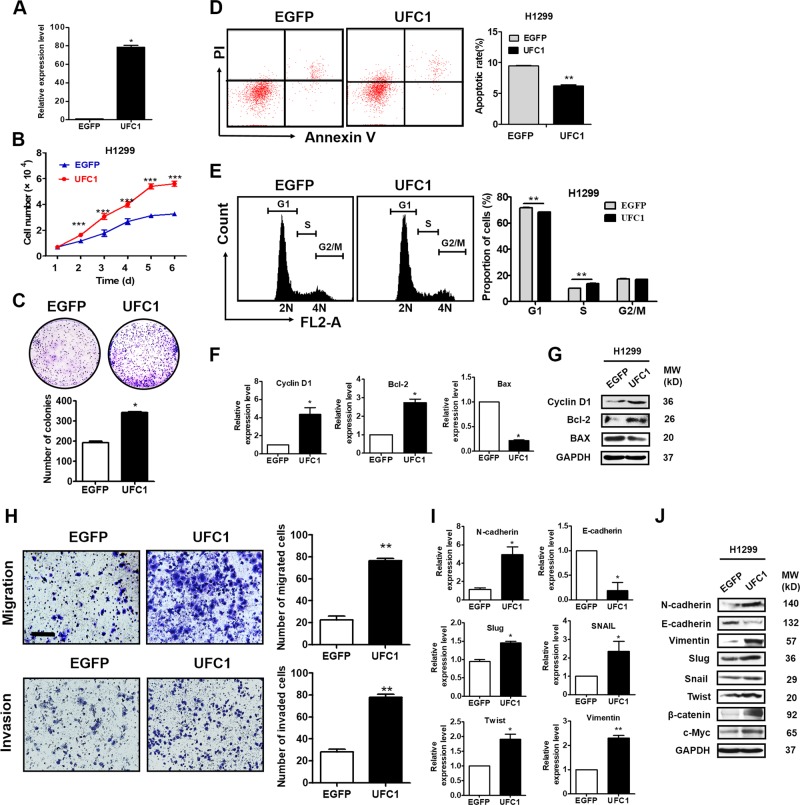
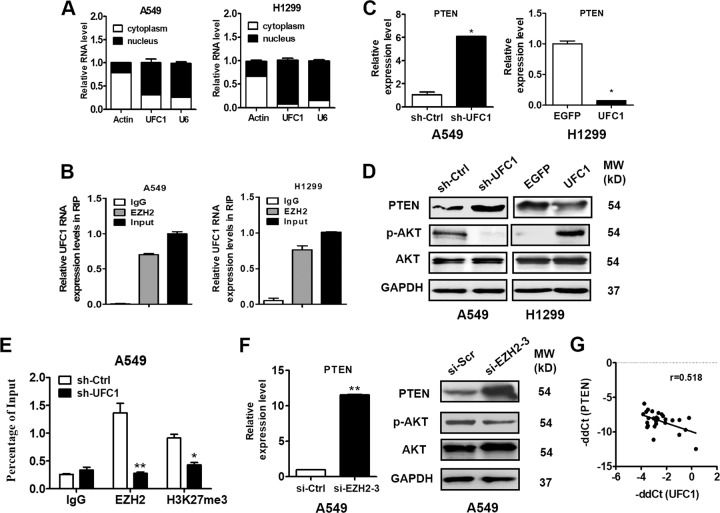
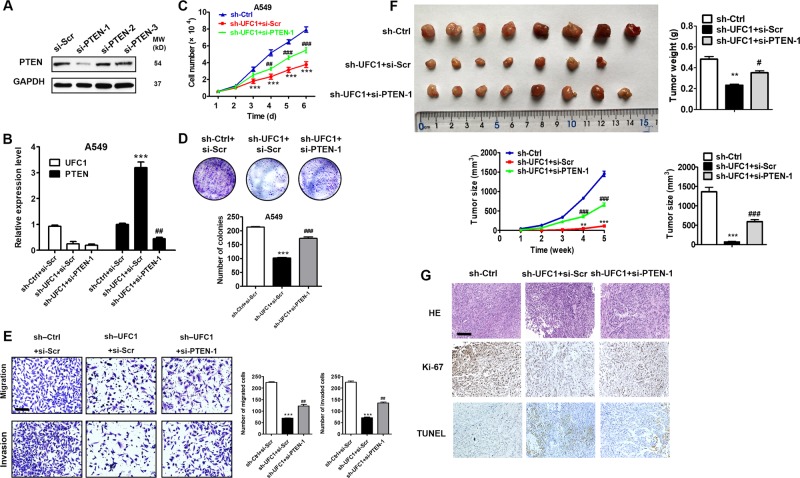
Long non-coding RNAs (LncRNAs) have been suggested as important regulators of cancer development and progression in non-small cell lung cancer (NSCLC). Nevertheless, the biological roles and clinical significance of lncRNA UFC1 in NSCLC remain unclear. We detected the expression of UFC1 in tumor tissues, serum, and serum exosomes of NSCLC patients by qRT-PCR. Gene overexpression or silencing were used to examine the biological roles of UFC1 in NSCLC. RNA immunoprecipitation and ChIP assays were performed to evaluate the interaction between UFC1 and enhancer of zeste homolog 2 (EZH2) and the binding of EZH2 to PTEN gene promoter. Rescue study was used to access the importance of PTEN regulation by UFC1 in NSCLC progression. UFC1 expression was upregulated in tumor tissues, serum, and serum exosomes of NSCLC patients and high level of UFC1 was associated with tumor infiltration. UFC1 knockdown inhibited NSCLC cell proliferation, migration and invasion while promoted cell cycle arrest and apoptosis. UFC1 overexpression led to the opposite effects. Mechanistically, UFC1 bound to EZH2 and mediated its accumulation at the promoter region of PTEN gene, resulting in the trimethylation of H3K27 and the inhibition of PTEN expression. UFC1 knockdown inhibited NSCLC growth in mouse xenograft tumor models while the simultaneous depletion of PTEN reversed this effect. NSCLC cells derived exosomes could promote NSCLC cell proliferation, migration and invasion through the transfer of UFC1. Moreover, Exosome-transmitted UFC1 promotes NSCLC progression by inhibiting PTEN expression via EZH2-mediated epigenetic silencing. Exosome-mediated transmit of UFC1 may represent a new mechanism for NSCLC progression and provide a potential marker for NSCLC diagnosis.
长链非编码 RNA(lncRNA)被认为是调节非小细胞肺癌(NSCLC)发生和发展的重要因素。然而,lncRNA UFC1 在 NSCLC 中的生物学作用和临床意义仍不清楚。我们通过 qRT-PCR 检测了 NSCLC 患者肿瘤组织、血清和血清外泌体中 UFC1 的表达。过表达或沉默 UFC1 用于检测其在 NSCLC 中的生物学作用。RNA 免疫沉淀和 ChIP 实验评估了 UFC1 与增强子结合蛋白 2(EZH2)的相互作用以及 EZH2 与 PTEN 基因启动子的结合。采用挽救实验评估了 UFC1 对 NSCLC 进展中 PTEN 调节的重要性。UFC1 在肿瘤组织、血清和血清外泌体中表达上调,高水平的 UFC1 与肿瘤浸润有关。UFC1 敲低抑制 NSCLC 细胞增殖、迁移和侵袭,促进细胞周期停滞和凋亡。UFC1 过表达则导致相反的效果。机制上,UFC1 与 EZH2 结合并介导其在 PTEN 基因启动子区域的积累,导致 H3K27 的三甲基化和 PTEN 表达的抑制。UFC1 敲低抑制了小鼠异种移植肿瘤模型中的 NSCLC 生长,而同时耗尽 PTEN 则逆转了这种效果。NSCLC 细胞衍生的外泌体可通过转移 UFC1 促进 NSCLC 细胞增殖、迁移和侵袭。此外,外泌体传递的 UFC1 通过 EZH2 介导的表观遗传沉默抑制 PTEN 表达,从而促进 NSCLC 的进展。外泌体介导的 UFC1 传递可能代表 NSCLC 进展的新机制,并为 NSCLC 的诊断提供了一个潜在的标志物。