The State Key Laboratory of Pharmaceutical Biotechnology, Division of Immunology, Medical School, Nanjing University, Nanjing 210093, China.
Department of Medical Genetics, Medical School, Nanjing University, Nanjing 210093, China.
Theranostics. 2018 Jun 24;8(14):3932-3948. doi: 10.7150/thno.25541. eCollection 2018.
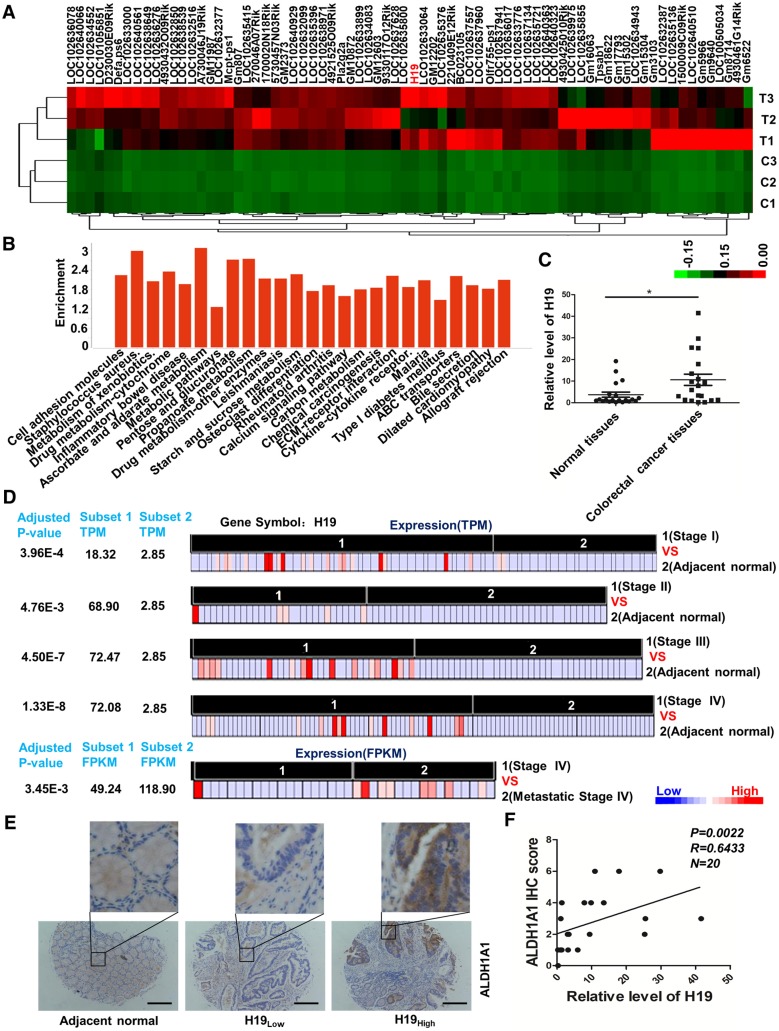
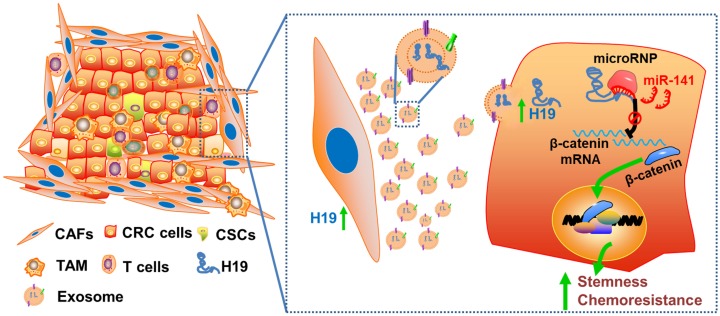
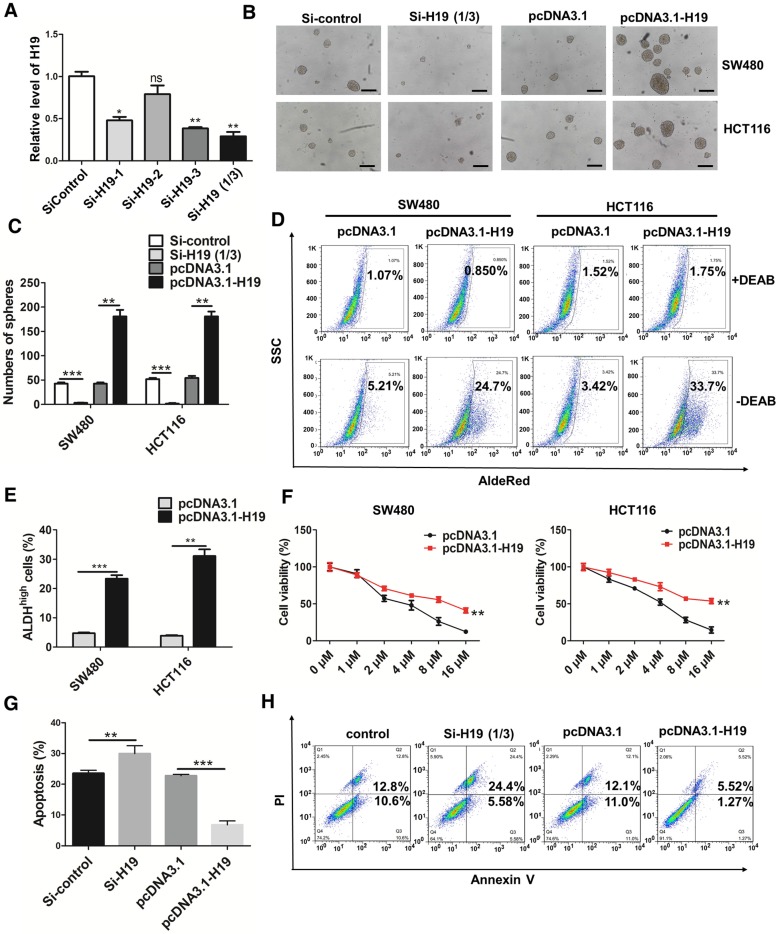
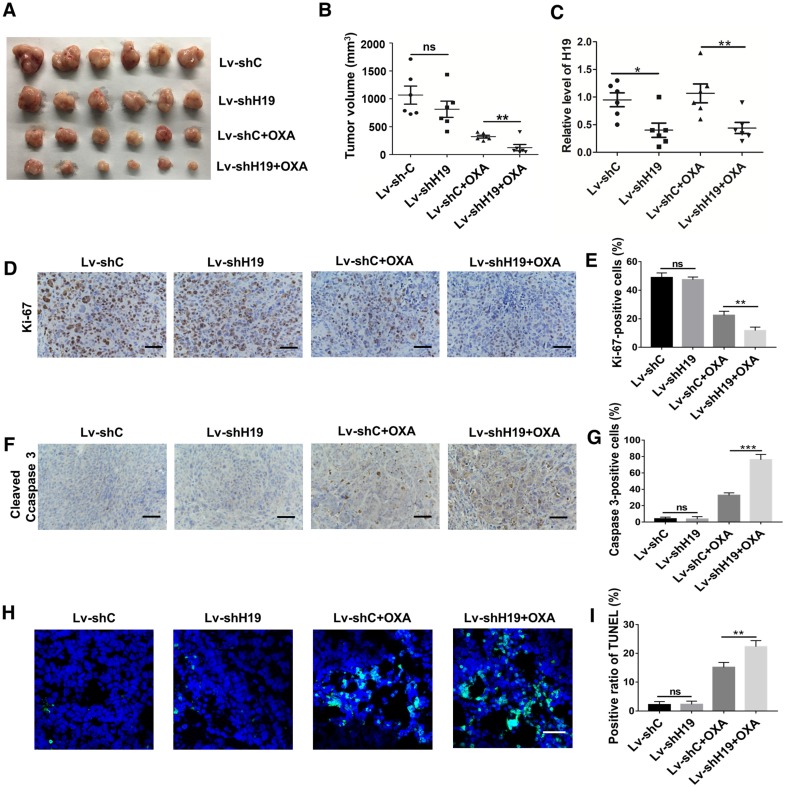
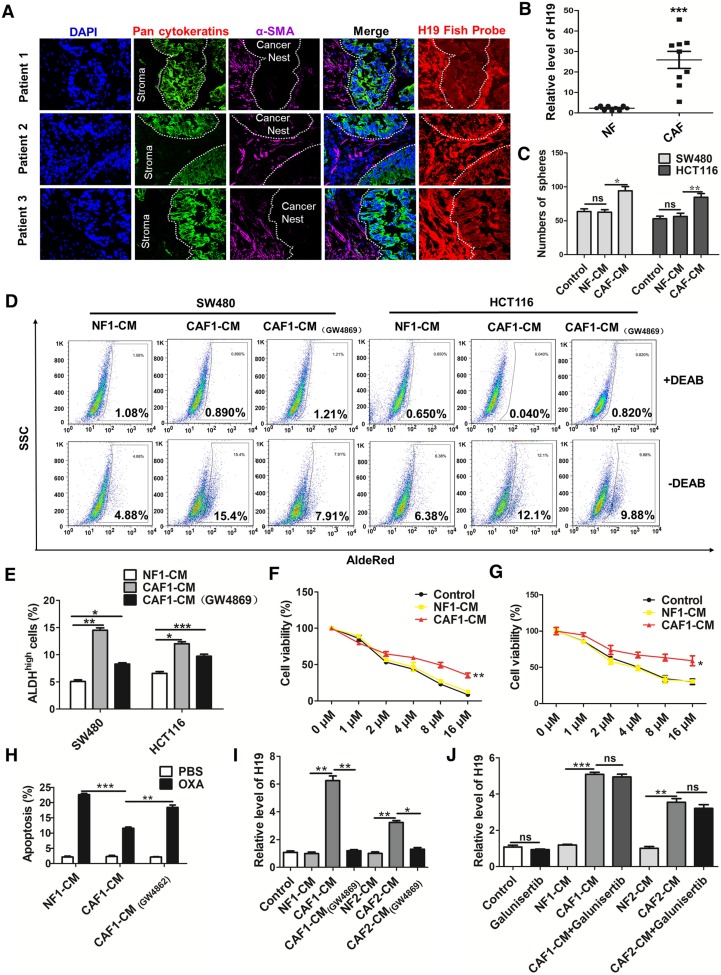
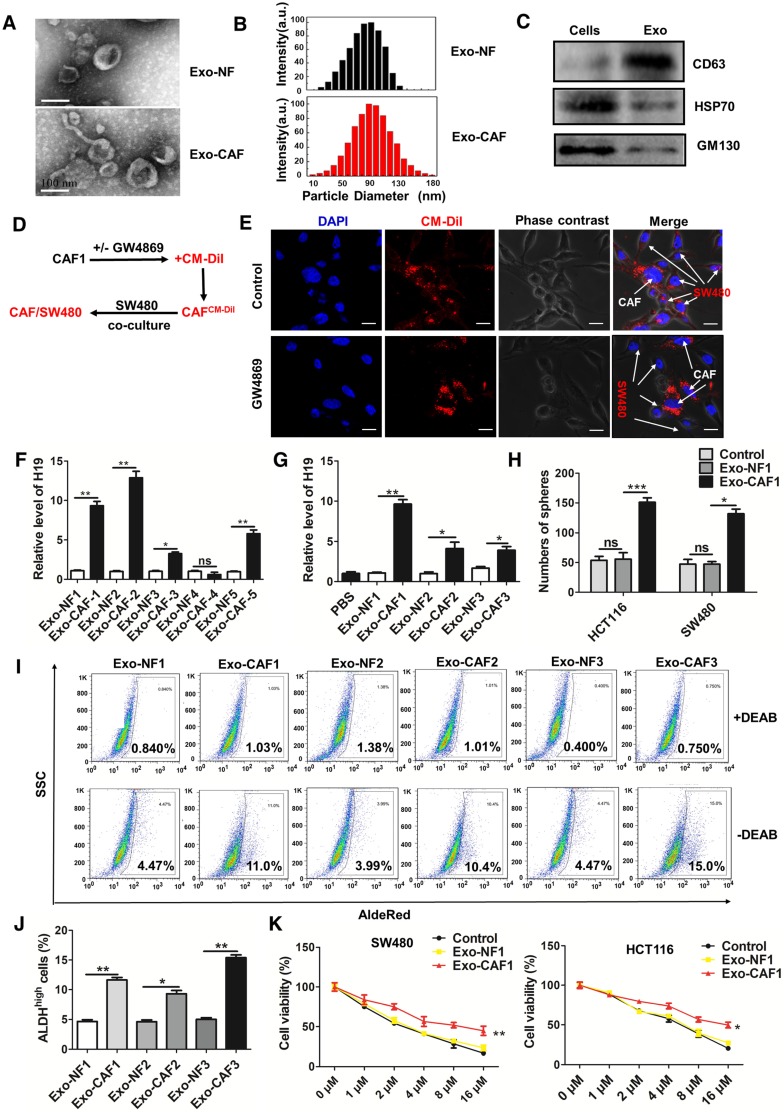
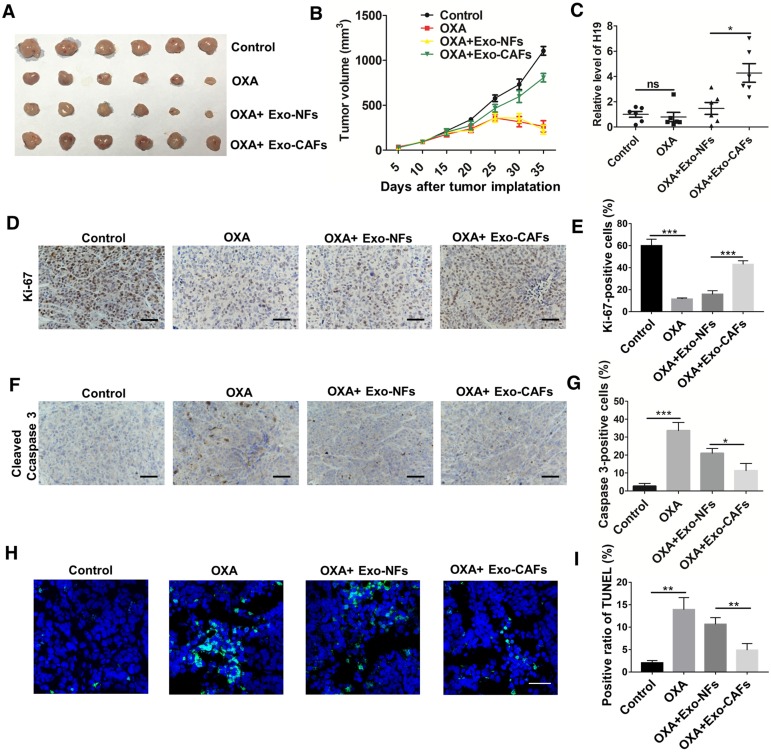
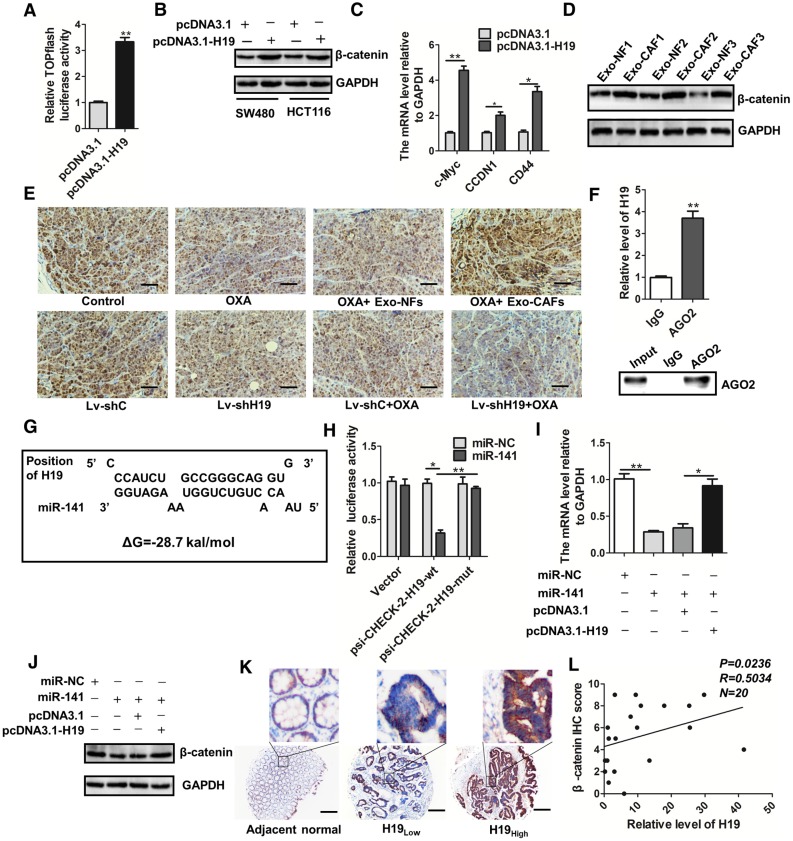
Long non-coding RNAs (lncRNAs) are involved in the pathology of various tumors, including colorectal cancer (CRC). The crosstalk between carcinoma- associated fibroblasts (CAFs) and cancer cells in the tumor microenvironment promotes tumor development and confers chemoresistance. In this study, we further investigated the underlying tumor-promoting roles of CAFs and the molecular mediators involved in these processes. The AOM/DSS-induced colitis-associated cancer (CAC) mouse model was established, and RNA sequencing was performed. Small interfering RNA (siRNA) sequences were used to knock down H19. Cell apoptosis was measured by flow cytometry. SW480 cells with H19 stably knocked down were used to establish a xenograft model. The indicated protein levels in xenograft tumor tissues were confirmed by immunohistochemistry assay, and cell apoptosis was analyzed by TUNEL apoptosis assay. RNA-FISH and immunofluorescence assays were performed to assess the expression of H19 in tumor stroma and cancer nests. The AldeRed ALDH detection assay was performed to detect intracellular aldehyde dehydrogenase (ALDH) enzyme activity. Isolated exosomes were identified by transmission electron microscopy, nanoparticle tracking and Western blotting. H19 was highly expressed in the tumor tissues of CAC mice compared with the expression in normal colon tissues. The up-regulation of H19 was also confirmed in CRC patient samples at different tumor node metastasis (TNM) stages. Moreover, H19 was associated with the stemness of colorectal cancer stem cells (CSCs) in CRC specimens. H19 promoted the stemness of CSCs and increased the frequency of tumor-initiating cells. RNA-FISH showed higher expression of H19 in tumor stroma than in cancer nests. Of note, H19 was enriched in CAF-derived conditioned medium and exosomes, which in turn promoted the stemness of CSCs and the chemoresistance of CRC cells and . Furthermore, H19 activated the β-catenin pathway via acting as a competing endogenous RNA sponge for miR-141 in CRC, while miR-141 significantly inhibited the stemness of CRC cells. CAFs promote the stemness and chemoresistance of CRC by transferring exosomal H19. H19 activated the β-catenin pathway via acting as a competing endogenous RNA sponge for miR-141, while miR-141 inhibited the stemness of CRC cells. Our findings indicate that H19 expressed by CAFs of the colorectal tumor stroma contributes to tumor development and chemoresistance.
长链非编码 RNA(lncRNA)参与多种肿瘤的病理学,包括结直肠癌(CRC)。肿瘤微环境中癌相关成纤维细胞(CAFs)与癌细胞之间的串扰促进肿瘤发展并赋予化疗耐药性。在这项研究中,我们进一步研究了 CAFs 的潜在肿瘤促进作用以及涉及这些过程的分子介质。 建立了 AOM/DSS 诱导的结肠炎相关癌症(CAC)小鼠模型,并进行了 RNA 测序。使用小干扰 RNA(siRNA)序列敲低 H19。通过流式细胞术测量细胞凋亡。使用稳定敲低 H19 的 SW480 细胞建立异种移植模型。通过免疫组化检测异种移植肿瘤组织中指示蛋白的水平,并通过 TUNEL 凋亡检测分析细胞凋亡。进行 RNA-FISH 和免疫荧光测定以评估肿瘤基质和癌巢中 H19 的表达。通过 AldeRed ALDH 检测试剂盒检测细胞内醛脱氢酶(ALDH)酶活性。通过透射电子显微镜、纳米颗粒跟踪和 Western blot 鉴定分离的外泌体。 H19 在 CAC 小鼠的肿瘤组织中的表达高于正常结肠组织中的表达。在不同肿瘤淋巴结转移(TNM)阶段的 CRC 患者样本中也证实了 H19 的上调。此外,H19 与 CRC 标本中的结直肠癌细胞(CSC)的干性有关。H19 促进 CSC 的干性并增加肿瘤起始细胞的频率。RNA-FISH 显示 H19 在肿瘤基质中的表达高于癌巢。值得注意的是,H19 在 CAF 衍生的条件培养基和外泌体中富集,这反过来又促进了 CSC 的干性和 CRC 细胞的化疗耐药性。此外,H19 通过作为 CRC 中的竞争性内源性 RNA 海绵作用于 miR-141 来激活 β-连环蛋白通路,而 miR-141 显著抑制 CRC 细胞的干性。 CAFs 通过转移外泌体 H19 促进 CRC 的干性和化疗耐药性。H19 通过作为 CRC 中的竞争性内源性 RNA 海绵作用于 miR-141 来激活 β-连环蛋白通路,而 miR-141 抑制 CRC 细胞的干性。我们的研究结果表明,结直肠肿瘤基质的 CAFs 表达的 H19 有助于肿瘤的发展和化疗耐药性。