Institute of Archaeology, The Hebrew University of Jerusalem, Mount Scopus, Jerusalem, Israel.
PLoS One. 2020 Apr 3;15(4):e0231109. doi: 10.1371/journal.pone.0231109. eCollection 2020.
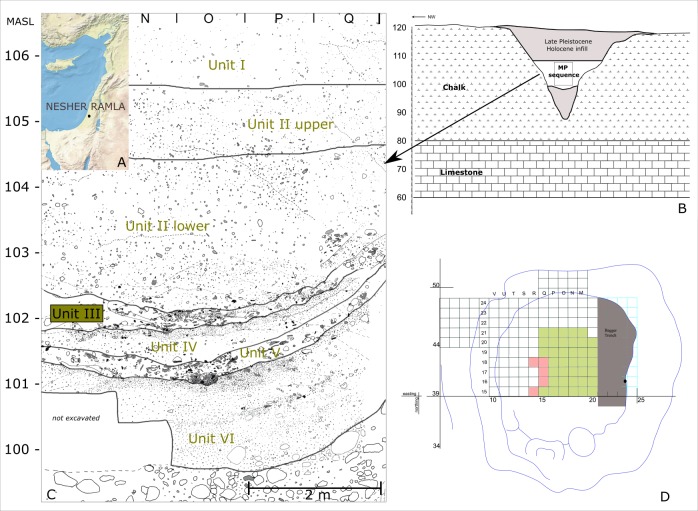
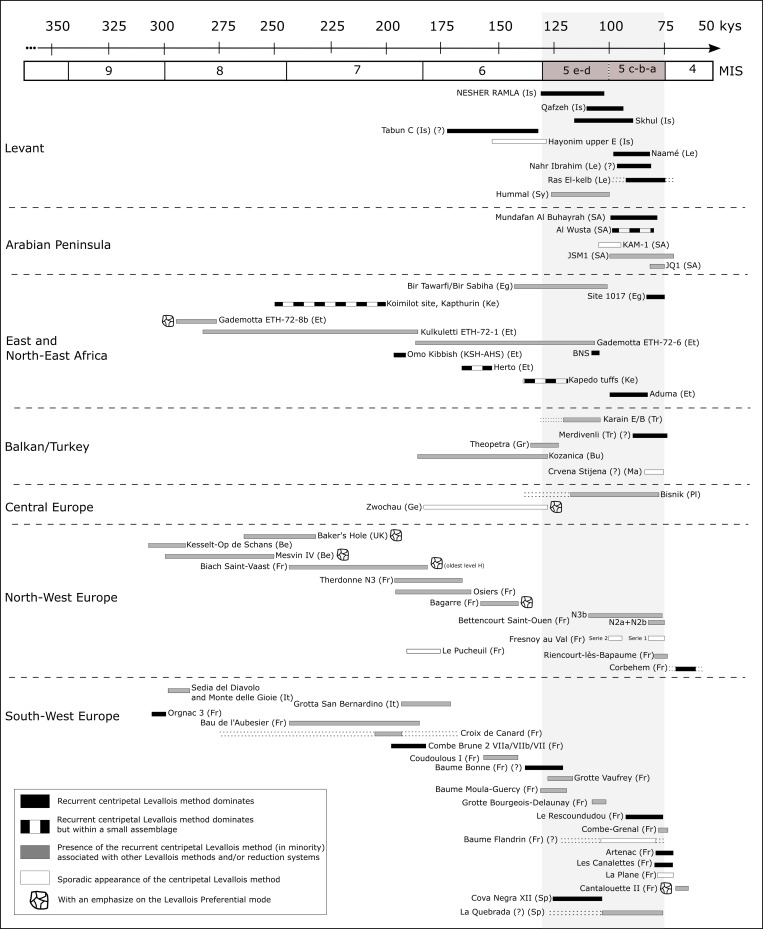
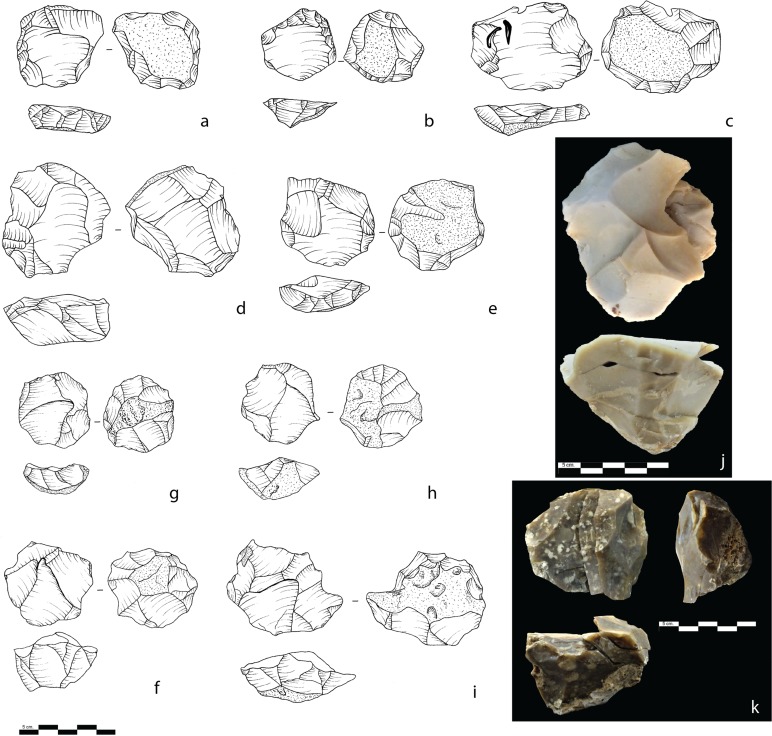
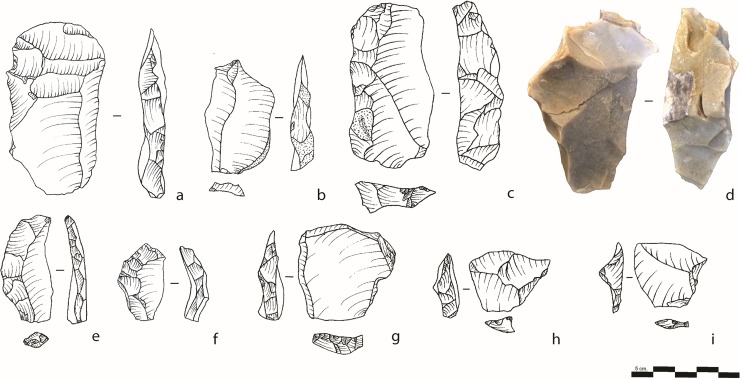
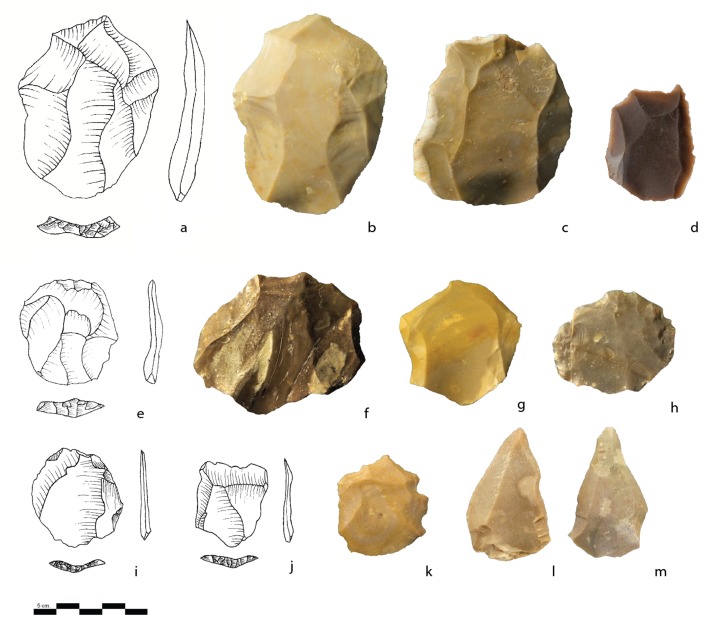
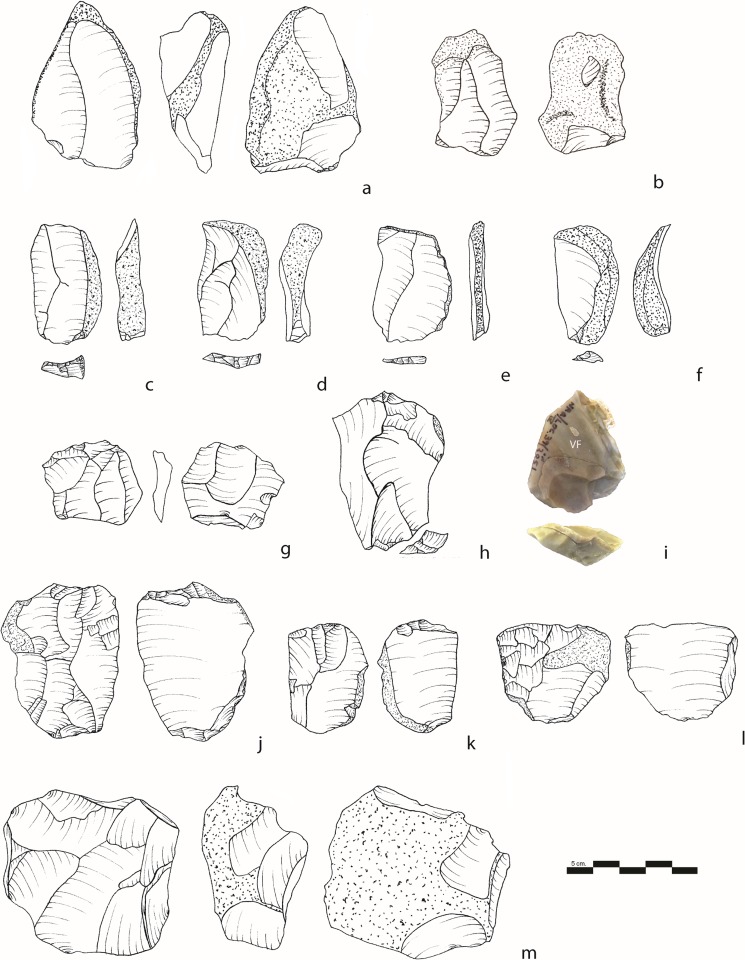
Interpreting human behavioral patterns during the Middle Paleolithic in the Levant is crucial for better understanding the dispersals and evolution of Homo sapiens and their possible interactions with other hominin groups. Here, we reconstruct the technological behavior, focusing on the centripetal Levallois method at Nesher Ramla karst sinkhole, Israel. Nesher Ramla karst sinkhole is dated to the Marine Isotope stages (MIS) 6 and 5 and represents one of the oldest occurrences of the centripetal Levallois reduction strategy in the Near East. The Levallois centripetal technology is often seen as a marker of human dispersals and adaptations in the Middle Paleolithic/Middle Stone Age of Africa and the Near East. This technology is documented in East African sites as early as 300 kya and in the Levant as early as 130 kya. However, the degree of similarity between African and Levantine centripetal technology and whether it originates from the same source remain under debate. In this paper, we focus on describing the lithic organization at Unit III of Nesher Ramla (dated to MIS 5), which is dominated by the centripetal Levallois method in association with other reduction sequences. Both preferential and recurrent centripetal Levallois modes were used at the site to produce oval and rectangular flakes. Other minor reduction sequences include unidirectional convergent method for Levallois points production and a specific method for the manufacture of naturally backed knives. The lithic data from Unit III of Nesher Ramla is further used in inter-site comparisons suggesting that the mid-Middle Paleolithic sites in the Near East possess common technological characteristics, especially the use of the centripetal Levallois method as predominant reduction strategy. This trend differs from what is usually observed in Africa and Europe, where the centripetal Levallois method is modestly represented during MIS 5 and is accompanied by other, more dominant, reduction strategies.
在黎凡特地区,对中石器时代人类行为模式进行解读,对于更好地理解智人扩散和进化及其与其他原始人类群体的可能互动至关重要。在这里,我们重建了技术行为,重点关注以色列内瑟拉姆拉岩溶坑的向心勒瓦娄哇技术。内瑟拉姆拉岩溶坑的年代可追溯到海洋同位素阶段 6 和 5,是近东地区最早出现向心勒瓦娄哇技术的地点之一。向心勒瓦娄哇技术通常被视为人类在非洲和近东地区中石器时代/中石器时代扩散和适应的标志。这种技术在东非遗址中早在 30 万年前就有记载,在近东地区也早在 13 万年前就有记载。然而,非洲和黎凡特向心技术之间的相似程度以及它们是否源自同一来源仍存在争议。本文主要关注描述内瑟拉姆拉单元 III 的石器组织(年代为 MIS 5),该单元以向心勒瓦娄哇技术为主,同时还存在其他几种减缩序列。该遗址中同时使用了优先向心和反复向心的勒瓦娄哇模式来生产椭圆形和长方形的石片。其他次要的减缩序列包括用于生产勒瓦娄哇点的单向会聚方法和用于制造天然背刀的特定方法。内瑟拉姆拉单元 III 的石器数据进一步用于遗址间比较,表明近东地区的中石器时代中期遗址具有共同的技术特征,尤其是使用向心勒瓦娄哇技术作为主要的减缩策略。这一趋势与非洲和欧洲通常观察到的情况不同,在非洲和欧洲,向心勒瓦娄哇技术在 MIS 5 期间的代表性较弱,同时还伴随着其他更为主要的减缩策略。