The Department of Molecular Biosciences, The University of Texas at Austin, Austin, TX, 78712, USA.
The Department of Molecular Biosciences, The University of Texas at Austin, Austin, TX, 78712, USA.
Redox Biol. 2020 May;32:101511. doi: 10.1016/j.redox.2020.101511. Epub 2020 Mar 21.
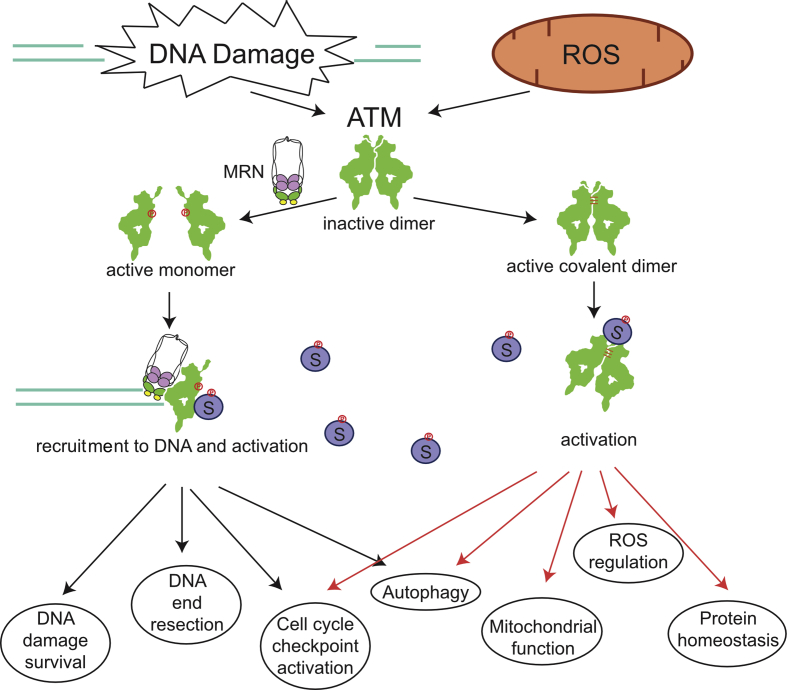
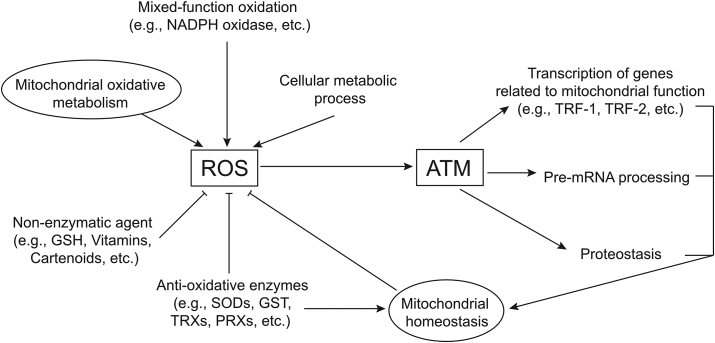
The Ataxia-telangiectasia mutated (ATM) kinase responds to DNA double-strand breaks and other forms of cellular stress, including reactive oxygen species (ROS). Recent work in the field has uncovered links between mitochondrial ROS and ATM activation, suggesting that ATM acts as a sensor for mitochondrial derived ROS and regulates ROS accumulation in cells through this pathway. In addition, characterization of cells from Ataxia-telangiectasia patients as well as ATM-deficient mice and cell models suggest a role for ATM in modulating mitochondrial gene expression and function. Here we review ROS responses related to ATM function, recent evidence for ATM roles in mitochondrial maintenance and turnover, and the relationship between ATM and regulation of protein homeostasis.
共济失调毛细血管扩张突变(ATM)激酶对 DNA 双链断裂和其他形式的细胞应激(包括活性氧物种(ROS))作出反应。该领域的最新研究揭示了线粒体 ROS 与 ATM 激活之间的联系,表明 ATM 作为线粒体衍生 ROS 的传感器,并通过该途径调节细胞中 ROS 的积累。此外,对共济失调毛细血管扩张症患者的细胞以及 ATM 缺陷小鼠和细胞模型的表征表明,ATM 在调节线粒体基因表达和功能方面发挥作用。在这里,我们综述了与 ATM 功能相关的 ROS 反应、最近关于 ATM 在维持和更替线粒体中的作用的证据,以及 ATM 与调节蛋白质平衡之间的关系。