Department of Molecular Biomedicine, Centro de Investigación y de Estudios Avanzados del Instituto Politécnico Nacional. Avenida Instituto Politécnico Nacional 2508, Ciudad de México 07360, Mexico.
Department of Physiology, Biophysics and Neurosciences, Centro de Investigación y de Estudios Avanzados del Instituto Politécnico Nacional. Avenida Instituto Politécnico Nacional 2508, Ciudad de México 07360, Mexico.
Int J Mol Sci. 2020 Mar 31;21(7):2429. doi: 10.3390/ijms21072429.
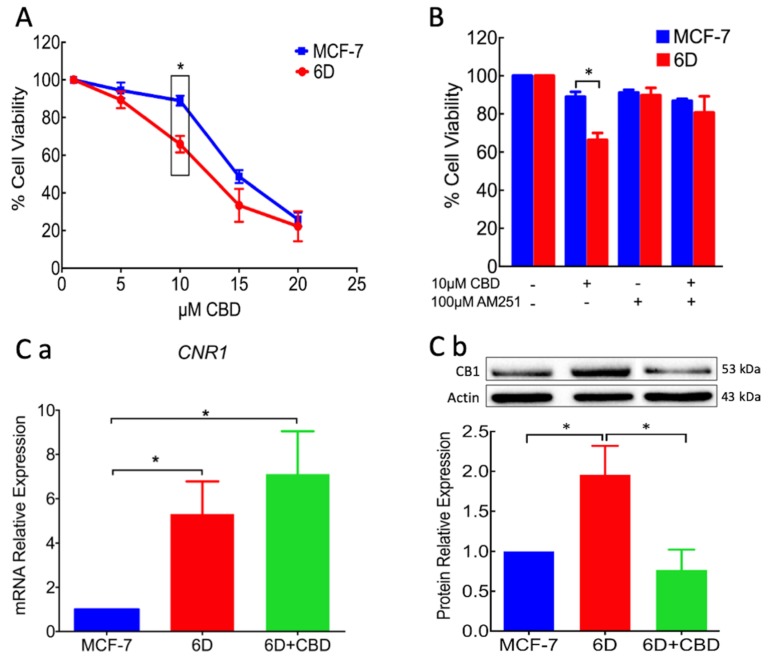
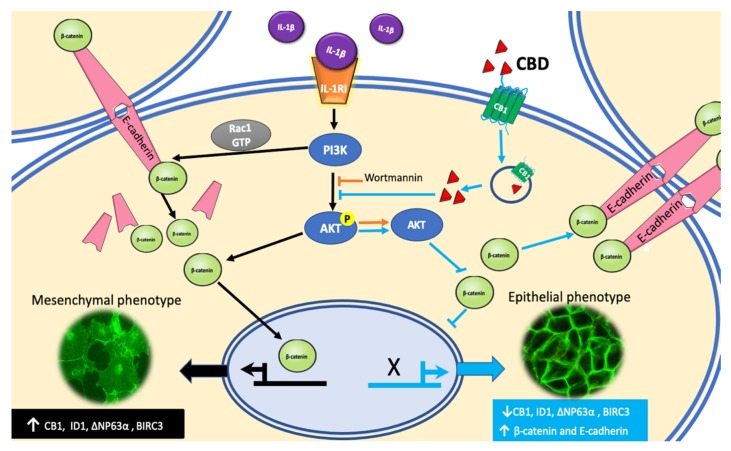
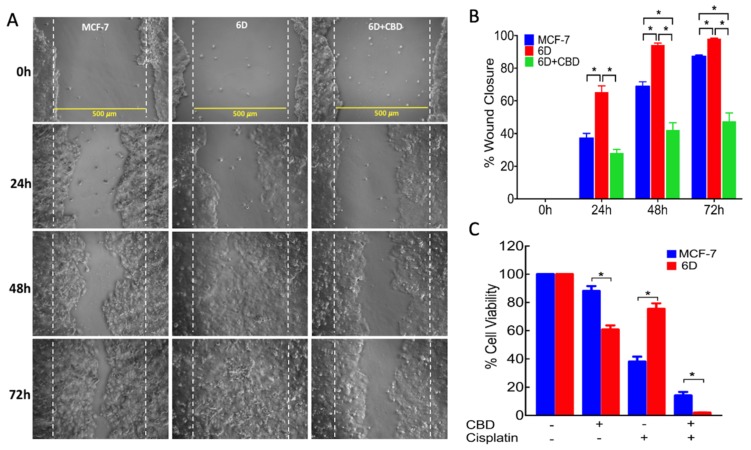
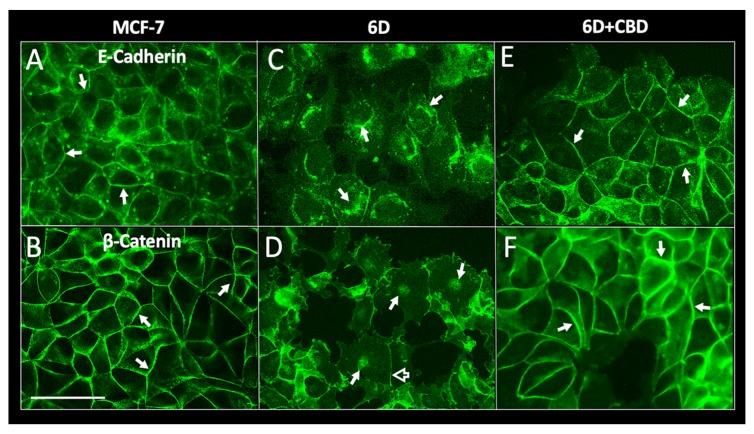
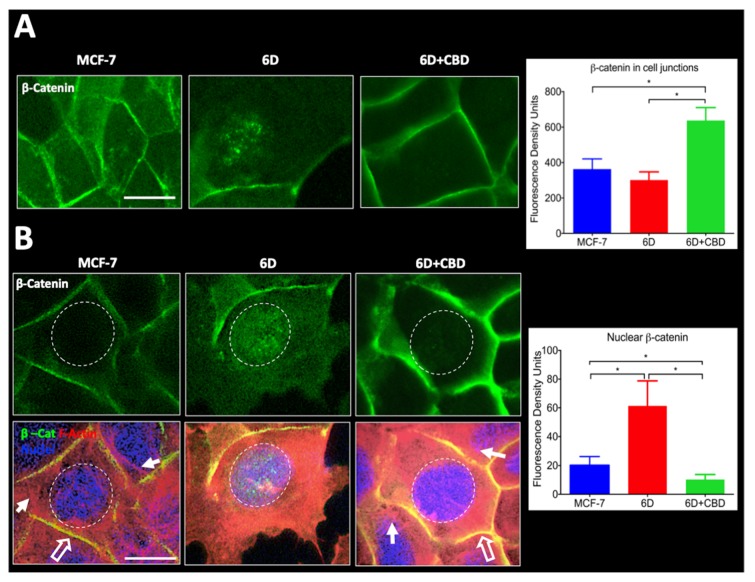
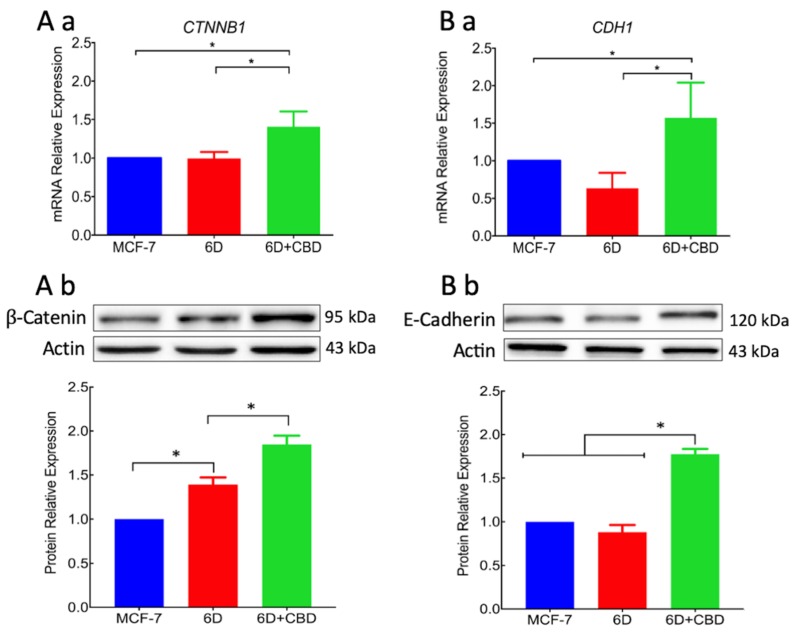
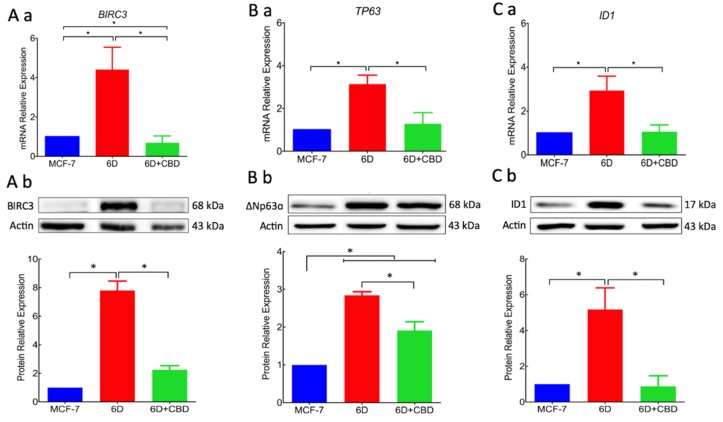
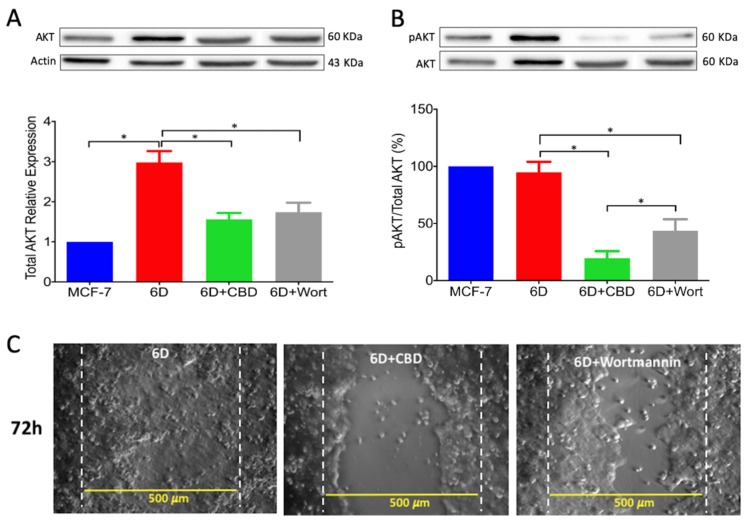
Cannabidiol (CBD) has been used to treat a variety of cancers and inflammatory conditions with controversial results. In previous work, we have shown that breast cancer MCF-7 cells, selected by their response to inflammatory IL-1β cytokine, acquire a malignant phenotype (6D cells) through an epithelial-mesenchymal transition (EMT). We evaluated CBD as a potential inhibitor of this transition and inducer of reversion to a non-invasive phenotype. It decreased 6D cell viability, downregulating expression of receptor CB1. The CBD blocked migration and progression of the IL-1β-induced signaling pathway IL-1β/IL-1RI/β-catenin, the driver of EMT. Cannabidiol reestablished the epithelial organization lost by dispersion of the cells and re-localized E-cadherin and β-catenin at the adherens junctions. It also prevented β-catenin nuclear translocation and decreased over-expression of genes for ∆Np63α, BIRC3, and ID1 proteins, induced by IL-1β for acquisition of malignant features. Cannabidiol inhibited the protein kinase B (AKT) activation, a crucial effector in the IL-1β/IL-1RI/β-catenin pathway, indicating that at this point there is crosstalk between IL-1β and CBD signaling which results in phenotype reversion. Our 6D cell system allowed step-by-step analysis of the phenotype transition and better understanding of mechanisms by which CBD blocks and reverts the effects of inflammatory IL-1β in the EMT.
大麻二酚 (CBD) 已被用于治疗多种癌症和炎症性疾病,但结果存在争议。在之前的工作中,我们已经表明,通过上皮-间充质转化 (EMT),对炎症性白细胞介素-1β 细胞因子有反应的乳腺癌 MCF-7 细胞获得恶性表型 (6D 细胞)。我们评估了 CBD 作为这种转化的潜在抑制剂和非侵袭性表型逆转诱导剂的潜力。它降低了 6D 细胞的活力,下调了受体 CB1 的表达。CBD 阻断了 IL-1β 诱导的信号通路 IL-1β/IL-1RI/β-catenin 的迁移和进展,该通路是 EMT 的驱动因素。大麻二酚重建了细胞分散导致的上皮组织丧失,并使 E-钙粘蛋白和 β-catenin 在黏附连接重新定位。它还阻止了 β-catenin 的核转位,并降低了 IL-1β 诱导的恶性特征获得所需的 ∆Np63α、BIRC3 和 ID1 蛋白基因的过度表达。大麻二酚抑制蛋白激酶 B (AKT) 的激活,AKT 是 IL-1β/IL-1RI/β-catenin 通路中的关键效应物,这表明在这一点上,IL-1β 和 CBD 信号之间存在串扰,导致表型逆转。我们的 6D 细胞系统允许逐步分析表型转化,并更好地理解 CBD 阻断和逆转 EMT 中炎症性 IL-1β 作用的机制。