University School of Biotechnology, Guru Gobind Singh Indraprastha University, Dwarka, Sector 16C, New Delhi 110075, India.
Indian Pharmacopoeia Commission, Pharmacovigilance Laboratory, Sector 23, Raj Nagar, Ghaziabad, Uttar Pradesh-201002, India.
Molecules. 2020 Apr 1;25(7):1609. doi: 10.3390/molecules25071609.
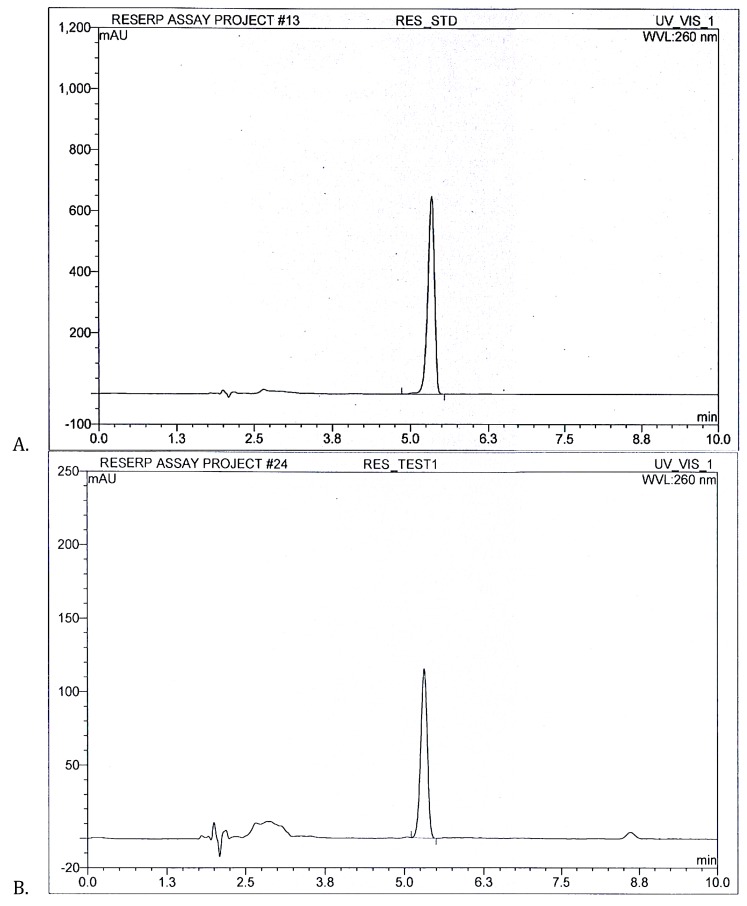
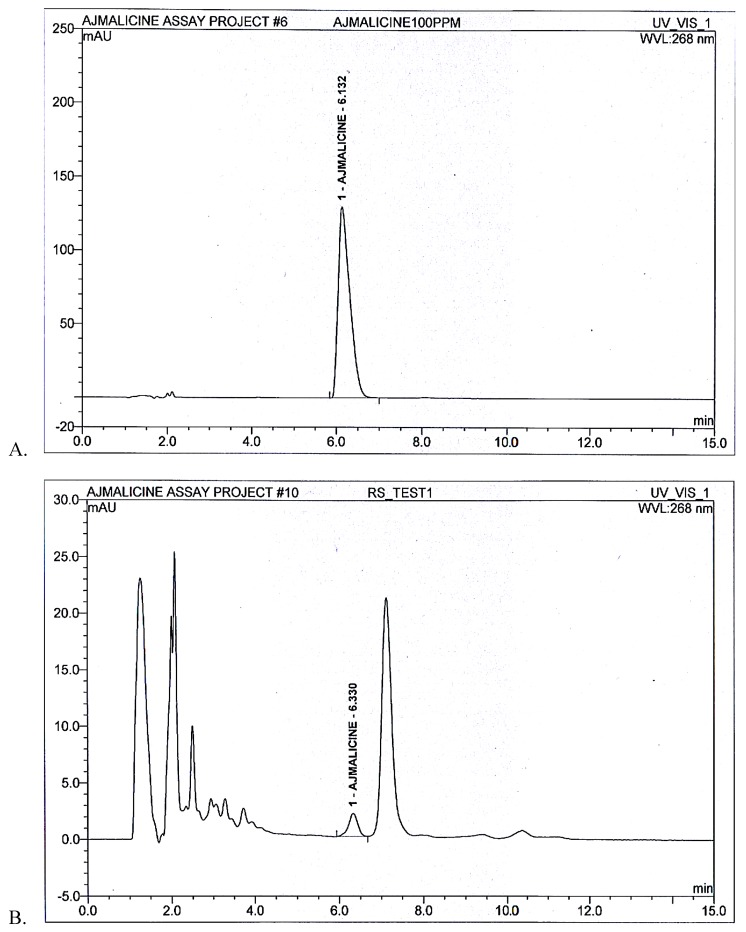
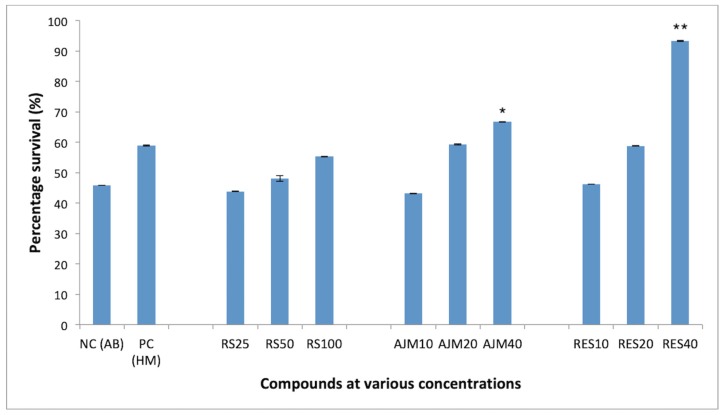
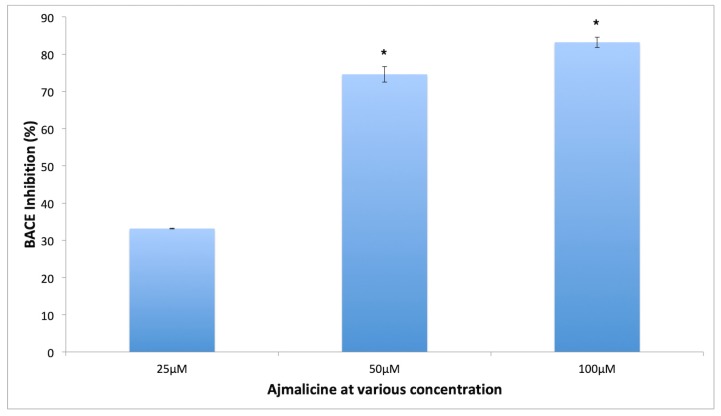
Alzheimer's disease (AD) is a multifactorial disorder characterized by exponential loss of memory and cognitive deficit involving several disease modifying targets (amyloid beta, beta-secretase, monoaminoxidase-B, and cholinesterase). The present study explores multi-target directed ligand approach using secondary metabolite reserpine (RES) and ajmalicine (AJM) obtained from roots. Novel LCMS and HPLC methods were developed for identification and quantification of reserpine and ajmalicine. In vitro enzyme inhibition assays were performed to evaluate anti-cholinesterase, β-site amyloid cleaving enzyme (BACE-1) inhibition and monoamine oxidase-B (MAO-B) inhibition, further analyzed with in silico analysis. Anti-amyloidogenic potential was studied using anti-aggregation studies along with TEM and circular dichroism (CD) analysis. In vitro neuroprotective potential against Aβ toxicity and anti-oxidative stress was demonstrated using PC12 cell cultures. Reserpine is a more potent dual cholinesterase inhibitor than ajmalicine (IC values of 1.7 μM (AChE) and 2.8 μM (BuChE)). The anti-aggregation activity of reserpine (68%) was more than ajmalicine (56%). Both compounds demonstrated neuroprotective activity against Aβ42 (92%) and HO (93%) induced toxicity in PC12 cells against controls. Phytocompounds also inhibited MAO-B and BACE-1 enzymes in concentration dependent manner. Molecular docking studies indicated the strong binding of compounds to the catalytic site of targets. This novel study demonstrated that reserpine and ajmalicine as a multi-target directed ligand that have disease modifying potential for amelioration of AD.
阿尔茨海默病(AD)是一种多因素疾病,其特征是记忆呈指数级丧失和认知功能障碍,涉及多个疾病修饰靶点(β-淀粉样蛋白、β-分泌酶、单胺氧化酶-B 和胆碱酯酶)。本研究探索了使用从根部获得的次生代谢物利血平和育亨宾的多靶点定向配体方法。开发了新的 LCMS 和 HPLC 方法来鉴定和定量利血平和育亨宾。进行了体外酶抑制测定,以评估抗胆碱酯酶、β-位点淀粉样蛋白裂解酶(BACE-1)抑制和单胺氧化酶-B(MAO-B)抑制,并进一步进行了计算机模拟分析。通过抗聚集研究以及 TEM 和圆二色性(CD)分析研究了抗淀粉样蛋白形成潜力。通过 PC12 细胞培养物,研究了体外神经保护潜力,以对抗 Aβ 毒性和抗氧化应激。利血平比育亨宾(AChE 的 IC 值为 1.7 μM 和 BuChE 的 2.8 μM)是更有效的双胆碱酯酶抑制剂。利血平的抗聚集活性(68%)高于育亨宾(56%)。两种化合物均表现出对 Aβ42(92%)和 HO(93%)诱导的 PC12 细胞毒性的神经保护活性,与对照相比。植物化合物还以浓度依赖性方式抑制 MAO-B 和 BACE-1 酶。分子对接研究表明,化合物与靶标的催化部位具有强结合。这项新研究表明,利血平和育亨宾作为一种多靶点定向配体,具有改善 AD 的疾病修饰潜力。