Emmert Maximilian Y, Firstenberg Michael S, Martella Arthur T, Lau Liming, Zlock Stephen, Mohan Ashik, Spangler Taylor, Currie Sarah, Salzberg Sacha P, Caliskan Etem
Department of Cardiovascular Surgery, Charité Universitätsmedizin Berlin, Berlin, Germany.
Department of Cardiothoracic and Vascular Surgery, German Heart Center Berlin, Berlin, Germany.
J Cardiothorac Surg. 2020 Apr 3;15(1):56. doi: 10.1186/s13019-020-01096-0.
Left atrial appendage occlusion (LAAO) represents a treatment alternative to anticoagulation in patients with atrial fibrillation. We evaluate a novel device for epicardial LAAO in a translational canine model.
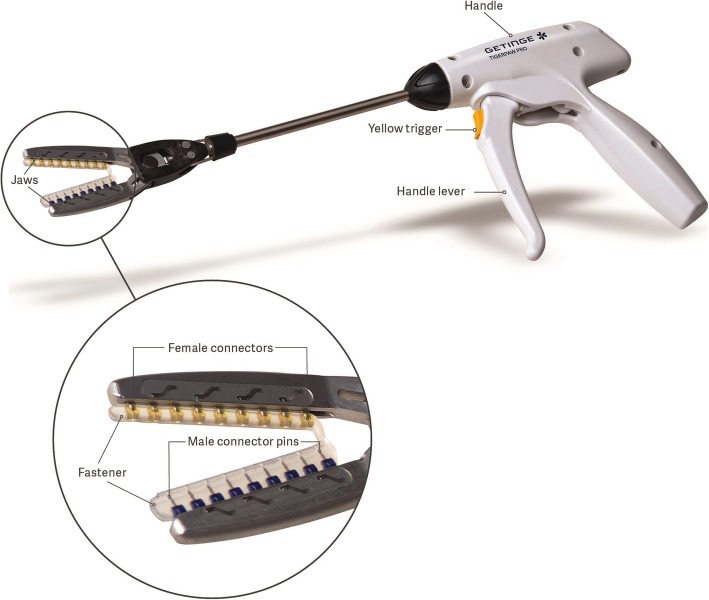
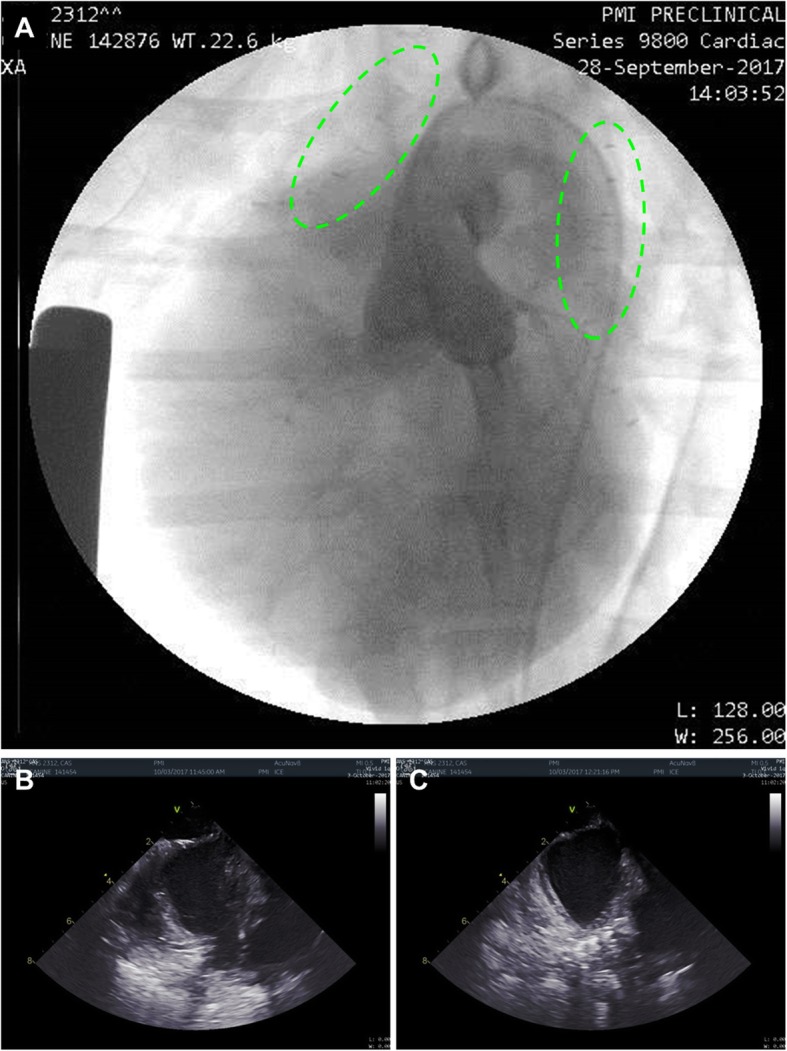
Nine hounds (n = 9) were used to assess usability, safety, and efficacy of the TigerPaw Pro (TPP) device for epicardial LAAO. Following baseline imaging (intra-cardiac echocardiography (ICE) and angiography) and intraoperative visual inspection, usability was tested via a closure/re-opening maneuver followed by deployment of a total of twenty TPP devices (n = 20) on the left and right atrial appendages respectively. Procedural safety was evaluated by assessing for adverse-events via direct Epicardial inspection and endocardial imaging. Efficacy evaluation included assessment of device positioning, presence of residual stumps and completeness of closure. Post-mortem evaluation was performed to confirm safety and efficacy.
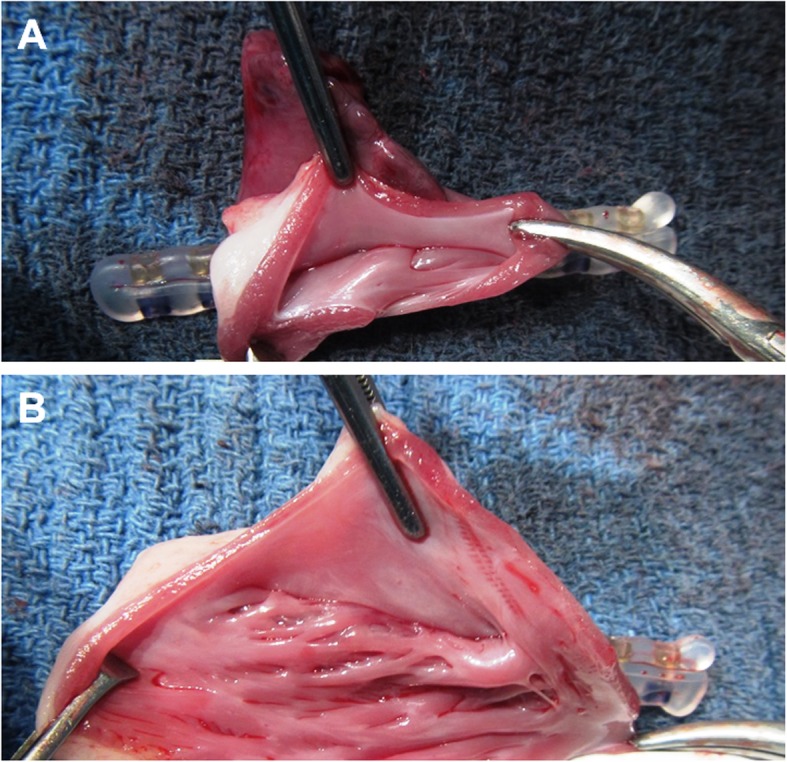
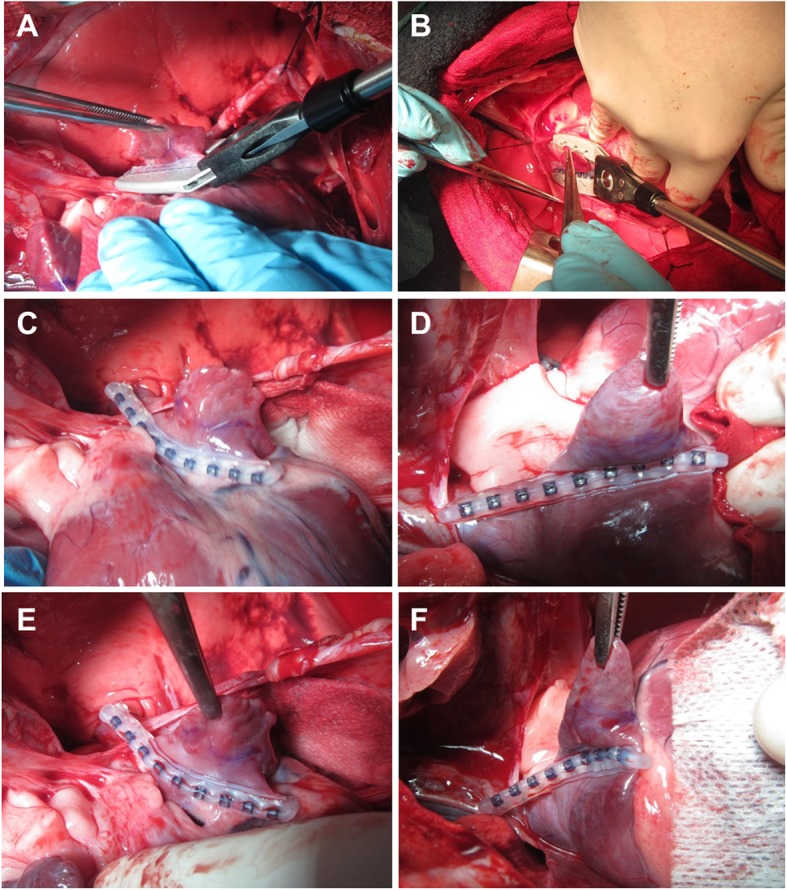
Usability testing of all TPP devices was successful (n = 20;100%, delivery-time range 22-120 s) without any procedural adverse-events (tissue damage or tears, bleeding, vessel-impingement, structural impact). All devices fully traversed the ostium (n = 18) or appendage body (n = 2), and conformed smoothly to adjacent cardiac anatomy. In nineteen deployments (n = 19;95%), all device connector pairs were fully engaged, while in one TPP device the most distal pair remained unengaged. ICE and post-mortem inspections revealed complete closure of all appendage ostia (n = 18;100%) and only in one case a small residual stump was detected. Intraoperative safety findings were further confirmed post-mortem. Devices created a nearly smooth line of closure via symmetric endocardial tissue-coaptation.
In this preclinical model, the TPP demonstrated good ease of use for ostial access, ability to re-position (after engagement) and rapid deployment, while achieving safe and effective LAAO.
左心耳封堵术(LAAO)是房颤患者抗凝治疗的一种替代方案。我们在一个转化犬模型中评估一种用于心外膜LAAO的新型装置。
使用9只猎犬(n = 9)评估TigerPaw Pro(TPP)装置用于心外膜LAAO的可用性、安全性和有效性。在基线成像(心内超声心动图(ICE)和血管造影)及术中目视检查后,通过“闭合/重新打开”操作测试可用性,随后分别在左、右心耳上总共部署20个TPP装置(n = 20)。通过直接的心外膜检查和心内膜成像评估不良事件来评价操作安全性。有效性评估包括装置定位、残余残端的存在情况及闭合完整性的评估。进行尸检评估以确认安全性和有效性。
所有TPP装置的可用性测试均成功(n = 20;100%,输送时间范围为22 - 120秒),且无任何操作不良事件(组织损伤或撕裂、出血、血管压迫、结构影响)。所有装置均完全穿过开口(n = 18)或心耳主体(n = 2),并与相邻心脏解剖结构平滑贴合。在19次部署中(n = 19;95%),所有装置连接器对均完全接合,而在一个TPP装置中,最远端的一对连接器未接合。ICE和尸检显示所有心耳开口均完全闭合(n = 18;100%),仅在1例中检测到一个小的残余残端。术中安全性结果在尸检中得到进一步证实。装置通过对称的心内膜组织贴合形成了近乎平滑的闭合线。
在这个临床前模型中,TPP在心外膜开口进入、重新定位(接合后)能力和快速部署方面表现出良好的易用性,同时实现了安全有效的LAAO。