Department of Chemical Engineering, McGill University, Montréal, QC, Canada.
INRS-Centre Armand Frappier Santé Biotechnologie and Réseau Intersectoriel de Recherche en Santé de l'Université du Québec, Laval, QC, Canada.
Sci Rep. 2020 Apr 3;10(1):5837. doi: 10.1038/s41598-020-62659-8.
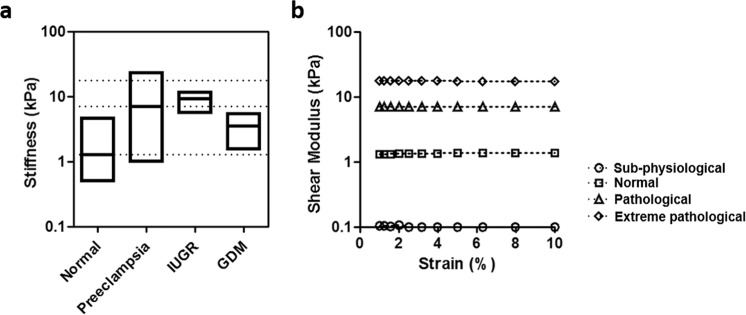
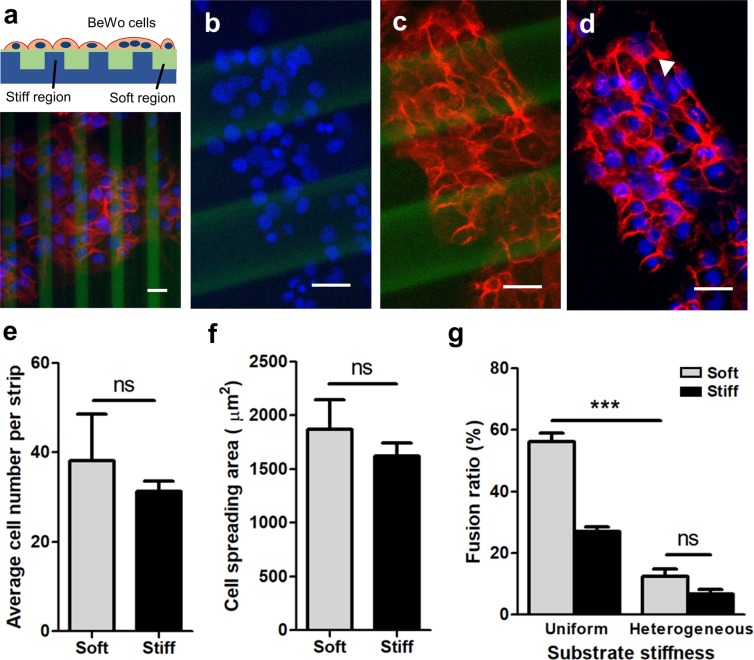
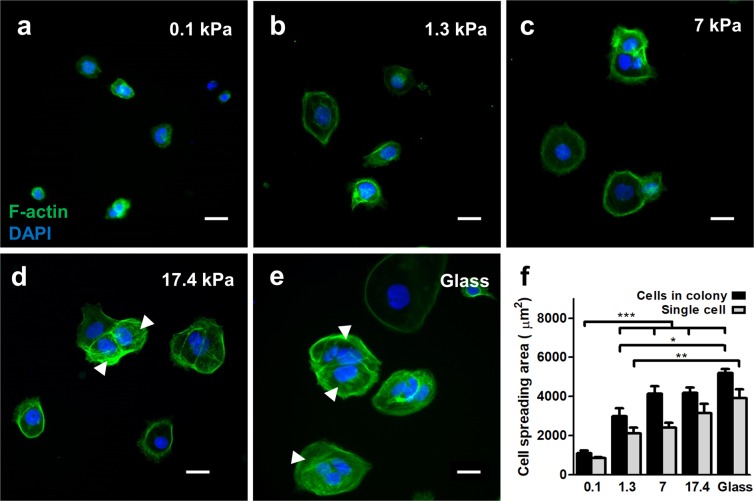
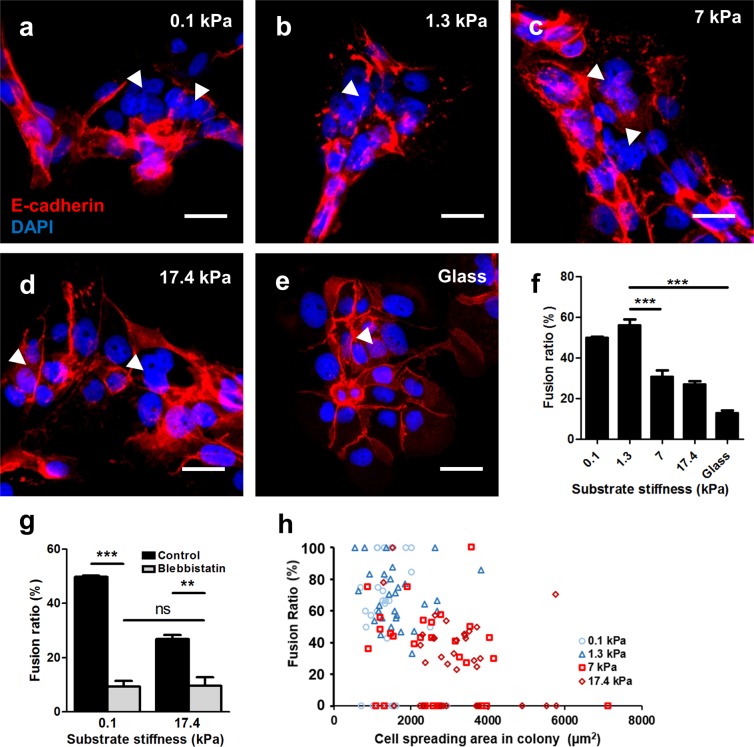
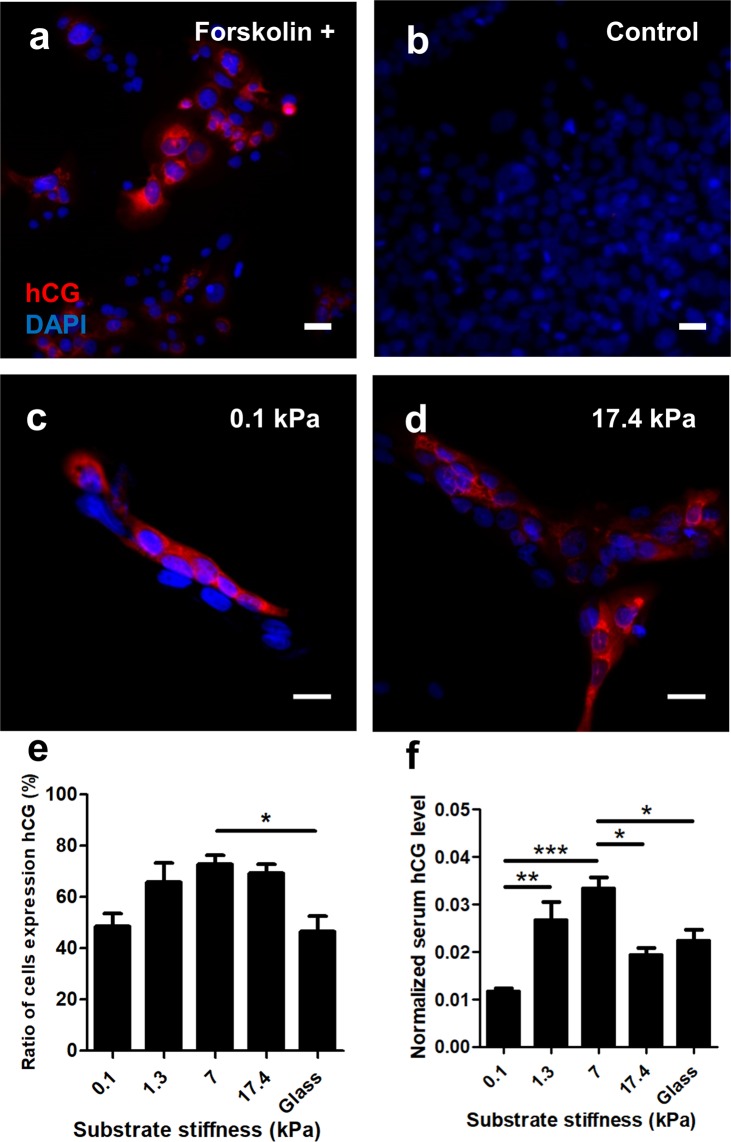
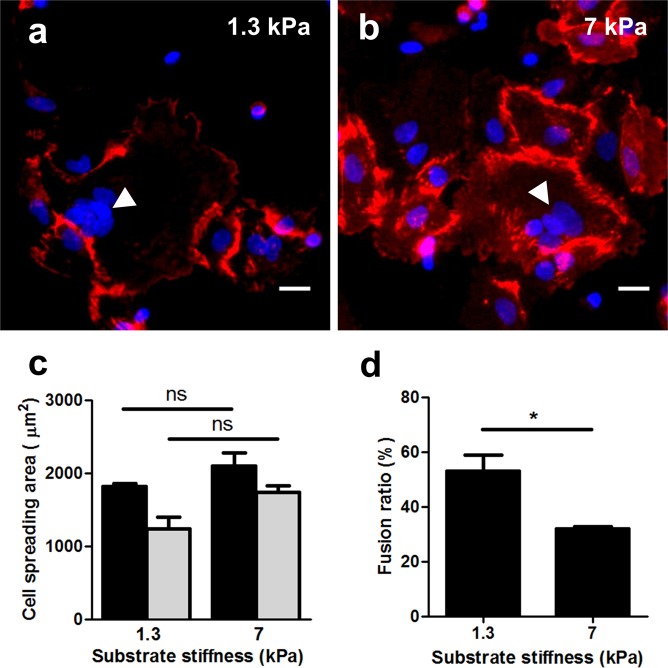
The syncytiotrophoblast is a multinucleated layer that plays a critical role in regulating functions of the human placenta during pregnancy. Maintaining the syncytiotrophoblast layer relies on ongoing fusion of mononuclear cytotrophoblasts throughout pregnancy, and errors in this fusion process are associated with complications such as preeclampsia. While biochemical factors are known to drive fusion, the role of disease-specific extracellular biophysical cues remains undefined. Since substrate mechanics play a crucial role in several diseases, and preeclampsia is associated with placental stiffening, we hypothesize that trophoblast fusion is mechanically regulated by substrate stiffness. We developed stiffness-tunable polyacrylamide substrate formulations that match the linear elasticity of placental tissue in normal and disease conditions, and evaluated trophoblast morphology, fusion, and function on these surfaces. Our results demonstrate that morphology, fusion, and hormone release is mechanically-regulated via myosin-II; optimal on substrates that match healthy placental tissue stiffness; and dysregulated on disease-like and supraphysiologically-stiff substrates. We further demonstrate that stiff regions in heterogeneous substrates provide dominant physical cues that inhibit fusion, suggesting that even focal tissue stiffening limits widespread trophoblast fusion and tissue function. These results confirm that mechanical microenvironmental cues influence fusion in the placenta, provide critical information needed to engineer better in vitro models for placental disease, and may ultimately be used to develop novel mechanically-mediated therapeutic strategies to resolve fusion-related disorders during pregnancy.
合体滋养层是一种具有多个核的细胞层,在妊娠期间对调节人胎盘的功能起着至关重要的作用。维持合体滋养层依赖于妊娠期间单核滋养细胞的持续融合,而融合过程中的错误与子痫前期等并发症有关。虽然已知生化因素可促进融合,但特定疾病相关的细胞外生物物理线索的作用仍未确定。由于基质力学在多种疾病中起着关键作用,并且子痫前期与胎盘僵硬有关,我们假设滋养细胞融合受到基质硬度的机械调节。我们开发了可调节杨氏模量的聚丙烯酰胺基质配方,这些配方与正常和疾病条件下胎盘组织的线性弹性相匹配,并在这些表面上评估滋养细胞的形态、融合和功能。我们的研究结果表明,形态、融合和激素释放通过肌球蛋白-II 进行机械调节;在与健康胎盘组织硬度匹配的基质上最佳;在类似疾病和超生理硬度的基质上失调。我们进一步表明,异质基质中的僵硬区域提供了抑制融合的主要物理线索,这表明即使是局部组织僵硬也会限制广泛的滋养细胞融合和组织功能。这些结果证实了机械微环境线索会影响胎盘的融合,为更好地构建胎盘疾病的体外模型提供了关键信息,并可能最终用于开发新的机械介导的治疗策略,以解决妊娠期间与融合相关的疾病。