Aix-Marseille Université, Institut de Recherche pour le Développement (IRD), Assistance Publique - Hôpitaux de Marseille (AP-HM); Microbes, Evolution, Phylogeny and Infection (MEPHI); Institut Hospitalo-Universitaire (IHU) Méditerranée Infection, 27 boulevard Jean Moulin, 13005, Marseille, France.
Institut Hospitalo-Universitaire (IHU) Méditerranée Infection, 19-21 boulevard Jean Moulin, 13005, Marseille, France.
Sci Rep. 2020 Apr 3;10(1):5928. doi: 10.1038/s41598-020-62836-9.
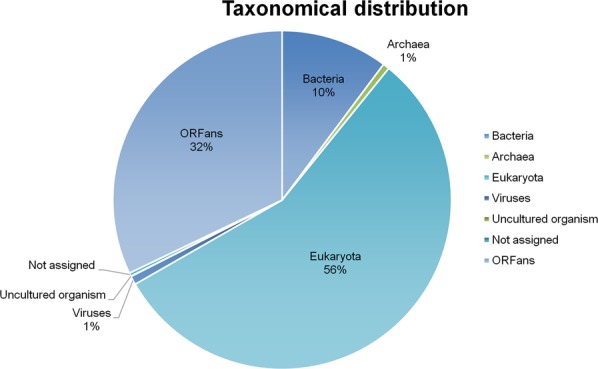
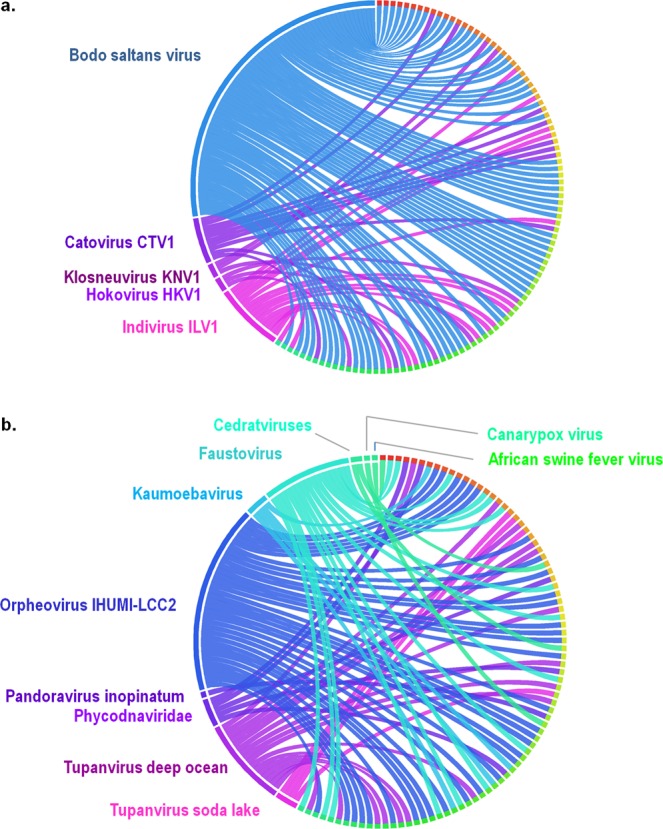
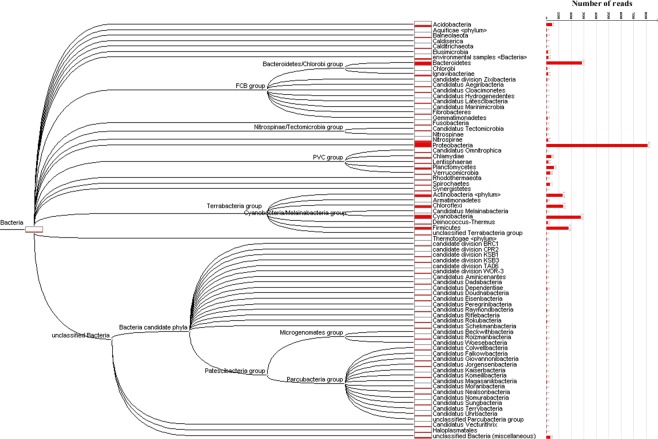
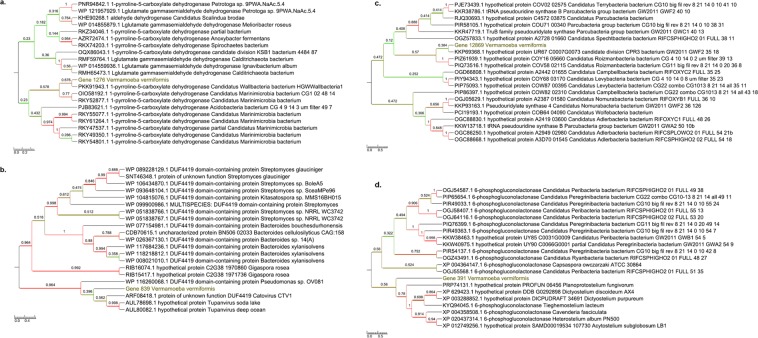
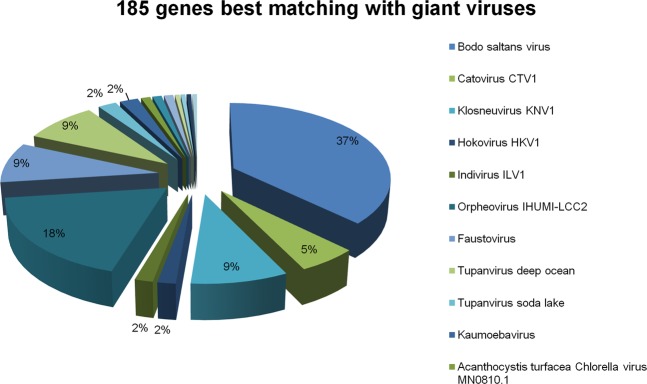
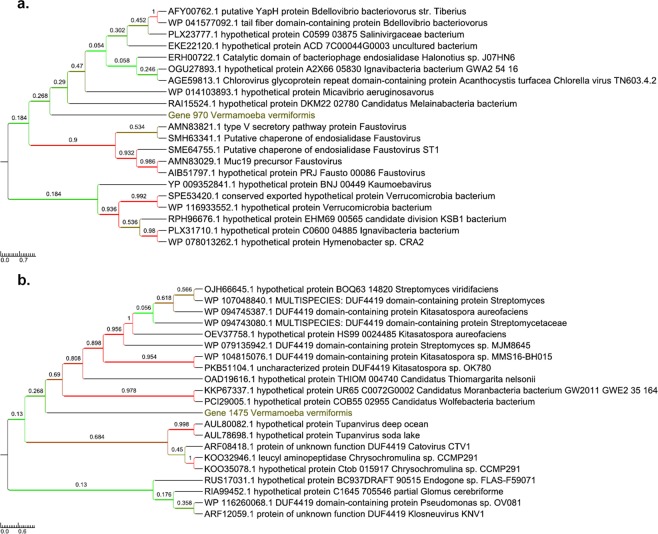
Vermamoeba vermiformis is a predominant free-living amoeba in human environments and amongst the most common amoebae that can cause severe infections in humans. It is a niche for numerous amoeba-resisting microorganisms such as bacteria and giant viruses. Differences in the susceptibility to these giant viruses have been observed. V. vermiformis and amoeba-resisting microorganisms share a sympatric lifestyle that can promote exchanges of genetic material. This work analyzed the first draft genome sequence of a V. vermiformis strain (CDC-19) through comparative genomic, transcriptomic and phylogenetic analyses. The genome of V. vermiformis is 59.5 megabase pairs in size, and 22,483 genes were predicted. A high proportion (10% (n = 2,295)) of putative genes encoded proteins showed the highest sequence homology with a bacterial sequence. The expression of these genes was demonstrated for some bacterial homologous genes. In addition, for 30 genes, we detected best BLAST hits with members of the Candidate Phyla Radiation. Moreover, 185 genes (0.8%) best matched with giant viruses, mostly those related to the subfamily Klosneuvirinae (101 genes), in particular Bodo saltans virus (69 genes). Lateral sequence transfers between V. vermiformis and amoeba-resisting microorganisms were strengthened by Sanger sequencing, transcriptomic and phylogenetic analyses. This work provides important insights and genetic data for further studies about this amoeba and its interactions with microorganisms.
内变形虫(Vermamoeba vermiformis)是人类环境中主要的自由生活阿米巴虫,也是最常见的能引起人类严重感染的阿米巴虫之一。它是许多抗阿米巴微生物(如细菌和巨型病毒)的栖息地。已经观察到对这些巨型病毒的敏感性存在差异。V. vermiformis 和抗阿米巴微生物共享共生生活方式,这可以促进遗传物质的交换。本研究通过比较基因组学、转录组学和系统发育分析,分析了一株 V. vermiformis (CDC-19)的基因组草图序列。V. vermiformis 的基因组大小为 59.5 兆碱基对,预测有 22483 个基因。高比例(10%(n=2295))的假定基因编码的蛋白质与细菌序列具有最高的序列同源性。这些基因的表达在一些细菌同源基因中得到了证明。此外,对于 30 个基因,我们检测到与候选门辐射成员的最佳 BLAST 命中。此外,185 个基因(0.8%)与巨型病毒最佳匹配,大多数与 Klosneuvirinae 亚科(101 个基因)有关,特别是 Bodo saltans 病毒(69 个基因)。桑格测序、转录组学和系统发育分析加强了 V. vermiformis 和抗阿米巴微生物之间的侧向序列转移。这项工作为进一步研究这种阿米巴虫及其与微生物的相互作用提供了重要的见解和遗传数据。