School of Engineering, University of Edinburgh, Edinburgh, United Kingdom.
JMIR Public Health Surveill. 2020 Apr 6;6(2):e18844. doi: 10.2196/18844.
The challenges faced by the Global South during the coronavirus disease (COVID-19) pandemic are compounded by the presence of informal settlements, which are typically densely populated and lacking in formalized sanitation infrastructure. Social distancing measures in informal settlements may be difficult to implement due to the density and layout of settlements. This study measures the distance between dwellings in informal settlements in Cape Town to identify the risk of COVID-19 transmission.
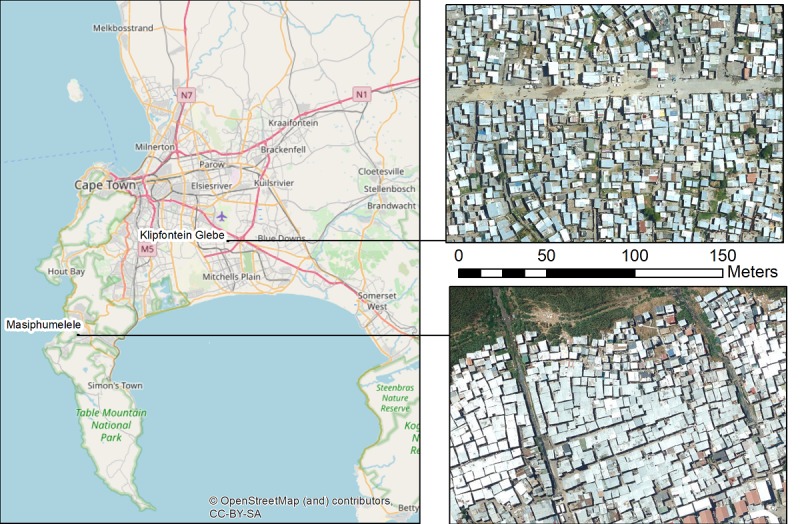
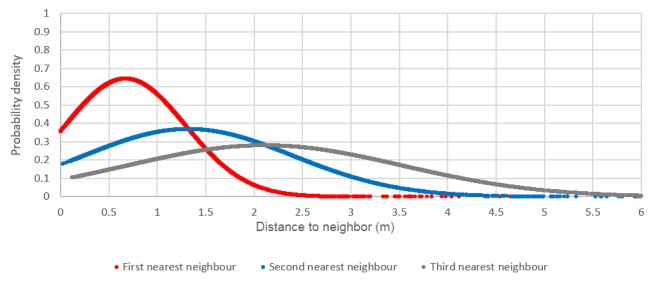
The aim of this paper is to determine if social distancing measures are achievable in informal settlements in Cape Town, using two settlements as an example. We will first examine the distance between dwellings and their first, second, and third nearest neighbors and then identify clusters of dwellings in which residents would be unable to effectively practice social isolation due to the close proximity of their homes.
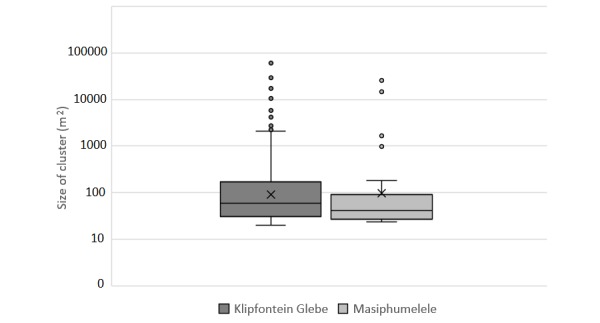
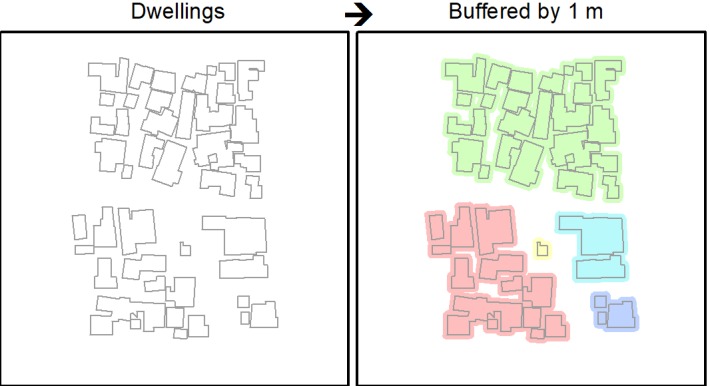
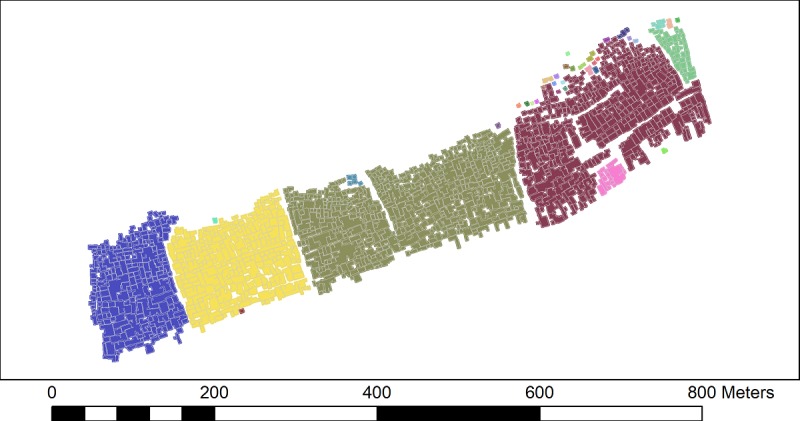
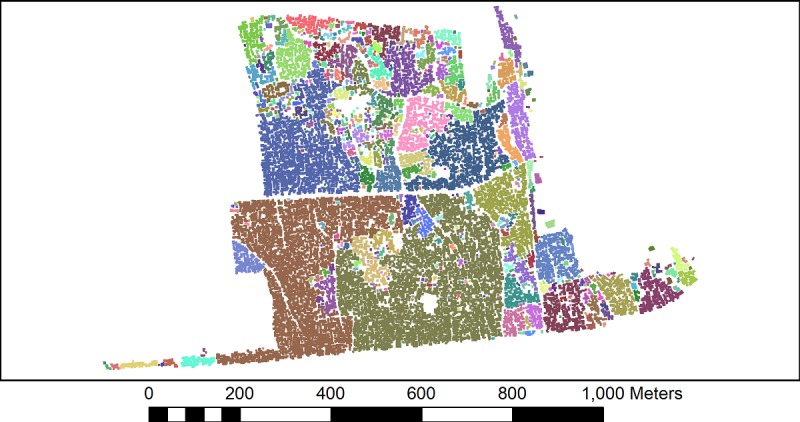
Dwellings in the settlements of Masiphumelele and Klipfontein Glebe were extracted from a geographic information system data set of outlines of all informal dwellings in Cape Town. The distance to each dwelling's first, second, and third nearest neighbors was calculated for each settlement. A social distance measure of 2 m was used (buffer of 1 m, as dwellings less than 2 m apart are joined) to identify clusters of dwellings that are unable to effectively practice social distancing in each settlement.
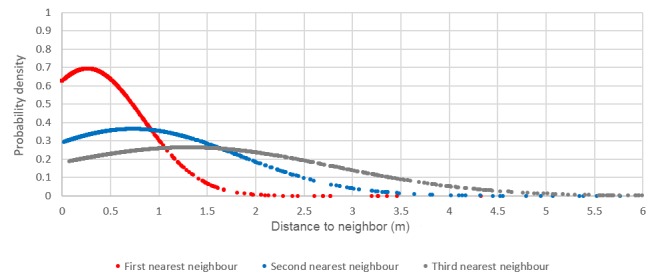
The distance to each dwelling's first 3 nearest neighbors illustrates that the settlement of Masiphumelele is constructed in a denser fashion as compared to the Klipfontein Glebe settlement. This implies that implementing social distancing will likely be more challenging in Masiphumelele than in Klipfontein Glebe. However, using a 2-m social distancing measure, it was demonstrated that large portions of Klipfontein Glebe would also be unable to effectively implement social distancing.
Effectively implementing social distancing may be a challenge in informal settlements due to their density. This paper uses dwelling outlines for informal settlements in the city of Cape Town to demonstrate that with a 2 m measure, effective social distancing will be challenging.
在冠状病毒病(COVID-19)大流行期间,南方国家面临的挑战因存在非正式住区而加剧,这些住区通常人口密集,缺乏正式的卫生基础设施。由于住区的密度和布局,在非正式住区实施社交距离措施可能很困难。本研究测量了开普敦非正式住区住宅之间的距离,以确定 COVID-19 传播的风险。
本文旨在确定在开普敦的非正式住区是否可以实施社交距离措施,以两个住区为例。我们将首先检查住宅及其第一、第二和第三近邻之间的距离,然后确定由于住宅彼此靠近而无法有效实施社会隔离的居民聚居区。
从开普敦所有非正式住区轮廓的地理信息系统数据集提取了 Masiphumelele 和 Klipfontein Glebe 住区的住宅。为每个住区计算了每个住宅的第一、第二和第三近邻的距离。使用 2 m 的社交距离测量值(缓冲区 1 m,因为距离小于 2 m 的住宅是连接的)来识别每个住区中无法有效实施社交隔离的住宅聚居区。
每个住宅的前 3 个最近邻居的距离表明,Masiphumelele 住区的建筑密度高于 Klipfontein Glebe 住区。这意味着在 Masiphumelele 实施社交距离将比在 Klipfontein Glebe 更具挑战性。然而,使用 2 m 的社交距离测量值,表明 Klipfontein Glebe 的很大一部分也无法有效实施社交距离。
由于密度,在非正式住区有效实施社交距离可能是一项挑战。本文使用开普敦城市非正式住区的住宅轮廓来证明,使用 2 m 的措施,有效实施社交距离将具有挑战性。