Department of Stem Cells and Human Disease Models, Research Center for Animal Life Science, Shiga University of Medical Science, Seta, Tsukinowa-cho, Otsu, Shiga, Japan.
Molecular Neuroscience Research Center, Shiga University of Medical Science, Seta, Tsukinowa-cho, Otsu, Shiga, Japan.
J Alzheimers Dis. 2020;75(1):45-60. doi: 10.3233/JAD-191081.
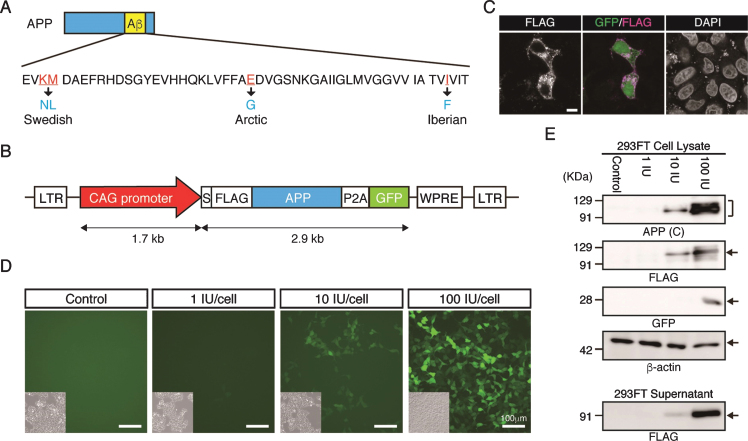
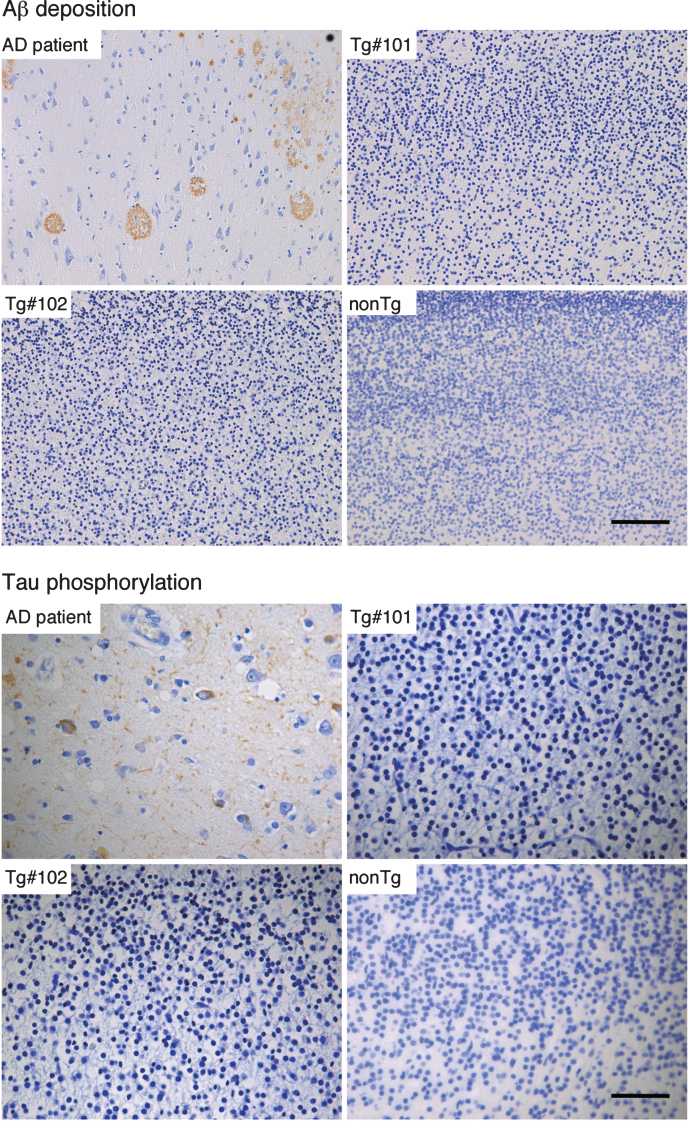
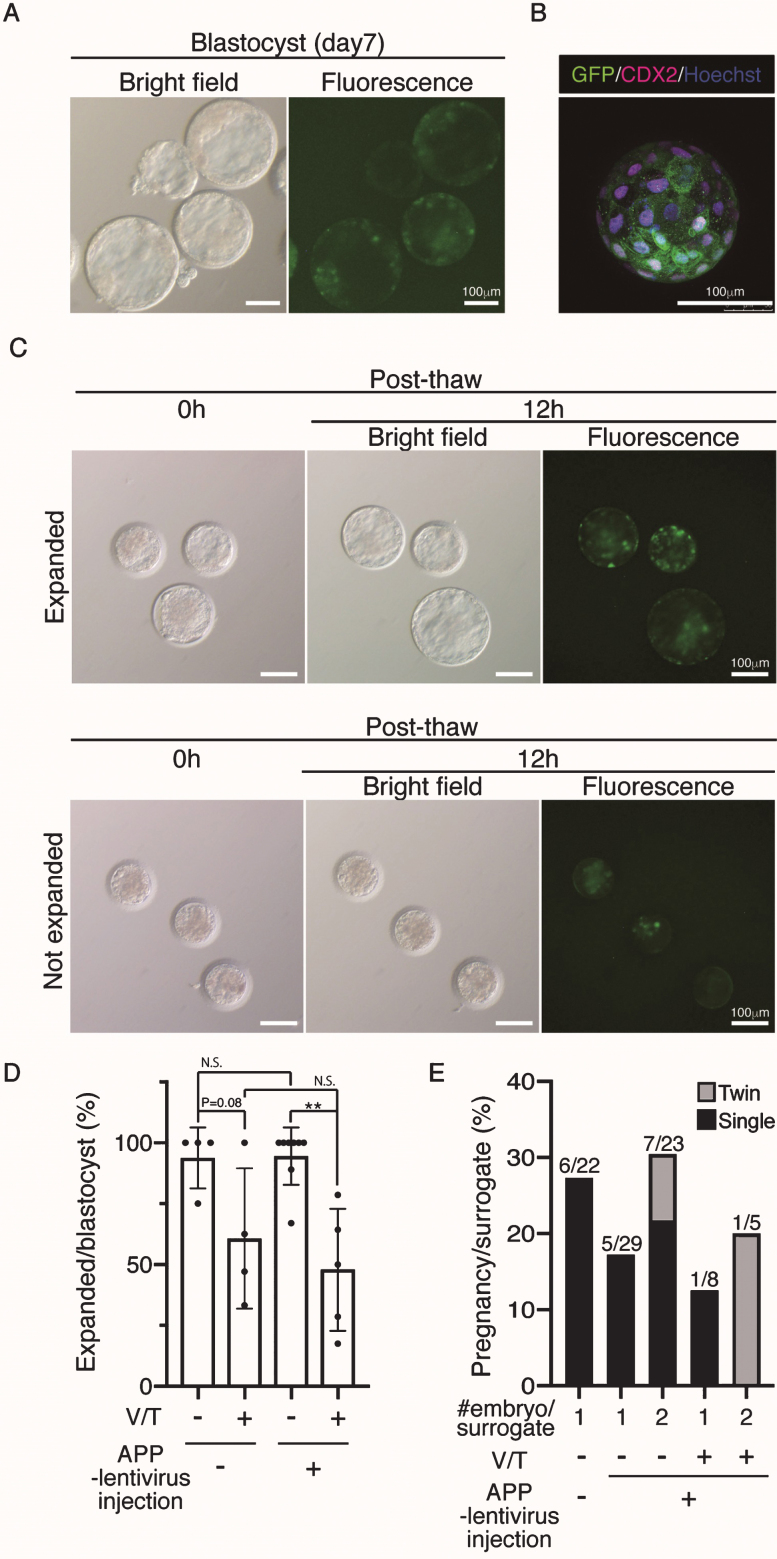
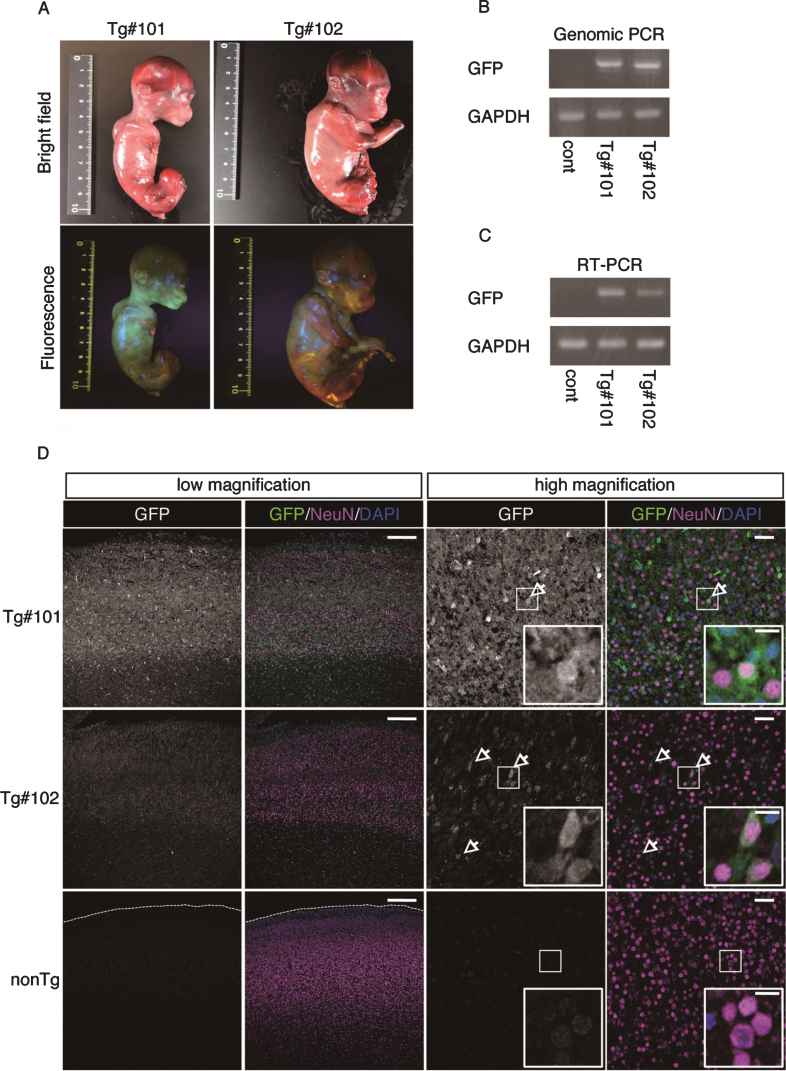
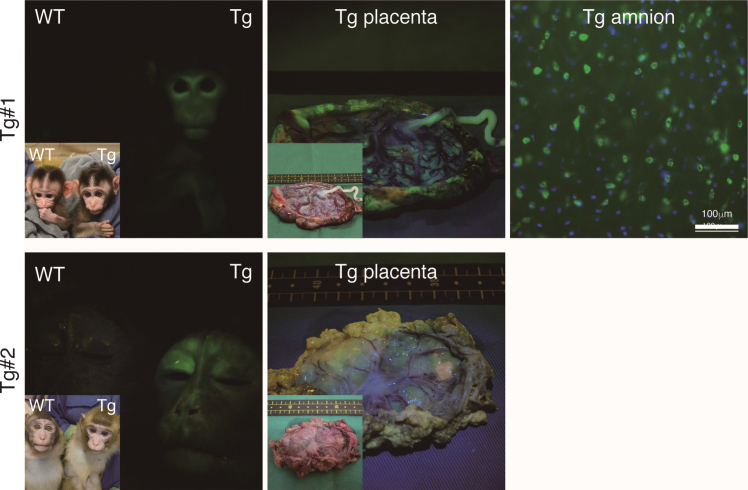
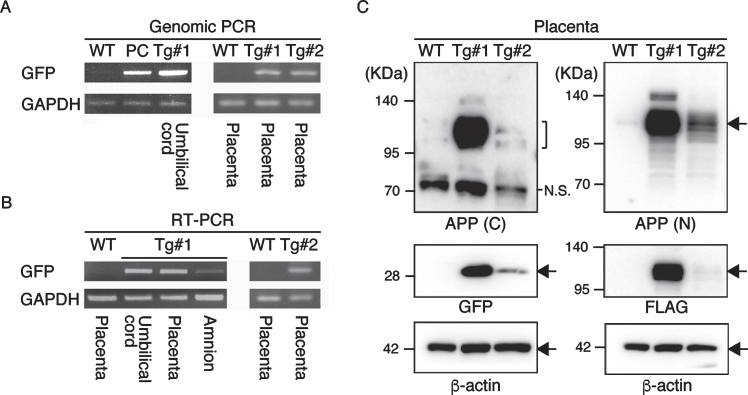
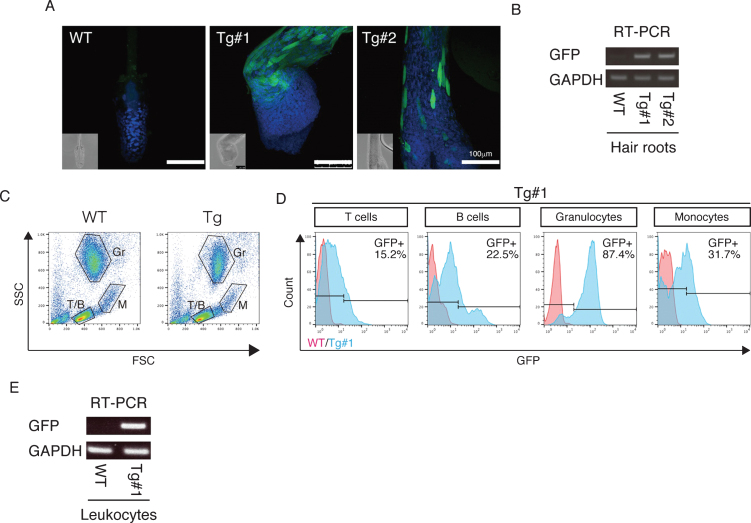
Alzheimer's disease (AD) is the most common cause of dementia and understanding its pathogenesis should lead to improved therapeutic and diagnostic methods. Although several groups have developed transgenic mouse models overexpressing the human amyloid-β precursor protein (APP) gene with AD mutations, with and without presenilin mutations, as well as APP gene knock-in mouse models, these animals display amyloid pathology but do not show neurofibrillary tangles or neuronal loss. This presumably is due to differences between the etiology of the aged-related human disease and the mouse models. Here we report the generation of two transgenic cynomolgus monkeys overexpressing the human gene for APP with Swedish, Artic, and Iberian mutations, and demonstrated expression of gene tagged green fluorescent protein marker in the placenta, amnion, hair follicles, and peripheral blood. We believe that these nonhuman primate models will be very useful to study the pathogenesis of dementia and AD. However, generated Tg monkeys still have some limitations. We employed the CAG promoter, which will promote gene expression in a non-tissue specific manner. Moreover, we used transgenic models but not knock-in models. Thus, the inserted transgene destroys endogenous gene(s) and may affect the phenotype(s). Nevertheless, it will be of great interest to determine whether these Tg monkeys will develop tauopathy and neurodegeneration similar to human AD.
阿尔茨海默病(AD)是痴呆症最常见的病因,了解其发病机制应该会带来改进的治疗和诊断方法。尽管有几个小组已经开发了过表达具有 AD 突变的人类淀粉样前体蛋白(APP)基因的转基因小鼠模型,包括有和没有早老素突变的,以及 APP 基因敲入小鼠模型,但这些动物表现出淀粉样病理学,但没有出现神经原纤维缠结或神经元丢失。这大概是由于与年龄相关的人类疾病的病因和小鼠模型之间的差异所致。在这里,我们报告了两种过表达具有瑞典、北极和伊比利亚突变的人类 APP 基因的转基因食蟹猴的产生,并证明了基因标记的绿色荧光蛋白标记在胎盘、羊膜、毛囊和外周血中的表达。我们相信这些非人类灵长类动物模型将非常有助于研究痴呆症和 AD 的发病机制。然而,所产生的 Tg 猴子仍然存在一些局限性。我们采用了 CAG 启动子,它将以非组织特异性的方式促进基因表达。此外,我们使用了转基因模型而不是敲入模型。因此,插入的转基因会破坏内源性基因并可能影响表型。尽管如此,确定这些 Tg 猴子是否会发展出类似于人类 AD 的 tau 病和神经退行性变将是非常有趣的。