Kappel Ben Arpad, De Angelis Lorenzo, Heiser Michael, Ballanti Marta, Stoehr Robert, Goettsch Claudia, Mavilio Maria, Artati Anna, Paoluzi Omero A, Adamski Jerzy, Mingrone Geltrude, Staels Bart, Burcelin Remy, Monteleone Giovanni, Menghini Rossella, Marx Nikolaus, Federici Massimo
Department of Systems Medicine, University of Rome Tor Vergata, Rome, Italy; Department of Internal Medicine 1, University Hospital Aachen, RWTH Aachen University, Aachen, Germany.
Department of Systems Medicine, University of Rome Tor Vergata, Rome, Italy.
Mol Metab. 2020 Jun;36:100976. doi: 10.1016/j.molmet.2020.100976. Epub 2020 Mar 13.
The metabolic influence of gut microbiota plays a pivotal role in the pathogenesis of cardiometabolic diseases. Antibiotics affect intestinal bacterial diversity, and long-term usage has been identified as an independent risk factor for atherosclerosis-driven events. The aim of this study was to explore the interaction between gut dysbiosis by antibiotics and metabolic pathways with the impact on atherosclerosis development.
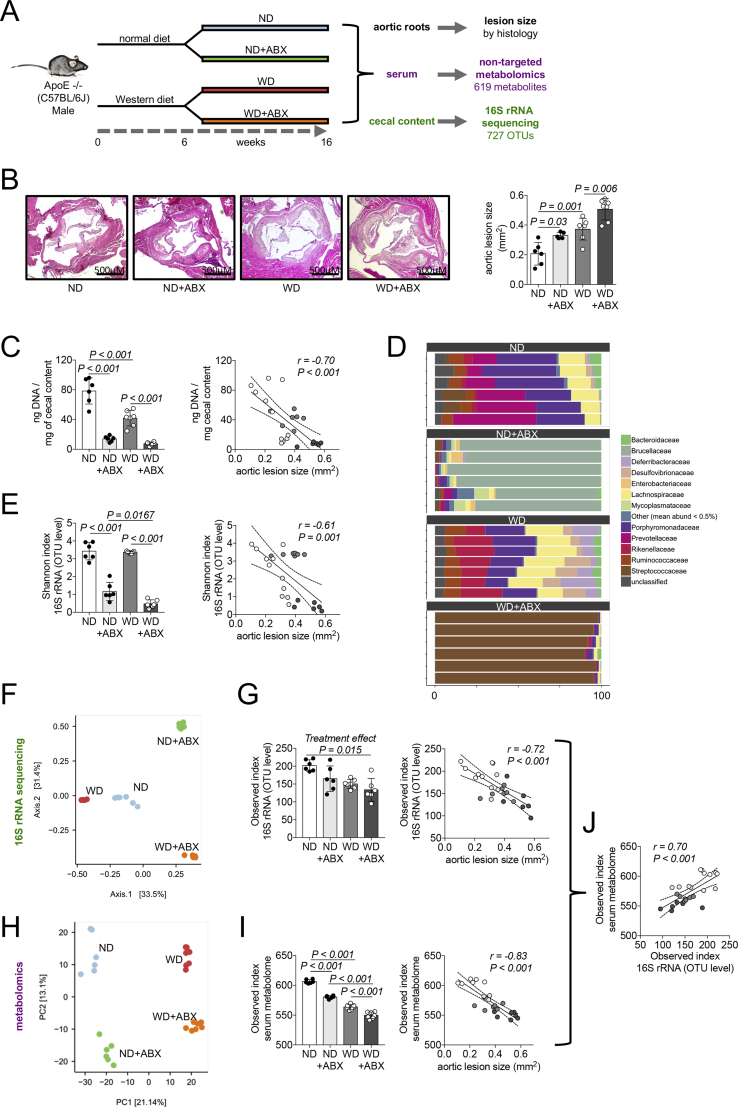
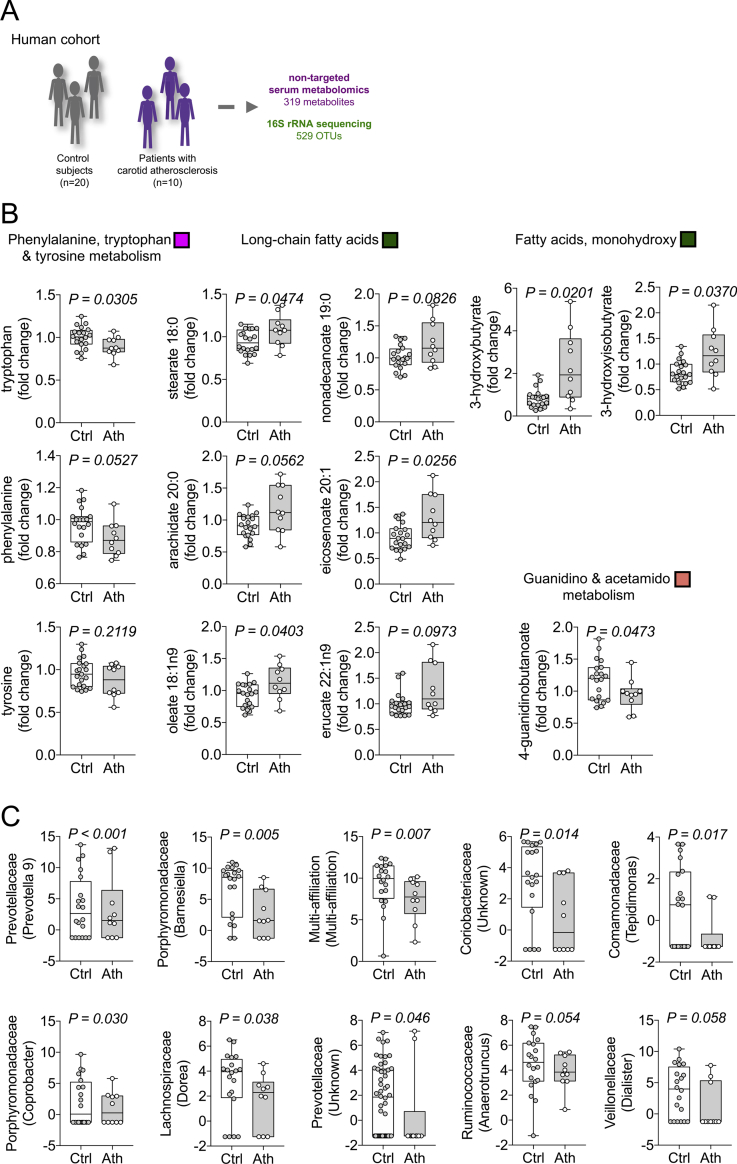
We combined oral antibiotics with different diets in an Apolipoprotein E-knockout mouse model linking gut microbiota to atherosclerotic lesion development via an integrative cross-omics approach including serum metabolomics and cecal 16S rRNA targeted metagenomic sequencing. We further investigated patients with carotid atherosclerosis compared to control subjects with comparable cardiovascular risk.
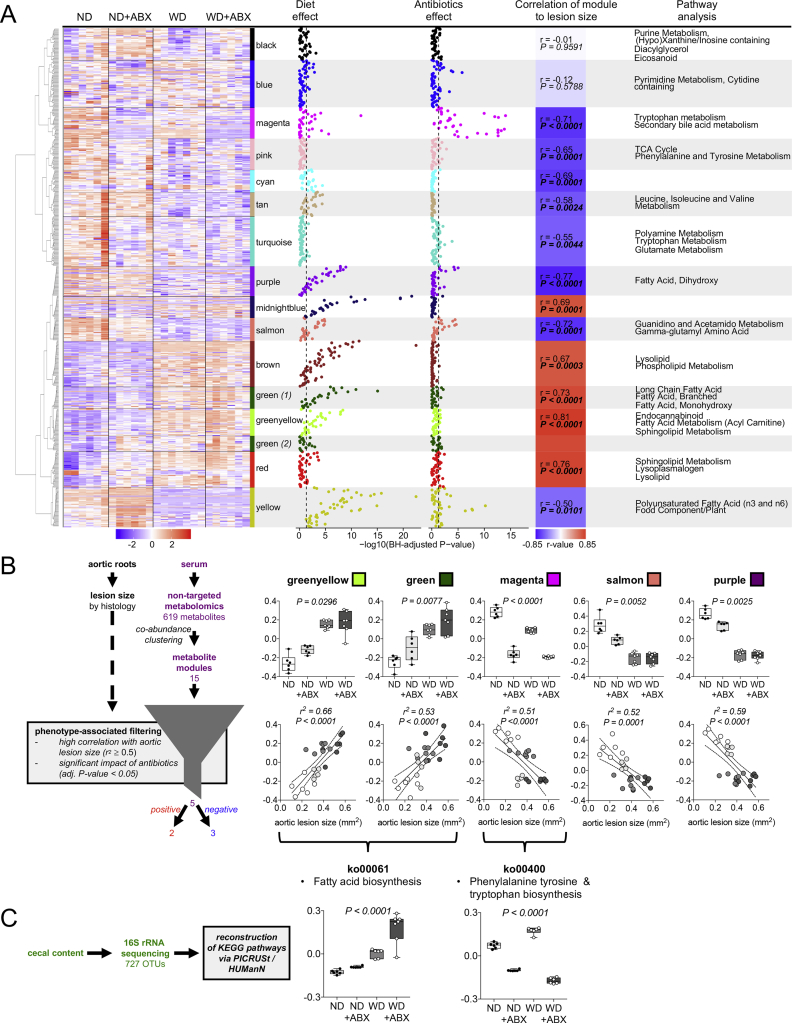
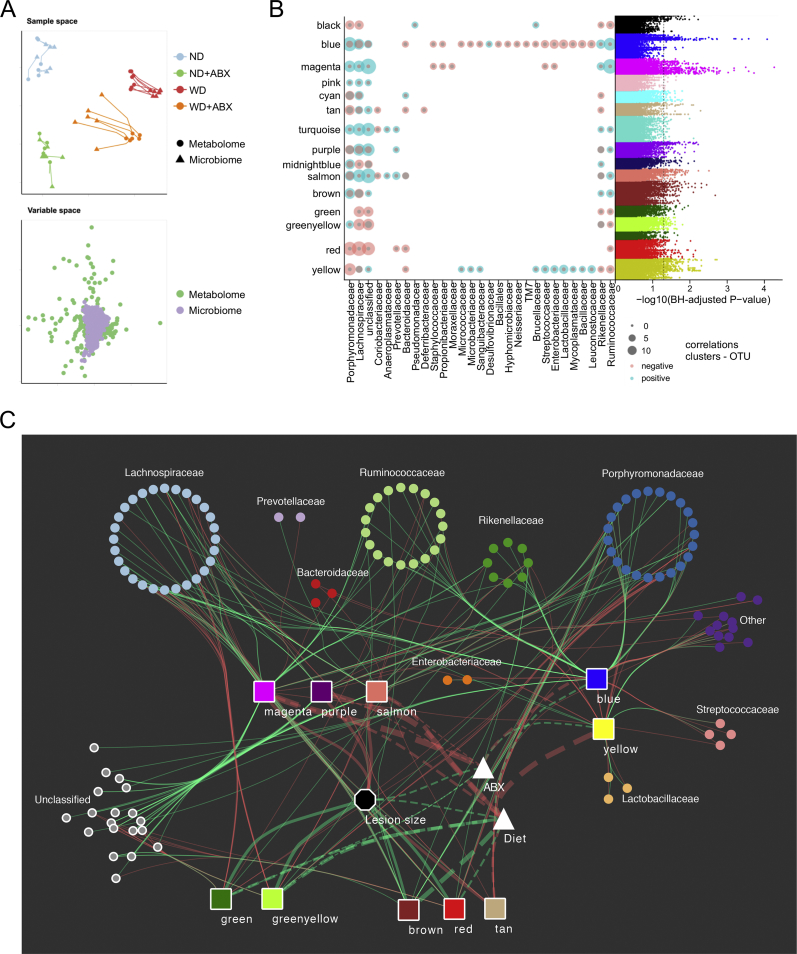
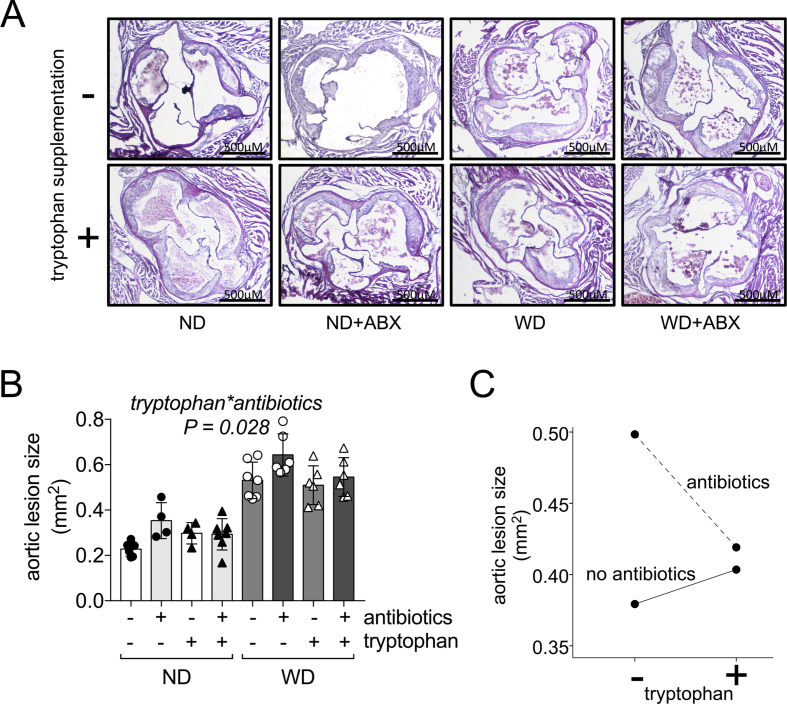
Here, we show that increased atherosclerosis by antibiotics was connected to a loss of intestinal diversity and alterations of microbial metabolic functional capacity with a major impact on the host serum metabolome. Pathways that were modulated by antibiotics and connected to atherosclerosis included diminished tryptophan and disturbed lipid metabolism. These pathways were related to the reduction of certain members of Bacteroidetes and Clostridia by antibiotics in the gut. Patients with atherosclerosis presented a similar metabolic signature as those induced by antibiotics in our mouse model.
Taken together, this work provides insights into the complex interaction between intestinal microbiota and host metabolism. Our data highlight that detrimental effects of antibiotics on the gut flora are connected to a pro-atherogenic metabolic phenotype beyond classical risk factors.
肠道微生物群的代谢影响在心脏代谢疾病的发病机制中起关键作用。抗生素会影响肠道细菌多样性,长期使用抗生素已被确定为动脉粥样硬化相关事件的独立危险因素。本研究的目的是探讨抗生素引起的肠道生态失调与代谢途径之间的相互作用及其对动脉粥样硬化发展的影响。
我们在载脂蛋白E基因敲除小鼠模型中,将口服抗生素与不同饮食相结合,通过血清代谢组学和盲肠16S rRNA靶向宏基因组测序等综合跨组学方法,将肠道微生物群与动脉粥样硬化病变发展联系起来。我们还对颈动脉粥样硬化患者与具有可比心血管风险的对照组进行了进一步研究。
在此,我们表明抗生素导致的动脉粥样硬化增加与肠道多样性丧失以及微生物代谢功能能力改变有关,这对宿主血清代谢组有重大影响。受抗生素调节且与动脉粥样硬化相关的途径包括色氨酸减少和脂质代谢紊乱。这些途径与肠道中抗生素导致拟杆菌门和梭菌纲某些成员的减少有关。动脉粥样硬化患者呈现出与我们小鼠模型中抗生素诱导的代谢特征相似的特征。
综上所述,这项工作为肠道微生物群与宿主代谢之间的复杂相互作用提供了见解。我们的数据强调,抗生素对肠道菌群的有害影响与经典危险因素之外的促动脉粥样硬化代谢表型有关。